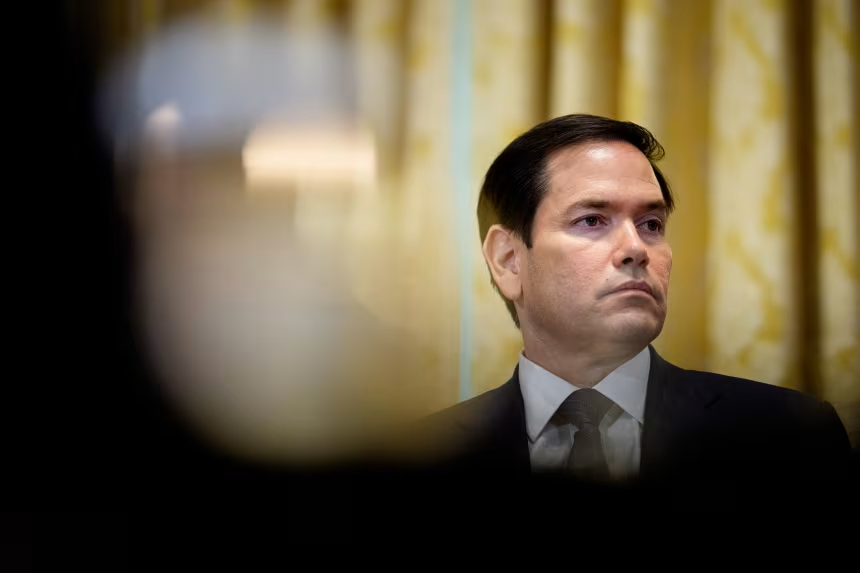
US State Department has revoked more than 6,000 student visas, official says
Entities mentioned:
- State Department: Security, Control, Duty
- Trump administration: Security, Control, Nationalism
- Rumeysa Ozturk: Freedom, Justice, Self-preservation
- Marco Rubio: Loyalty, Security, Righteousness
- NAFSA: Association of International Educators: Professional pride, Concern, Influence
Article Assessment:
Credibility Score: 75/100
Bias Rating: 55/100 (Center)
Sentiment Score: 30/100
Authoritarianism Risk: 65/100 (Authoritarian Tendencies)
Bias Analysis:
The article presents multiple perspectives, including government officials and educational organizations. While it leans slightly towards criticizing the policy, it also provides space for the administration's justifications.
Key metric: International Student Enrollment
As a social scientist, I analyze that the revocation of over 6,000 student visas by the US State Department represents a significant shift in immigration policy with potential far-reaching consequences. This action, part of a broader crackdown on international students, is likely to impact the United States' position as a global leader in higher education. The justifications provided for these revocations, ranging from expired visas to allegations of terrorism support, suggest a tightening of national security measures. However, the broad scope and aggressive implementation of these policies may lead to unintended consequences, including a substantial decline in international student enrollment and subsequent economic losses. The new vetting requirements, including scrutiny of social media profiles, raise concerns about privacy and potential ideological screening. This shift could potentially damage the US's soft power and cultural influence globally, as well as its ability to attract top international talent. The projected 30-40% decline in new international student enrollment could have significant economic impacts, affecting not only universities but also local economies that benefit from international students' presence.
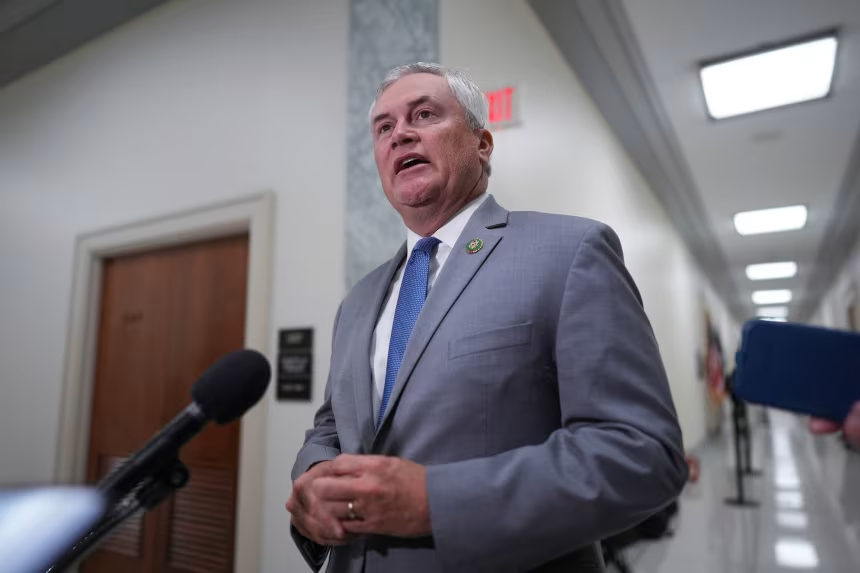
House Oversight Chair says Justice Department to start providing Epstein-related records on Friday
Entities mentioned:
- James Comer: Ambition, Justice, Influence
- Department of Justice: Duty, Control, Professional pride
- Bill Barr: Loyalty, Self-preservation, Duty
- Jeffrey Epstein: Power, Greed, Self-preservation
- Donald Trump: Power, Self-preservation, Legacy
- Democrats: Competitive spirit, Justice, Influence
- Republicans: Competitive spirit, Justice, Influence
- Mike Johnson: Control, Influence, Wariness
Article Assessment:
Credibility Score: 75/100
Bias Rating: 55/100 (Center)
Sentiment Score: 40/100
Authoritarianism Risk: 30/100 (Generally Democratic)
Bias Analysis:
The article presents multiple viewpoints, including both Republican and Democratic perspectives. While it gives slightly more space to Republican statements, it balances this with critical Democratic responses, maintaining a relatively centrist approach.
Key metric: Government Transparency and Accountability
As a social scientist, I analyze that this article highlights ongoing tensions between political parties and government institutions regarding the handling of sensitive information. The pursuit of Epstein-related records by the House Oversight Committee underscores a broader struggle for transparency and accountability in high-profile cases. The involvement of former high-ranking officials, including ex-Attorney General Bill Barr, suggests a complex interplay of political motivations, institutional responsibilities, and public interest. The differing perspectives between Republicans and Democrats on the investigation's authenticity and thoroughness reflect deeper partisan divides in addressing controversial issues. This situation may impact public trust in government institutions and the justice system, potentially influencing future policy-making and oversight processes.