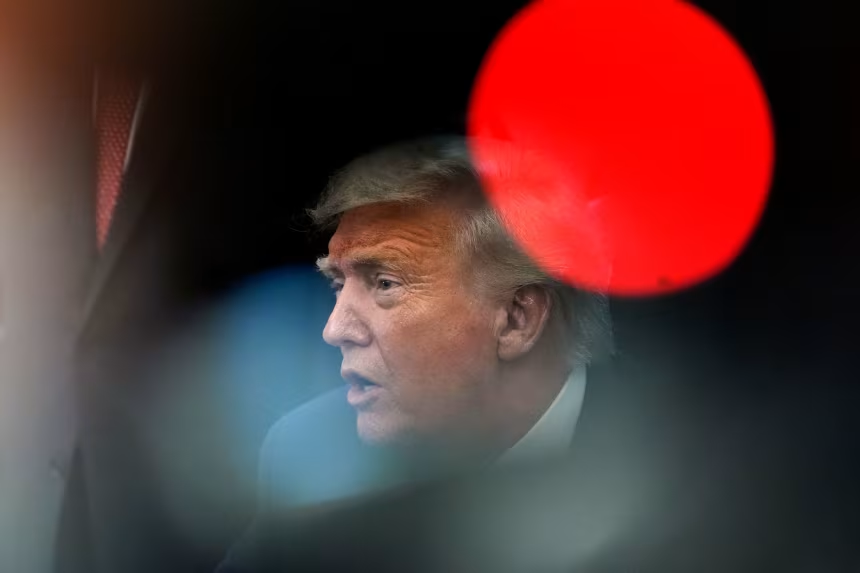
Trump’s remarkable statement against states’ rights
Entities mentioned:
- Donald Trump: Power, Control, Self-preservation
- Republican Party: Loyalty, Power, Control
- States: Autonomy, Self-preservation, Duty
- Federal Government: Power, Control, Influence
- Congress: Duty, Power, Control
- Obama Administration: Power, Control, Influence
Article Assessment:
Credibility Score: 75/100
Bias Rating: 35/100 (Lean Left)
Sentiment Score: 30/100
Authoritarianism Risk: 65/100 (Authoritarian Tendencies)
Bias Analysis:
The article leans slightly left, evidenced by its critical tone towards Trump and Republican policies. While it presents factual information, the framing and language choices suggest a skeptical view of Trump's actions and their implications.
Key metric: Democratic Institutions Strength
As a social scientist, I analyze that this article highlights a significant shift in the Republican Party's stance on states' rights, particularly under Trump's leadership. The president's attempt to exert federal control over state election processes contradicts long-standing conservative principles of limited federal government. This shift poses potential risks to the balance of power between state and federal governments, a cornerstone of American democracy. The article suggests that Trump's actions and statements reflect a broader pattern of centralizing power, which could weaken democratic institutions and norms. This trend, if continued, may lead to increased political polarization and erosion of trust in the electoral system.

KFILE
Entities mentioned:
- Donald Trump: Self-preservation, Power, Influence
- Jeffrey Epstein: Power, Control, Greed
- CNN: Professional pride, Influence, Recognition
- Justice Department: Duty, Control, Justice
- Steven Cheung: Loyalty, Duty, Self-preservation
- Ghislaine Maxwell: Self-preservation, Loyalty, Power
Article Assessment:
Credibility Score: 75/100
Bias Rating: 40/100 (Lean Left)
Sentiment Score: 30/100
Authoritarianism Risk: 25/100 (Generally Democratic)
Bias Analysis:
The article leans slightly left due to its focus on potentially damaging information about Trump. While it includes Trump's denials and White House statements, the overall framing and detailed exploration of Trump-Epstein connections suggest a left-leaning bias.
Key metric: Political Polarization
As a social scientist, I analyze that this article significantly impacts political polarization in the United States. The revelation of new evidence linking former President Trump to Jeffrey Epstein is likely to deepen existing divisions between Trump supporters and critics. Trump's supporters may view this as a politically motivated attack, while his critics may see it as further evidence of questionable associations. The article's timing and content could exacerbate tensions in an already polarized political landscape, potentially affecting public trust in institutions and influencing future electoral behavior.
- Read more about KFILE
- Log in to post comments