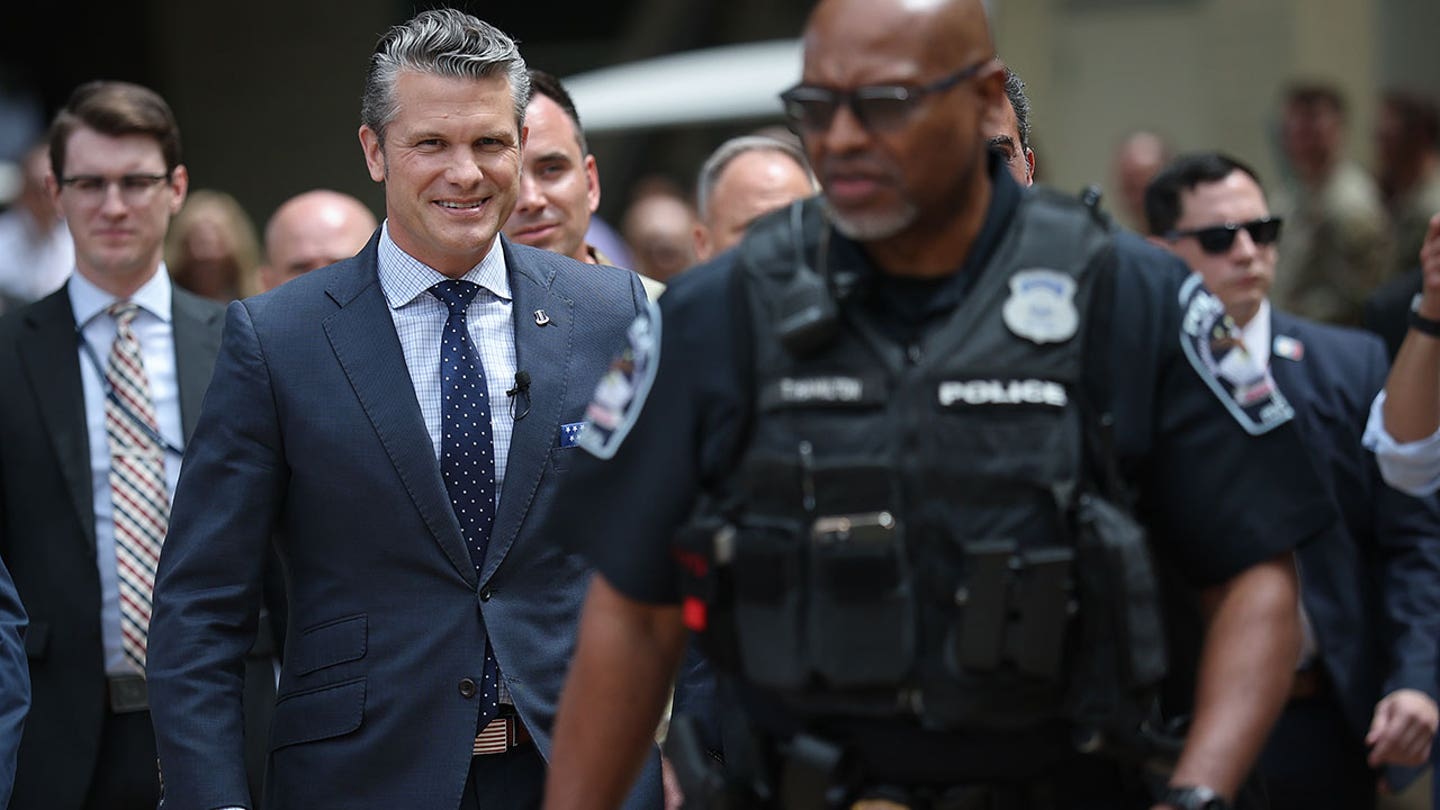
Pentagon officials blast Washington Post for putting 'lives at risk' with report on Pete Hegseth’s security
Entities mentioned:
- Pentagon officials: Security, Indignation, Professional pride
- Washington Post: Recognition, Influence, Curiosity
- Pete Hegseth: Self-preservation, Security, Duty
- Army Criminal Investigation Division (CID): Duty, Security, Professional pride
- Kingsley Wilson: Loyalty, Security, Indignation
- Sean Parnell: Indignation, Security, Loyalty
- Dan Lamothe: Professional pride, Righteousness, Determination
- Rep. Anna Paulina Luna: Moral outrage, Justice, Security
Article Assessment:
Credibility Score: 70/100
Bias Rating: 65/100 (Lean Right)
Sentiment Score: 25/100
Authoritarianism Risk: 55/100 (Mixed/Neutral)
Bias Analysis:
The article leans right, evidenced by its focus on Pentagon officials' criticisms of the Washington Post and inclusion of multiple conservative voices. While it includes the Post's perspective, it gives more space and emphasis to those condemning the report.
Key metric: National Security Perception
As a social scientist, I analyze that this article highlights a significant tension between press freedom and national security concerns. The Washington Post's reporting on Secretary Hegseth's security details has sparked outrage among Pentagon officials, who claim it jeopardizes the safety of Hegseth and his family. This conflict underscores the delicate balance between transparency in government operations and the need to protect sensitive information. The public reaction, particularly from government officials, suggests a growing concern about the vulnerability of high-ranking officials in an increasingly polarized political climate. This incident may lead to increased scrutiny of media practices regarding reporting on security measures and could potentially influence future policies on information sharing between government agencies and the press. The strong reactions from multiple Pentagon officials indicate a unified stance on prioritizing security over press freedom in this instance, which could have implications for future media-government relations and public perception of national security priorities.
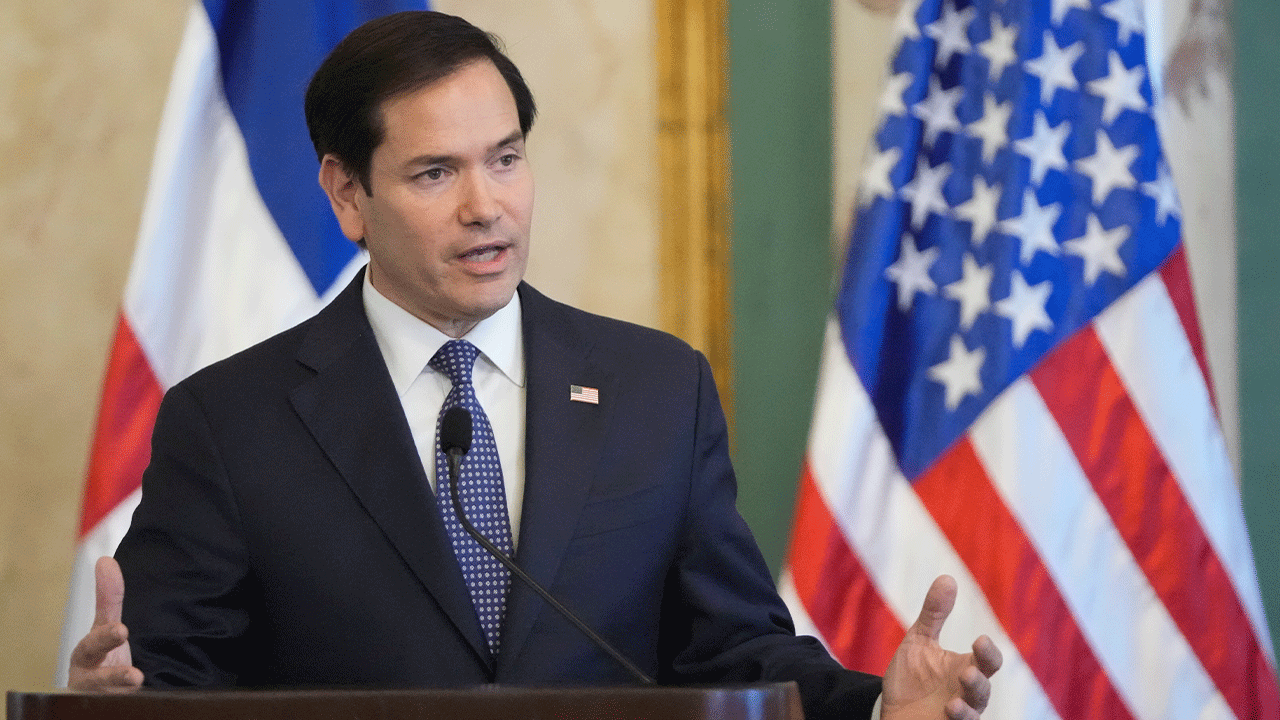
US announces more sanctions on ICC officials for targeting Americans, Israelis
Entities mentioned:
- International Criminal Court (ICC): Justice, Influence, Duty
- United States: Self-preservation, Power, Control
- Israel: Self-preservation, Security, Power
- Marco Rubio: Righteousness, Patriotism, Power
- Donald Trump: Power, Control, Influence
Article Assessment:
Credibility Score: 75/100
Bias Rating: 55/100 (Center)
Sentiment Score: 35/100
Authoritarianism Risk: 65/100 (Authoritarian Tendencies)
Bias Analysis:
The article presents both US and ICC perspectives, quoting officials from both sides. However, it gives slightly more space to the US position and reasoning behind the sanctions, suggesting a slight lean towards the US viewpoint.
Key metric: International Relations and Diplomacy
As a social scientist, I analyze that this move by the United States to sanction ICC officials significantly impacts international relations and diplomacy. The sanctions represent a strong pushback against international jurisdiction over US and Israeli nationals, potentially weakening the ICC's global influence and effectiveness. This action may strain relationships with allies, particularly those who are ICC members, and could be seen as the US prioritizing its sovereignty over international cooperation in matters of justice. The move also risks undermining the broader system of international law and could encourage other nations to similarly reject international court decisions they disagree with, potentially leading to a more fragmented global legal order.