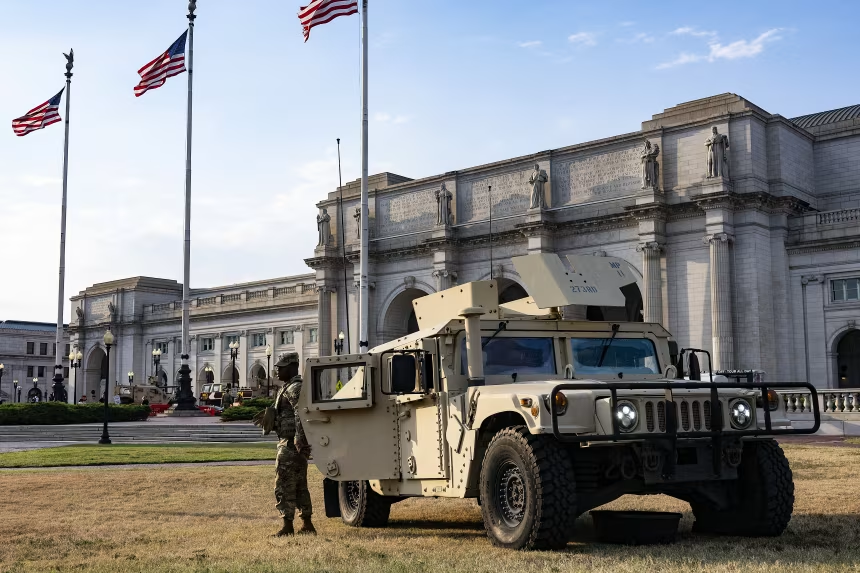
Five GOP-led states to send hundreds of National Guard troops to DC as White House escalates police takeover
Entities mentioned:
- Donald Trump: Power, Control, Security
- Patrick Morrisey: Duty, Loyalty, Security
- Henry McMaster: Loyalty, Duty, Security
- Mike DeWine: Duty, Security, Obligation
- Muriel Bowser: Self-preservation, Justice, Freedom
- Sean Curran: Duty, Security, Professional pride
- Robert White: Moral outrage, Justice, Freedom
- Alan Dent: Moral outrage, Justice, Freedom
- Pam Bondi: Power, Control, Loyalty
- Terry Cole: Duty, Power, Control
- Pamela Smith: Professional pride, Duty, Security
Article Assessment:
Credibility Score: 75/100
Bias Rating: 45/100 (Center)
Sentiment Score: 35/100
Authoritarianism Risk: 65/100 (Authoritarian Tendencies)
Bias Analysis:
The article presents multiple viewpoints, including those of the federal government, state governors, and local officials. While it includes criticism of the federal actions, it also provides the administration's justifications, maintaining a relatively balanced perspective.
Key metric: Political Stability Index
As a social scientist, I analyze that this article highlights a significant escalation in federal intervention in local law enforcement, particularly in Washington, DC. The deployment of National Guard troops from multiple states, coupled with the attempted federal takeover of the DC police force, suggests a dramatic shift in the balance of power between federal and local authorities. This move raises concerns about the erosion of local autonomy and the potential for increased authoritarianism. The justification of addressing crime rates, despite evidence of lower overall crime numbers, indicates a possible disconnect between the stated reasons and actual motivations for these actions. This situation could lead to increased tensions between federal and local governments, potentially impacting the overall political stability of the nation. The resistance from local officials and citizens, as well as legal challenges, demonstrates the complex interplay of federal power, states' rights, and local governance in the American system.
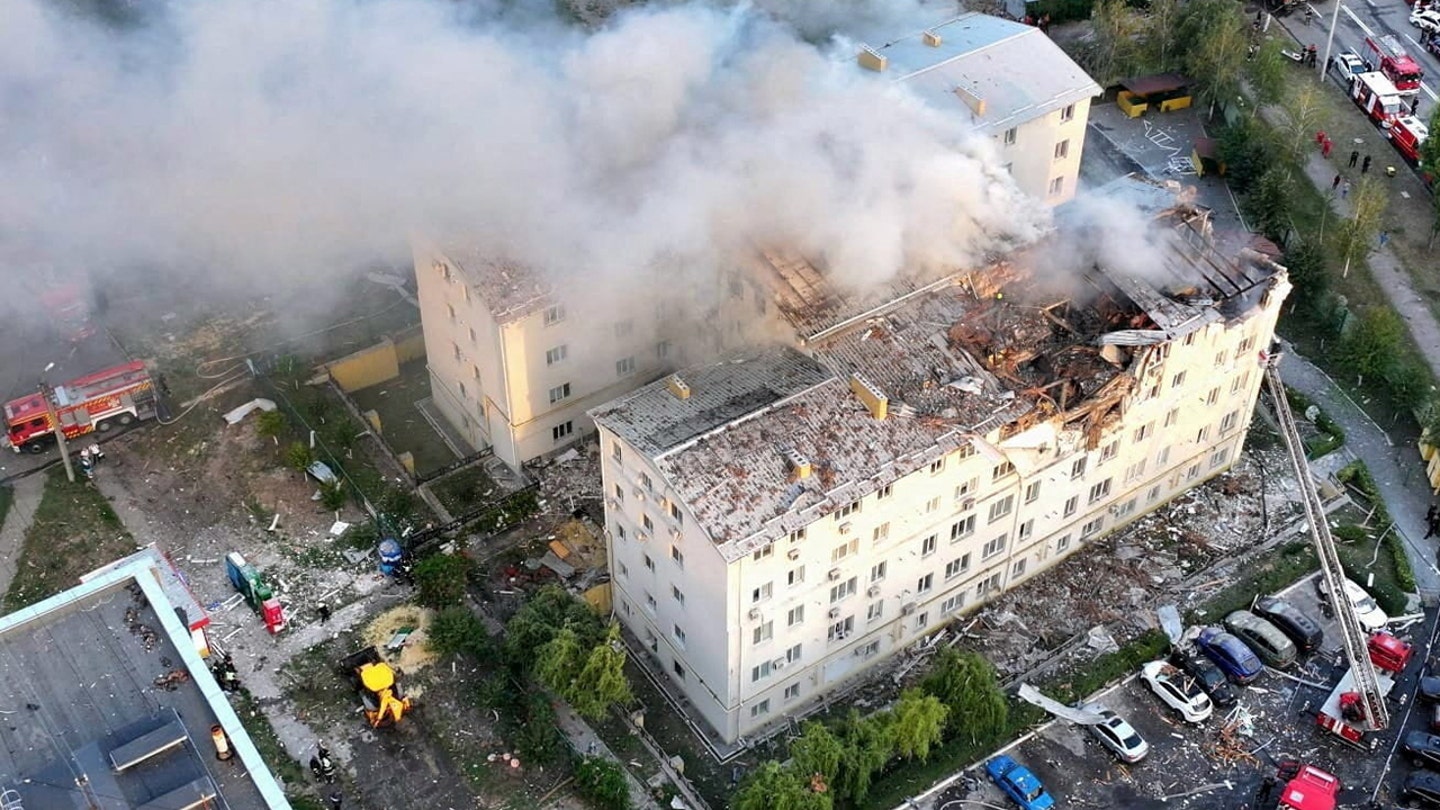
Russian drone strikes kill 7 in Kharkiv during Zelenskyy's White House meeting with Trump
Entities mentioned:
- Volodymyr Zelenskyy: Unity, Self-preservation, Determination
- Donald Trump: Power, Influence, Recognition
- Vladimir Putin: Power, Control, Influence
- Andriy Yermak: Moral outrage, Loyalty, Justice
- Ihor Terekhov: Duty, Moral outrage, Justice
Article Assessment:
Credibility Score: 75/100
Bias Rating: 45/100 (Center)
Sentiment Score: 25/100
Authoritarianism Risk: 30/100 (Generally Democratic)
Bias Analysis:
The article presents a relatively balanced view, incorporating perspectives from Ukrainian officials and mentioning Trump's meetings with both Zelenskyy and Putin. However, there is slightly more emphasis on Ukrainian suffering, which could be seen as leaning slightly left.
Key metric: International Conflict Resolution Index
As a social scientist, I analyze that this article highlights the ongoing conflict between Russia and Ukraine, and its impact on international diplomacy. The drone strikes in Kharkiv during Zelenskyy's visit to Washington demonstrate Putin's aggressive stance and unwillingness to de-escalate the conflict. This event underscores the challenges in achieving peace and the importance of international support for Ukraine. The timing of the attacks appears strategic, possibly aimed at undermining peace talks and maintaining Russia's position of power. The involvement of the US, particularly Trump's meetings with both Zelenskyy and Putin, indicates the complex geopolitical dynamics at play. The civilian casualties, especially children, emphasize the humanitarian cost of the conflict and may influence public opinion and international response. This situation likely negatively impacts the International Conflict Resolution Index by demonstrating the difficulties in achieving a ceasefire and the ongoing threat to civilian lives.