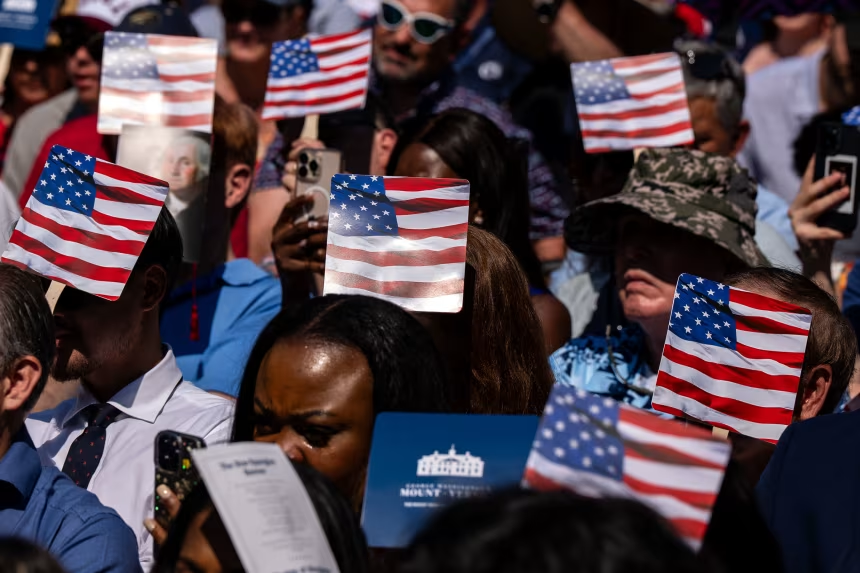
Trump administration expands ‘good moral character’ requirement to become naturalized citizen
Entities mentioned:
- Trump administration: Control, Security, Righteousness
- US Citizenship and Immigration Services: Duty, Control, Security
- Department of Homeland Security: Security, Control, Duty
- Matthew J. Tragesser: Professional pride, Duty, Righteousness
- Emily Ryo: Professional pride, Curiosity, Wariness
- Susan Ramos: Professional pride, Justice, Wariness
- Kathrin Mautino: Professional pride, Justice, Wariness
- US State Department: Security, Control, Duty
Article Assessment:
Credibility Score: 75/100
Bias Rating: 55/100 (Center)
Sentiment Score: 35/100
Authoritarianism Risk: 65/100 (Authoritarian Tendencies)
Bias Analysis:
The article presents multiple perspectives, including government officials and immigration lawyers, providing a relatively balanced view. However, there's a slight emphasis on critical viewpoints of the policy change, which nudges it slightly left of center.
Key metric: Immigration and Naturalization Rates
As a social scientist, I analyze that this policy change by the Trump administration significantly impacts the naturalization process for immigrants seeking US citizenship. The expanded 'good moral character' requirement introduces greater subjectivity and uncertainty into the assessment process. This may lead to decreased naturalization rates, as applicants face additional scrutiny and potential barriers. The policy shift reflects a more restrictive approach to immigration, emphasizing stringent vetting and ideological alignment with American values. This change could disproportionately affect certain immigrant groups and potentially reduce the diversity of new citizens. The long-term implications may include a slowdown in naturalization rates, changes in the demographic composition of new citizens, and increased administrative burden on the immigration system.
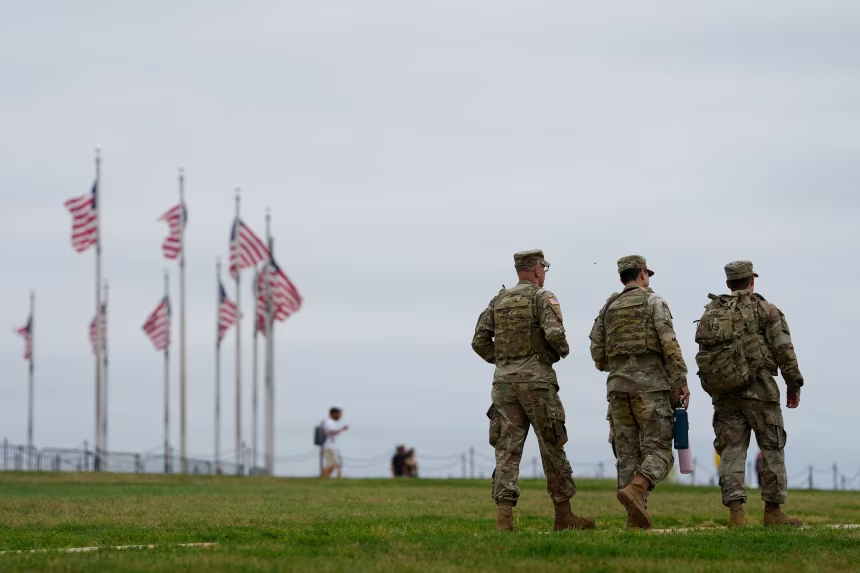
DC residents feel less safe after Trump takeover: poll
Entities mentioned:
- Donald Trump: Power, Control, Recognition
- Washington, DC residents: Security, Freedom, Self-preservation
- Muriel Bowser: Duty, Professional pride, Security
- DC Police Department: Duty, Security, Professional pride
- National Guard: Duty, Security, Obligation
- FBI: Duty, Security, Justice
Article Assessment:
Credibility Score: 75/100
Bias Rating: 40/100 (Lean Left)
Sentiment Score: 35/100
Authoritarianism Risk: 65/100 (Authoritarian Tendencies)
Bias Analysis:
The article leans slightly left, primarily due to its focus on DC residents' opposition to Trump's actions and the emphasis on alternative crime-reduction strategies. However, it does present some balancing information, such as including views from crime victims who are more supportive of Trump's actions.
Key metric: Public Trust in Government
As a social scientist, I analyze that this article reveals a significant disconnect between the federal government's actions and local residents' perceptions of safety and governance. The overwhelming opposition (79%) to Trump's takeover of DC police and deployment of federal forces indicates a severe erosion of public trust in the federal government's decision-making. This distrust is further evidenced by the fact that 61% of residents who noticed increased federal presence feel less safe. The stark contrast between Trump's narrative of improved safety and residents' actual feelings suggests a potential crisis in democratic representation and local autonomy. Furthermore, the residents' preference for economic and community-based solutions to crime, rather than increased law enforcement, points to a fundamental disagreement on approaches to public safety. This situation likely contributes to decreased public trust in government institutions and may lead to increased political polarization and social unrest.