Judge rejects Trump administration request to release Jeffrey Epstein grand jury documents
Entities mentioned:
- Judge Richard Berman: Justice, Duty, Professional pride
- Justice Department: Control, Influence, Obligation
- Jeffrey Epstein: Self-preservation, Power, Greed
- Trump administration: Control, Power, Self-preservation
- Attorney General Pam Bondi: Loyalty, Influence, Control
- Ghislaine Maxwell: Self-preservation, Loyalty, Fear
Article Assessment:
Credibility Score: 75/100
Bias Rating: 45/100 (Center)
Sentiment Score: 35/100
Authoritarianism Risk: 25/100 (Generally Democratic)
Bias Analysis:
The article presents a balanced view of the situation, including perspectives from multiple parties involved. While it mentions right-wing social media influencers, it also notes Democratic reactions, maintaining a relatively neutral stance.
Key metric: Government Transparency Index
As a social scientist, I analyze that this article highlights a significant tension between government transparency and judicial process. The repeated denial of requests to unseal grand jury documents related to the Epstein case by multiple federal judges underscores the importance of maintaining the integrity of the judicial system, even in high-profile cases. This situation challenges the Trump administration's promises of transparency, potentially eroding public trust. The judges' decisions to prioritize victim protection and adherence to legal precedent over public disclosure demonstrate the complex balance between transparency and privacy in sensitive legal matters. This case may have long-term implications for how high-profile investigations are handled and disclosed to the public, potentially influencing future government transparency policies and practices.
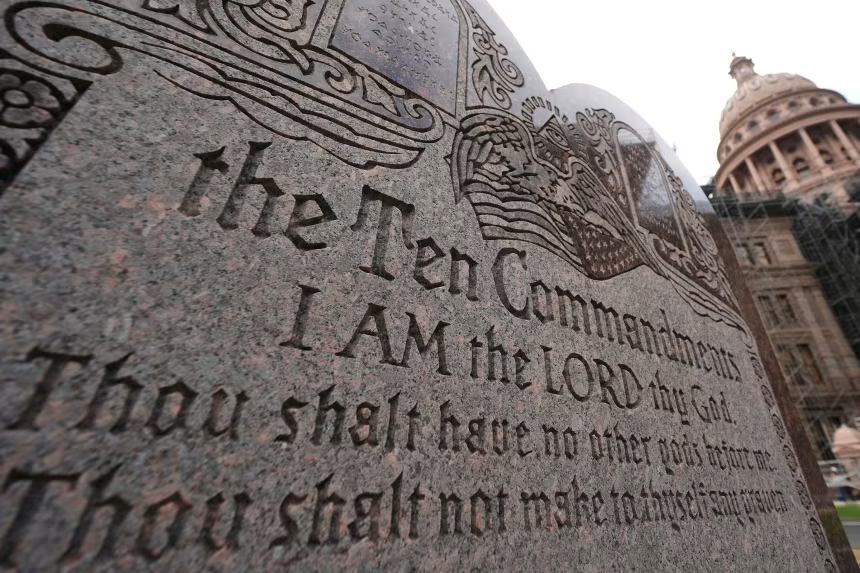
Judge rules that some Texas schools don’t have to display Ten Commandments in classrooms
Entities mentioned:
- Judge Fred Biery: Justice, Righteousness, Duty
- Texas school districts: Obligation, Wariness, Self-preservation
- Texas state legislature: Control, Righteousness, Influence
- Texas families (plaintiffs): Freedom, Justice, Self-respect
- Gov. Greg Abbott: Control, Righteousness, Influence
- Tommy Buser-Clancy (ACLU): Justice, Freedom, Duty
- Ken Paxton: Righteousness, Determination, Influence
Article Assessment:
Credibility Score: 75/100
Bias Rating: 45/100 (Center)
Sentiment Score: 55/100
Authoritarianism Risk: 25/100 (Generally Democratic)
Bias Analysis:
The article presents multiple perspectives, including the judge's ruling, plaintiffs' arguments, and the state's defense. While it gives more space to arguments against the law, it also includes the opposing view from the Texas Attorney General.
Key metric: First Amendment Protections
As a social scientist, I analyze that this ruling significantly impacts First Amendment protections in public schools. The judge's decision to block the enforcement of the Ten Commandments display law in several Texas school districts upholds the separation of church and state. This ruling sets a precedent that could influence similar cases in other states, potentially strengthening First Amendment protections nationwide. The decision reflects a tension between religious conservative efforts to introduce religious symbols in public spaces and the constitutional principle of religious neutrality in government institutions. The judge's detailed and occasionally humorous opinion suggests a strong stance against what he perceives as unconstitutional religious influence in public education, which could have far-reaching implications for similar legislative efforts in other states.