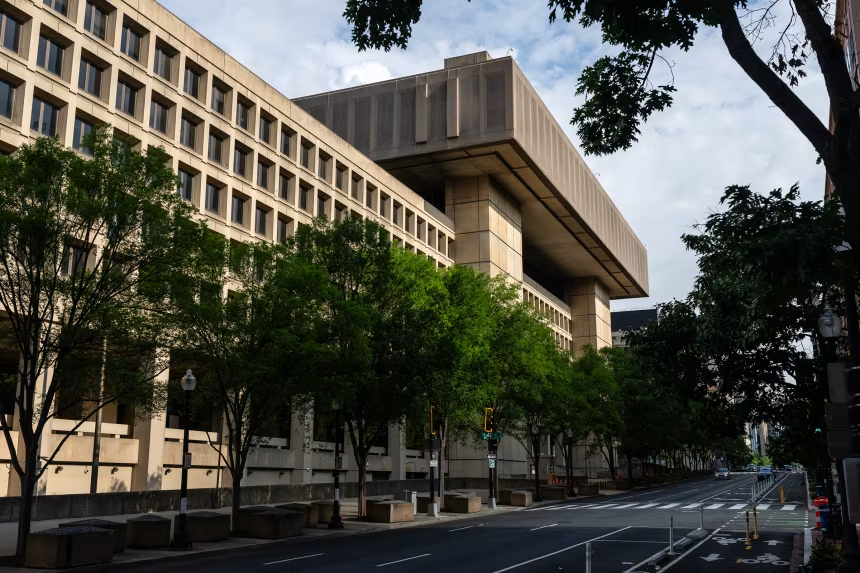
FBI firing senior officials at odds with Trump administration
Entities mentioned:
- FBI: Duty, Professional pride, Justice
- Trump administration: Control, Power, Revenge
- Brian Driscoll: Duty, Loyalty, Professional pride
- Steve Jensen: Duty, Professionalism, Loyalty
- Kash Patel: Power, Loyalty, Control
- Emil Bove: Control, Power, Loyalty
- Dan Bongino: Loyalty, Ambition, Power
- FBI Agents Association: Justice, Duty, Professional pride
- Jeanine Pirro: Loyalty, Duty, Professionalism
Article Assessment:
Credibility Score: 75/100
Bias Rating: 45/100 (Center)
Sentiment Score: 30/100
Authoritarianism Risk: 70/100 (Authoritarian Tendencies)
Bias Analysis:
The article presents multiple perspectives, including those of the administration and concerned FBI officials. While it leans slightly towards portraying the firings negatively, it maintains a relatively balanced tone by including administration viewpoints.
Key metric: Rule of Law Index
As a social scientist, I analyze that this article portrays a significant disruption in the leadership and operations of the FBI, a key law enforcement agency in the United States. The mass firings of senior officials, particularly those who were perceived to be opposed to the Trump administration or involved in investigations related to January 6th, suggest a politicization of law enforcement. This could potentially undermine the FBI's independence and ability to conduct impartial investigations. The demand for names of agents involved in January 6th cases and subsequent personnel actions indicate a possible attempt to influence or obstruct ongoing investigations. These actions could significantly impact the Rule of Law Index, as they suggest a weakening of checks and balances and potential executive overreach into law enforcement matters. The resistance from within the FBI and the FBI Agents Association's concerns highlight the tension between political influence and the professional integrity of law enforcement institutions. This situation could lead to a decrease in public trust in law enforcement and the overall justice system, potentially lowering the U.S. score on the Rule of Law Index.

Indiana’s Republican leaders won’t commit to redistricting after Vance visit
Entities mentioned:
- JD Vance: Power, Influence, Ambition
- Mike Braun: Wariness, Self-preservation, Loyalty
- Donald Trump: Power, Control, Ambition
- Todd Huston: Wariness, Self-preservation, Duty
- Rodric Bray: Wariness, Self-preservation, Duty
- Mitch Daniels: Righteousness, Legacy, Influence
- Frank Mrvan: Self-preservation, Determination, Duty
- André Carson: Self-preservation, Duty, Justice
- Matt Pierce: Justice, Moral outrage, Duty
Article Assessment:
Credibility Score: 75/100
Bias Rating: 45/100 (Center)
Sentiment Score: 35/100
Authoritarianism Risk: 65/100 (Authoritarian Tendencies)
Bias Analysis:
The article presents multiple viewpoints, including those of Republicans and Democrats. While it highlights the controversial nature of the redistricting effort, it maintains a relatively balanced tone, providing context and background information.
Key metric: Electoral Integrity
As a social scientist, I analyze that this article highlights a critical juncture in American democratic processes, specifically focusing on redistricting efforts in Indiana. The push for mid-cycle redistricting by the Trump administration threatens to undermine electoral integrity and further polarize the political landscape. This move, if successful, could significantly alter the balance of power in the U.S. House of Representatives, potentially swinging two Democratic seats to Republican control. The resistance from some Indiana Republican leaders, including former Governor Mitch Daniels, suggests a conflict between party loyalty and maintaining democratic norms. This situation exemplifies the broader national trend of intensifying partisan gerrymandering, which risks eroding public trust in electoral processes and representative democracy. The potential special session for redistricting also raises questions about the use of public resources for partisan gain. The Democrats' limited power to oppose such moves in Indiana further underscores the importance of checks and balances in maintaining democratic integrity.