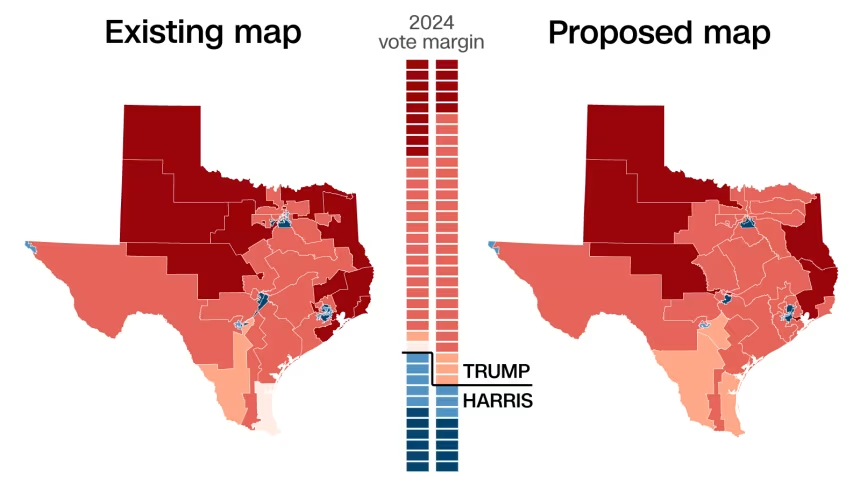
How Texas Republicans want to dismantle Democratic districts
Entities mentioned:
- Texas Republicans: Power, Control, Competitive spirit
- Texas Democrats: Self-preservation, Justice, Influence
- Donald Trump: Power, Influence, Legacy
- Rep. Al Green: Self-preservation, Duty, Influence
- Rep. Julie Johnson: Self-preservation, Duty, Influence
- Rep. Marc Veasey: Self-preservation, Duty, Influence
- Rep. Greg Casar: Self-preservation, Duty, Influence
- Rep. Lloyd Doggett: Self-preservation, Duty, Influence
- Rep. Henry Cuellar: Self-preservation, Duty, Influence
- Rep. Vicente Gonzalez: Self-preservation, Duty, Influence
- Greg Abbott: Power, Control, Influence
Article Assessment:
Credibility Score: 75/100
Bias Rating: 55/100 (Center)
Sentiment Score: 40/100
Authoritarianism Risk: 65/100 (Authoritarian Tendencies)
Bias Analysis:
The article presents a detailed, factual account of the redistricting plan, including specific district changes. While it focuses more on the Republican strategy, it does provide context on Democratic incumbents and potential impacts, maintaining a relatively balanced perspective.
Key metric: Electoral Competitiveness
As a social scientist, I analyze that the proposed redistricting plan in Texas significantly impacts electoral competitiveness. The Republicans' strategy of efficiently distributing GOP voters and targeting Democratic-held districts aims to solidify their control over the state's congressional representation. This approach could lead to a less competitive electoral landscape, potentially reducing the responsiveness of elected officials to constituents and increasing political polarization. The plan's focus on creating safe Republican districts, even in areas that were previously competitive, may result in a mismatch between overall state voting patterns and congressional representation. This redistricting effort demonstrates the ongoing tension between partisan interests and democratic principles of fair representation, highlighting the critical role of redistricting in shaping political outcomes and the balance of power.
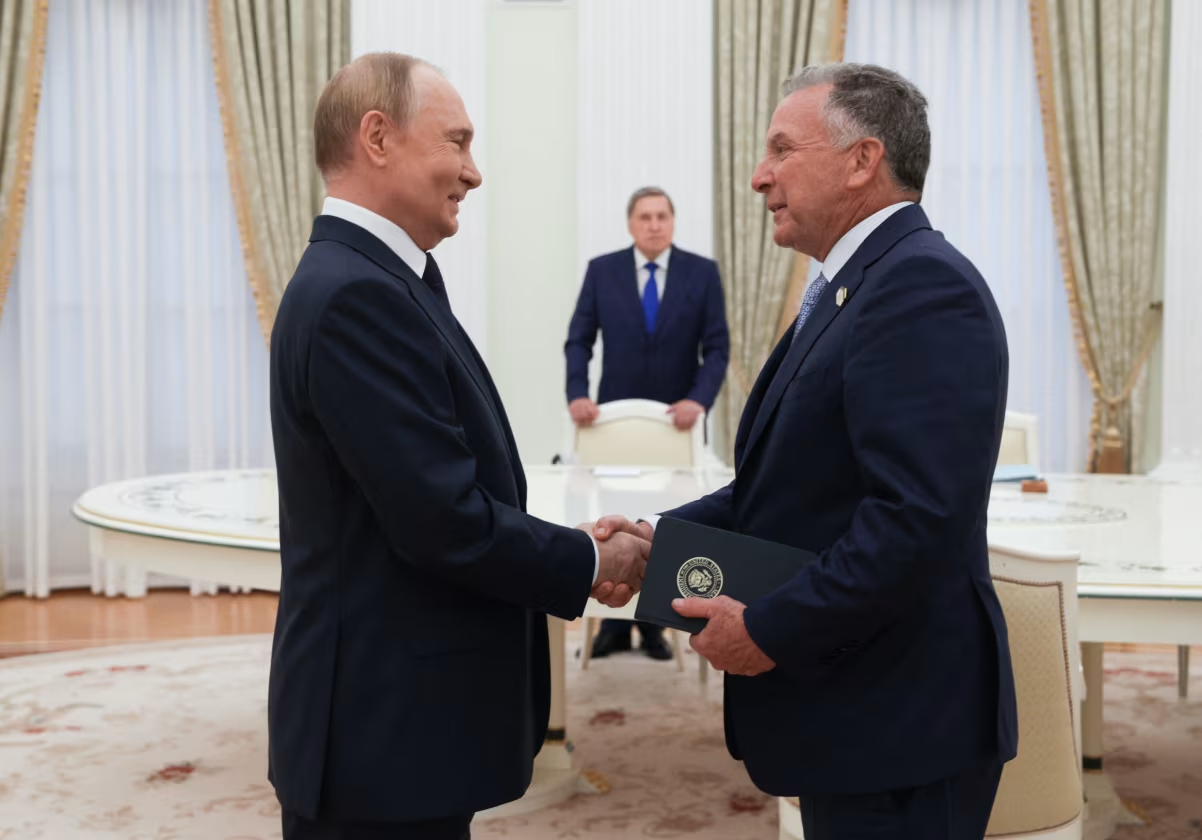
Witkoff meets with Putin as Trump’s sanctions threat looms
Entities mentioned:
- Donald Trump: Power, Control, Determination
- Steve Witkoff: Duty, Influence, Ambition
- Vladimir Putin: Power, Control, Self-preservation
- Volodymyr Zelensky: Self-preservation, Determination, Unity
- Kirill Dmitriev: Duty, Loyalty, Influence
- Dmitry Medvedev: Loyalty, Influence, Power
- Marco Rubio: Professional pride, Influence, Duty
- Scott Bessent: Duty, Influence, Professional pride
- Xi Jinping: Power, Influence, Unity
- Keith Kellogg: Duty, Influence, Professional pride
Article Assessment:
Credibility Score: 75/100
Bias Rating: 45/100 (Center)
Sentiment Score: 35/100
Authoritarianism Risk: 25/100 (Generally Democratic)
Bias Analysis:
The article presents multiple perspectives and cites various sources, including state media and unnamed officials. While it leans slightly towards a US-centric view, it attempts to provide balanced coverage of the complex situation.
Key metric: International Relations Score
As a social scientist, I analyze that this article highlights the complex dynamics of international relations, particularly between the US and Russia. The potential for new sanctions against Russia and the diplomatic efforts to avoid them demonstrate the delicate balance of power and negotiation in global politics. Trump's approach, combining threats of sanctions with diplomatic outreach, reflects a strategy of creating leverage. The involvement of other countries like China and India in Russian energy purchases adds layers of complexity to the situation. This diplomatic dance has significant implications for global stability, economic relations, and the ongoing conflict in Ukraine.