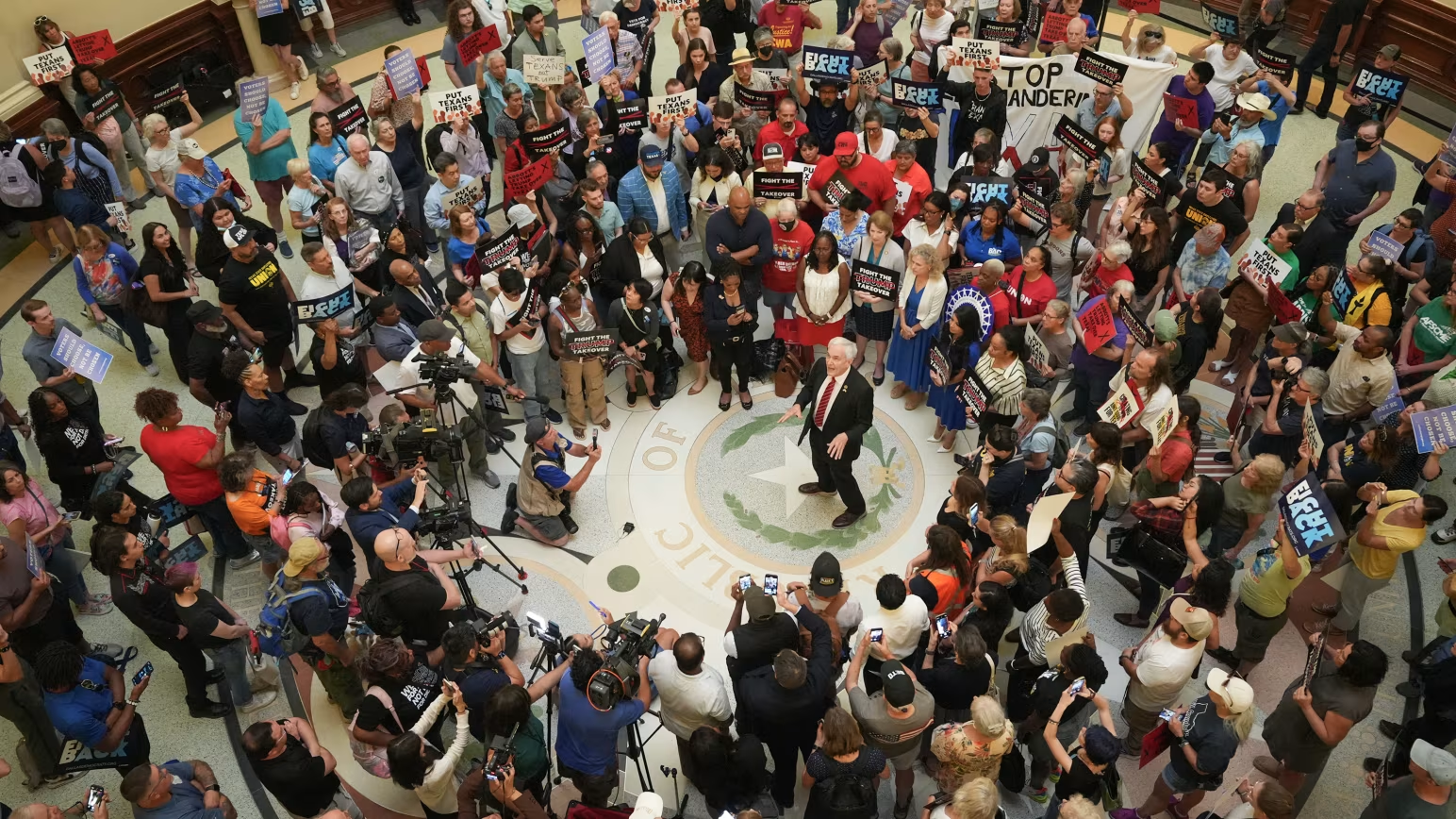
Why Trump’s Texas battle over the House could end up affecting every American
Entities mentioned:
- Donald Trump: Power, Control, Ambition
- Democratic Party: Competitive spirit, Self-preservation, Justice
- Republican Party: Power, Control, Competitive spirit
- Texas State Lawmakers (Democratic): Righteousness, Determination, Resistance
- Kathy Hochul: Competitive spirit, Determination, Power
- Gavin Newsom: Ambition, Competitive spirit, Justice
- Greg Abbott: Loyalty, Power, Control
- Mike Johnson: Power, Loyalty, Control
Article Assessment:
Credibility Score: 65/100
Bias Rating: 35/100 (Lean Left)
Sentiment Score: 30/100
Authoritarianism Risk: 55/100 (Mixed/Neutral)
Bias Analysis:
The article leans slightly left, focusing more on Democratic perspectives and strategies. While it mentions Republican actions, it frames them more negatively and gives more space to Democratic justifications.
Key metric: Electoral Integrity
As a social scientist, I analyze that this article highlights a significant escalation in the ongoing battle over redistricting and its impact on electoral integrity in the United States. The Democrats' shift towards more aggressive tactics in response to Republican gerrymandering efforts in Texas represents a potential turning point in how both parties approach electoral map-drawing. This development could have far-reaching consequences for the balance of power in the House of Representatives and the overall health of American democracy. The article suggests that Democrats are abandoning previous commitments to nonpartisan redistricting commissions in favor of a more combative approach, mirroring Republican tactics. This shift indicates a growing concern among Democrats about losing ground in the electoral landscape and a willingness to engage in similar practices they have previously criticized. The potential for a 'race to the bottom' in gerrymandering could further erode public trust in the electoral system and exacerbate political polarization. The focus on Texas as a battleground for this issue underscores the state's importance in national politics and its role as a bellwether for broader trends in electoral strategy.
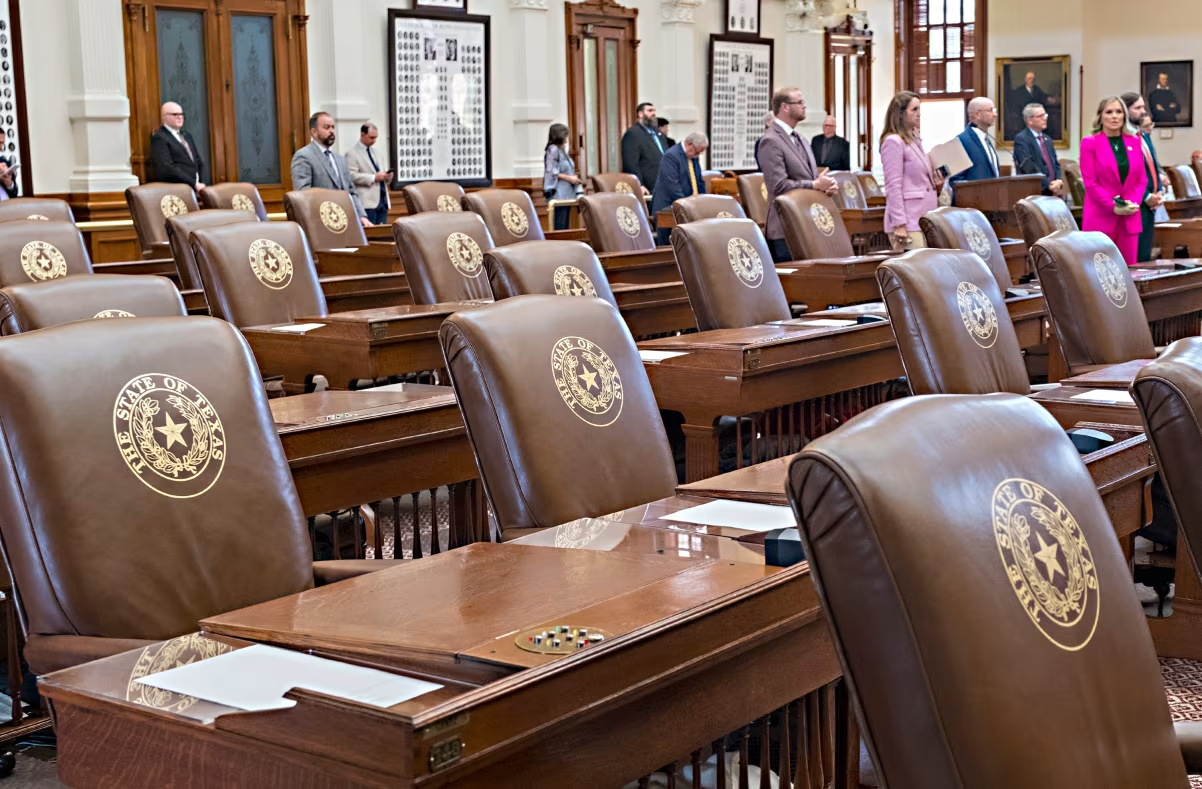
What is gerrymandering? Why is it legal?
Entities mentioned:
- Republicans: Power, Control, Self-preservation
- Democrats: Power, Justice, Competitive spirit
- Supreme Court: Influence, Legacy, Control
- Texas Legislature: Power, Control, Loyalty
- President Trump: Power, Control, Self-preservation
- Gov. Greg Abbott: Loyalty, Power, Control
Article Assessment:
Credibility Score: 75/100
Bias Rating: 45/100 (Center)
Sentiment Score: 35/100
Authoritarianism Risk: 65/100 (Authoritarian Tendencies)
Bias Analysis:
The article presents a balanced view of the redistricting issue, discussing actions and motivations of both Republicans and Democrats. While it critiques Republican efforts more heavily, it also acknowledges Democratic gerrymandering and provides context for the historical and legal aspects of the issue.
Key metric: Electoral Competitiveness
As a social scientist, I analyze that this article highlights the ongoing battle over redistricting and its impact on electoral competitiveness in the United States. The practice of gerrymandering, while historically used by both major parties, is currently being leveraged more aggressively by Republicans, particularly in Texas. This mid-decade redistricting effort, prompted by the Trump administration, could significantly alter the balance of power in the House of Representatives. The article underscores how recent Supreme Court decisions have emboldened partisan gerrymandering efforts, potentially leading to a redistricting war across multiple states. This situation poses a substantial threat to fair representation and the principle of voters choosing their representatives rather than the reverse. The analysis also points out the limitations faced by Democrats in counteracting these efforts due to their own commitments to nonpartisan redistricting processes in some states they control. Overall, this development could lead to a decrease in electoral competitiveness, with more safe seats for the party controlling the redistricting process, potentially undermining the responsiveness of the electoral system to shifts in public opinion.
- Read more about What is gerrymandering? Why is it legal?
- Log in to post comments