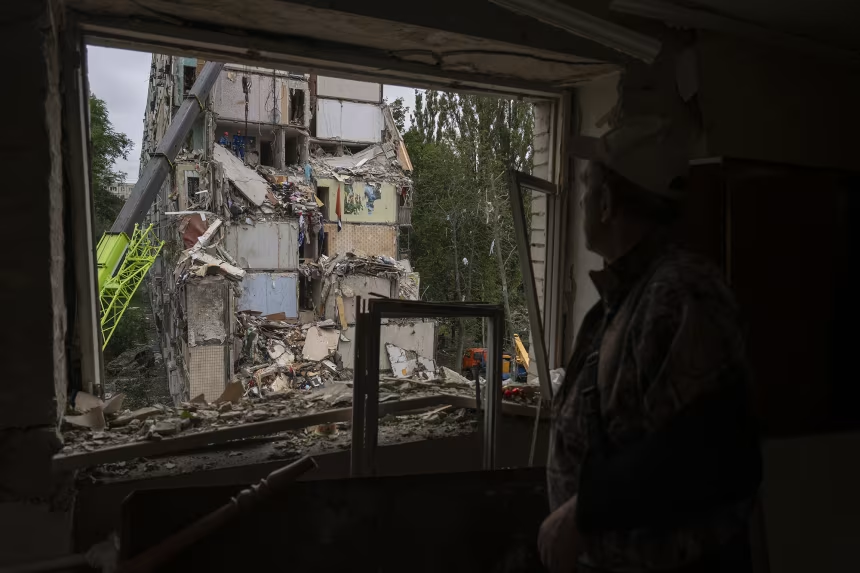
What polls show ahead of Friday’s Trump-Putin meeting
Entities mentioned:
- Donald Trump: Power, Influence, Legacy
- Vladimir Putin: Power, Control, Influence
- Americans: Security, Justice, Freedom
- Republicans: Loyalty, Security, Wariness
Article Assessment:
Credibility Score: 75/100
Bias Rating: 45/100 (Center)
Sentiment Score: 35/100
Authoritarianism Risk: 25/100 (Generally Democratic)
Bias Analysis:
The article presents data from multiple reputable polling sources and offers balanced commentary. While it focuses more on Republican shifts, it also provides overall American sentiment, maintaining a relatively centrist perspective.
Key metric: US Foreign Policy Effectiveness
As a social scientist, I analyze that this article highlights a significant shift in American public opinion, particularly among Republicans, regarding the Ukraine-Russia conflict. The data from multiple polls suggests an increasing hawkish stance towards Russia and greater support for Ukraine. This shift poses challenges for Trump's historically softer approach to Putin, potentially impacting US foreign policy effectiveness. The article indicates that Trump's recent criticism of Putin has somewhat aligned him with the changing Republican sentiment, but there remains skepticism about his ability to effectively manage the relationship with Russia. This evolving public opinion could pressure the administration to adopt a firmer stance against Russia, potentially influencing diplomatic strategies and international alliances.

US military deploying over 4,000 additional troops to waters around Latin America as part of Trump’s counter-cartel mission
Entities mentioned:
- US Military: Duty, Security, Control
- Trump Administration: Power, Security, Control
- Drug Cartels: Greed, Power, Self-preservation
- US Southern Command: Duty, Security, Control
- Pete Hegseth: Duty, Security, Righteousness
Article Assessment:
Credibility Score: 75/100
Bias Rating: 55/100 (Center)
Sentiment Score: 40/100
Authoritarianism Risk: 65/100 (Authoritarian Tendencies)
Bias Analysis:
The article presents a fairly balanced view, citing multiple sources and providing context. However, there's a slight lean towards emphasizing military action, with limited discussion of alternative approaches or potential drawbacks.
Key metric: National Security Index
As a social scientist, I analyze that this military deployment represents a significant escalation in the US approach to combating drug cartels in Latin America and the Caribbean. The scale of the deployment, including over 4,000 troops, naval vessels, and air assets, indicates a shift towards a more militarized strategy in addressing drug trafficking. This move could potentially impact regional dynamics, international relations, and domestic perceptions of border security. The emphasis on 'sealing borders' and repelling 'forms of invasion' suggests a conflation of drug trafficking with immigration issues, which could have broader sociopolitical implications. The inclusion of options for ensuring access to the Panama Canal also hints at wider strategic considerations beyond drug interdiction.