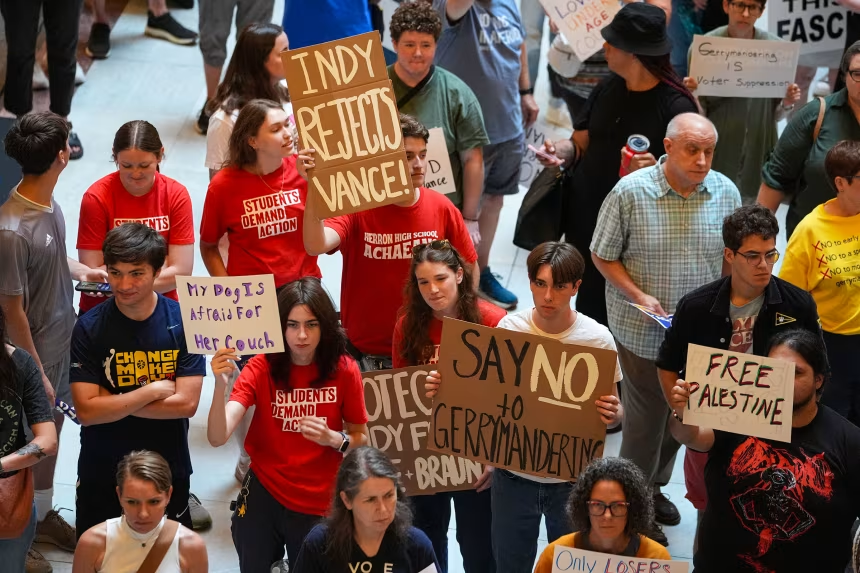
Republicans are going outside of Texas to try to redraw more US House seats
Entities mentioned:
- National Republicans: Power, Control, Competitive spirit
- Donald Trump: Power, Influence, Revenge
- JD Vance: Influence, Loyalty, Ambition
- GOP state lawmakers: Self-preservation, Wariness, Loyalty
- Democrats: Self-preservation, Justice, Competitive spirit
- Mike Braun: Wariness, Self-preservation, Loyalty
- Ralph Norman: Ambition, Competitive spirit, Power
- Nancy Mace: Self-preservation, Wariness, Professional pride
- Jim Clyburn: Self-preservation, Justice, Loyalty
- Mike Kehoe: Loyalty, Power, Competitive spirit
- Emanuel Cleaver: Self-preservation, Justice, Determination
- Daniel Perez: Power, Influence, Loyalty
- Ron DeSantis: Power, Ambition, Control
Article Assessment:
Credibility Score: 75/100
Bias Rating: 45/100 (Center)
Sentiment Score: 45/100
Authoritarianism Risk: 65/100 (Authoritarian Tendencies)
Bias Analysis:
The article presents a relatively balanced view, including perspectives from both Republicans and Democrats. While it focuses more on Republican strategies, it also mentions potential drawbacks and opposition, indicating an attempt at neutrality.
Key metric: Congressional Seat Distribution
As a social scientist, I analyze that this article highlights a concerted effort by Republican leadership to redraw congressional districts in multiple states to gain more GOP-friendly seats ahead of the 2026 midterm elections. This strategy, seemingly driven by Trump and his allies, aims to consolidate Republican power in the House of Representatives. The approach faces several challenges, including potential legal issues, resistance from some GOP state lawmakers, and the risk of spreading Republican votes too thin. The article showcases the tension between national party goals and local political realities, as well as the ongoing debate over the fairness and legality of redistricting practices. This redistricting push could significantly impact the balance of power in Congress and potentially alter the representation of minority communities, raising important questions about democratic representation and the long-term implications of partisan gerrymandering.
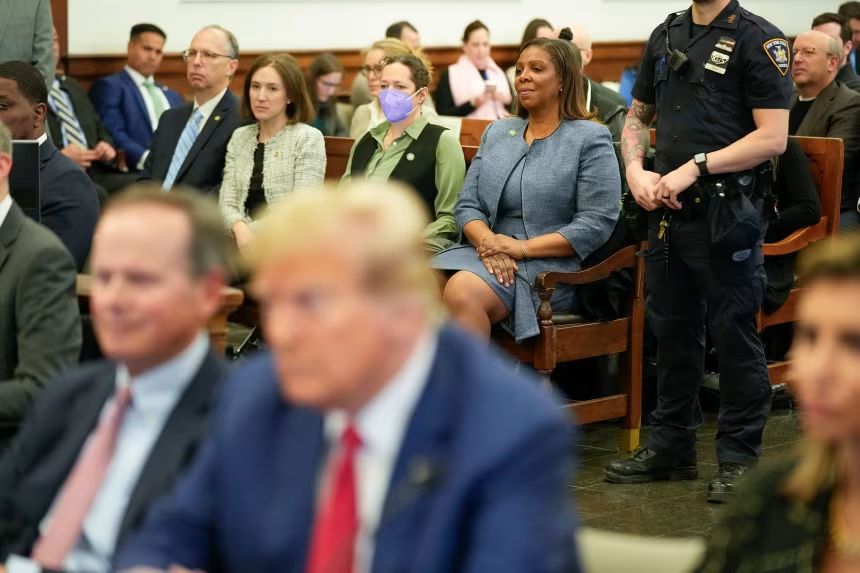
Justice Department opens investigation into New York attorney general who won civil fraud case against Trump
Entities mentioned:
- Justice Department: Power, Control, Justice
- Letitia James: Justice, Determination, Professional pride
- Donald Trump: Revenge, Self-preservation, Power
- Abbe Lowell: Loyalty, Righteousness, Indignation
- Trump Organization: Self-preservation, Greed, Power
- National Rifle Association: Self-preservation, Influence, Power
- Alina Habba: Loyalty, Ambition, Professional pride
- Wayne LaPierre: Greed, Power, Self-preservation
Article Assessment:
Credibility Score: 70/100
Bias Rating: 40/100 (Lean Left)
Sentiment Score: 30/100
Authoritarianism Risk: 65/100 (Authoritarian Tendencies)
Bias Analysis:
The article leans slightly left, presenting the investigation as potentially politically motivated. While it includes multiple perspectives, the framing and source selection appear more sympathetic to James' position.
Key metric: Rule of Law Index
As a social scientist, I analyze that this article highlights a concerning trend of potential political retaliation within the US justice system. The investigation into Letitia James, who successfully prosecuted a civil fraud case against Trump, raises questions about the separation of powers and the independence of the judiciary. This action could significantly impact the Rule of Law Index, as it suggests a possible abuse of executive power to target political opponents. The timing and nature of the investigation, coupled with similar probes into other Trump critics, indicate a pattern that could erode public trust in governmental institutions and the fair application of justice. This situation may lead to a decrease in the US Rule of Law Index score, particularly in factors related to constraints on government powers and absence of corruption.