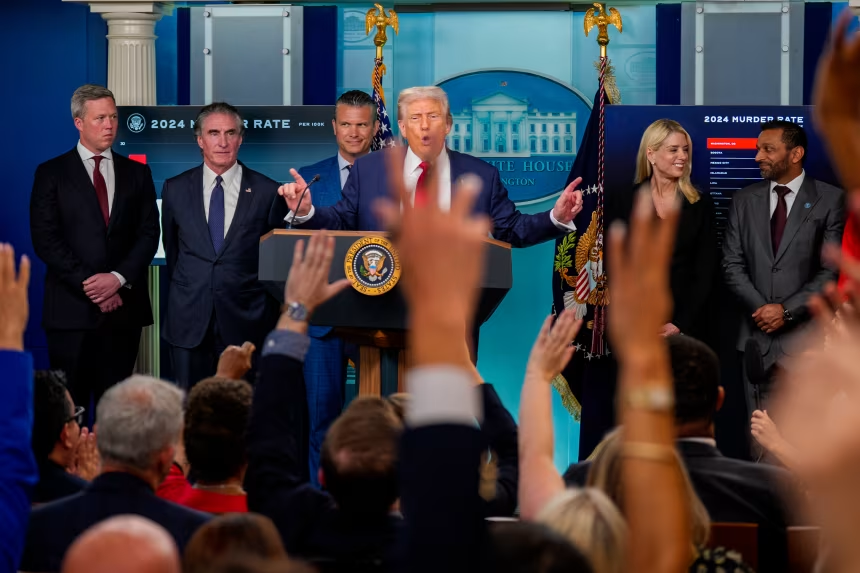
Trump declared federal control of DC police and is deploying the National Guard. Here’s how he is able to do it
Entities mentioned:
- Donald Trump: Power, Control, Influence
- DC National Guard: Duty, Security, Obligation
- Washington DC Police Department: Security, Duty, Professional pride
- US Congress: Control, Obligation, Oversight
- Muriel Bowser: Self-preservation, Wariness, Indignation
- Greggory Pemberton: Security, Professional pride, Duty
- Federal Bureau of Investigation (FBI): Security, Duty, Control
Article Assessment:
Credibility Score: 75/100
Bias Rating: 55/100 (Center)
Sentiment Score: 35/100
Authoritarianism Risk: 70/100 (Authoritarian Tendencies)
Bias Analysis:
The article presents multiple viewpoints and includes factual crime statistics that contradict the president's claims. However, it gives more space to concerns about the president's actions than to supporters, slightly leaning towards a skeptical stance.
Key metric: Federal-Local Government Relations
As a social scientist, I analyze that this unprecedented move by President Trump to assume direct federal control over Washington DC's police department significantly impacts federal-local government relations. This action tests the limits of presidential power and challenges the autonomy of local governance in the nation's capital. The use of emergency powers granted by the Home Rule Act raises questions about the balance between federal oversight and local self-governance. This move could set a precedent for increased federal intervention in local affairs, potentially altering the dynamics of federalism in the United States. The deployment of the National Guard and involvement of federal agencies in local law enforcement further blurs the lines between federal and local authority, which may have long-term implications for governance structures and civil liberties.
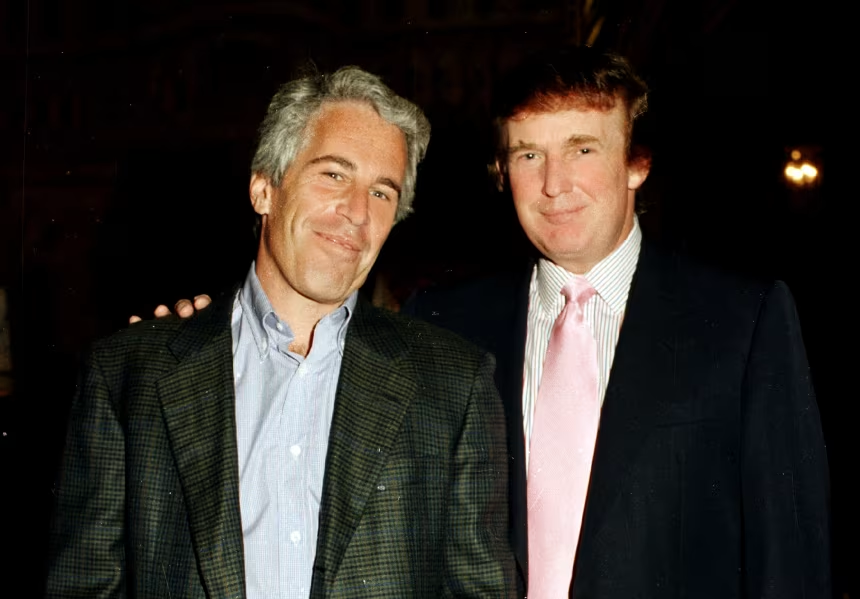
A judge’s brutal rebuke of Trump’s Epstein gambit
Entities mentioned:
- Trump administration: Control, Self-preservation, Influence
- Judge Paul Engelmayer: Justice, Duty, Righteousness
- Jeffrey Epstein: Power, Control, Self-preservation
- Ghislaine Maxwell: Self-preservation, Loyalty, Fear
- Donald Trump: Power, Self-preservation, Control
- Department of Justice: Control, Duty, Self-preservation
- Epstein's victims: Justice, Moral outrage, Indignation
Article Assessment:
Credibility Score: 75/100
Bias Rating: 40/100 (Lean Left)
Sentiment Score: 30/100
Authoritarianism Risk: 65/100 (Authoritarian Tendencies)
Bias Analysis:
The article leans slightly left, evidenced by its critical tone towards the Trump administration. While it presents factual information, the framing and language choices suggest skepticism of the administration's motives.
Key metric: Government Transparency and Accountability
As a social scientist, I analyze that this article highlights a significant issue in government transparency and accountability. The Trump administration's actions regarding the Epstein files appear to be a calculated attempt to create an illusion of transparency while actually withholding meaningful information. This behavior undermines public trust in government institutions and the justice system. The judge's rebuke exposes the administration's strategy as potentially deceptive, which could further erode confidence in the government's handling of high-profile cases. This situation also demonstrates the crucial role of the judiciary in maintaining checks and balances, as Judge Engelmayer's ruling serves as a counterweight to executive branch actions. The administration's reluctance to provide substantive information about the Epstein case, despite public interest and pressure, suggests a conflict between political self-interest and the public's right to information. This case may have long-lasting implications for how government transparency is perceived and demanded by the public, potentially leading to calls for stricter disclosure requirements and oversight mechanisms.