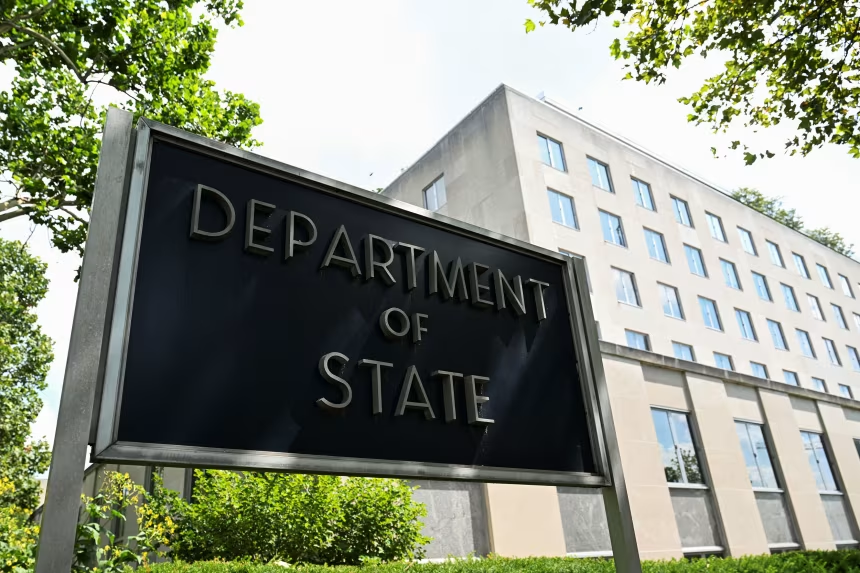
State Department human rights report scaled back, omits details on abuses in politically allied countries
Entities mentioned:
- US State Department: Control, Influence, Duty
- Trump administration: Power, Control, Influence
- Marco Rubio: Loyalty, Power, Influence
- Michael Honigstein: Professional pride, Duty, Righteousness
- Tammy Bruce: Loyalty, Duty, Control
- El Salvador government: Power, Control, Self-preservation
- Israeli government: Self-preservation, Power, Control
- Hamas: Power, Control, Revenge
- Russian government: Power, Control, Influence
- Chinese government: Power, Control, Unity
Article Assessment:
Credibility Score: 65/100
Bias Rating: 55/100 (Center)
Sentiment Score: 30/100
Authoritarianism Risk: 55/100 (Mixed/Neutral)
Bias Analysis:
The article presents multiple perspectives and cites specific examples of changes in the report. However, it leans slightly critical of the administration's approach, which may reflect a slight center-left bias in framing.
Key metric: Global Democracy Index
As a social scientist, I analyze that the significant reduction in detail and criticism within the State Department's human rights report suggests a shift in US foreign policy priorities. This change appears to downplay human rights concerns in countries politically aligned with the current administration, potentially impacting the Global Democracy Index. The omission of specific sections on issues like LGBTQ+ rights, women's rights, and racial violence indicates a narrowing focus on human rights reporting. This could lead to decreased international pressure on human rights violators and potentially embolden authoritarian regimes. The report's streamlining may reduce its effectiveness as a tool for human rights advocacy and diplomatic leverage, potentially weakening the US's role in promoting global democracy and human rights standards.
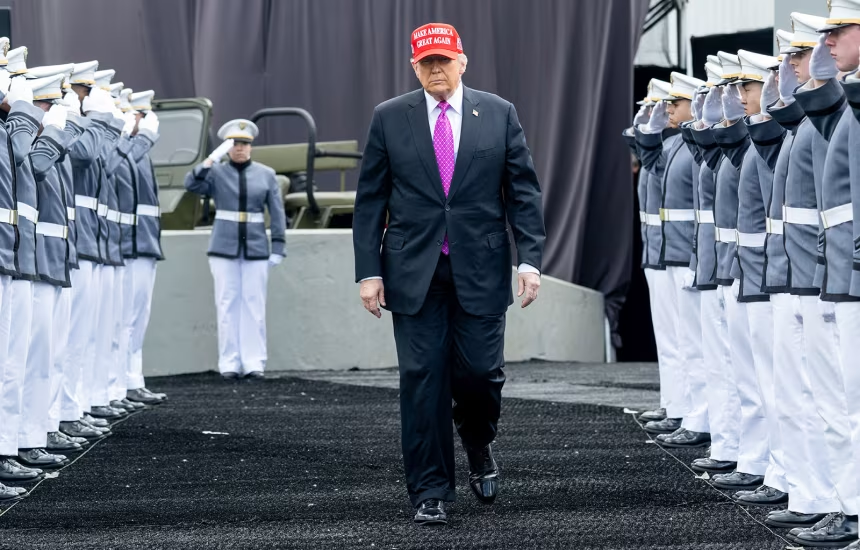
Anti-affirmative action group drops lawsuits against West Point and Air Force Academy after policy changes
Entities mentioned:
- Students for Fair Admissions (SFFA): Justice, Righteousness, Competitive spirit
- Donald Trump: Power, Control, Influence
- West Point: Duty, Professional pride, Obligation
- Air Force Academy: Duty, Professional pride, Obligation
- Pam Bondi: Righteousness, Influence, Control
- Edward Blum: Justice, Righteousness, Determination
- Supreme Court: Justice, Duty, Influence
- Biden administration: Unity, Influence, Duty
- Elizabeth Prelogar: Duty, Professional pride, Security
Article Assessment:
Credibility Score: 75/100
Bias Rating: 55/100 (Center)
Sentiment Score: 45/100
Authoritarianism Risk: 35/100 (Generally Democratic)
Bias Analysis:
The article presents multiple perspectives on the issue, including views from both sides of the affirmative action debate. While it gives slightly more space to the anti-affirmative action stance, it also includes counterarguments, maintaining a relatively balanced approach.
Key metric: Military Readiness and Diversity
As a social scientist, I analyze that this article highlights a significant shift in military academy admissions policies, moving away from considering race as a factor. This change, driven by the Trump administration and supported by anti-affirmative action groups, could potentially impact the diversity of the officer corps in the U.S. military. The dropping of lawsuits by Students for Fair Admissions (SFFA) suggests a victory for those opposing race-conscious admissions policies. However, this shift raises concerns about the military's ability to maintain a diverse officer corps that reflects the enlisted ranks and the broader population. The article presents competing viewpoints on the importance of diversity in military leadership, with the Biden administration previously arguing for its critical role in national security. This policy change may have long-term implications for military cohesion, leadership representation, and overall effectiveness, potentially affecting the key metric of Military Readiness and Diversity.