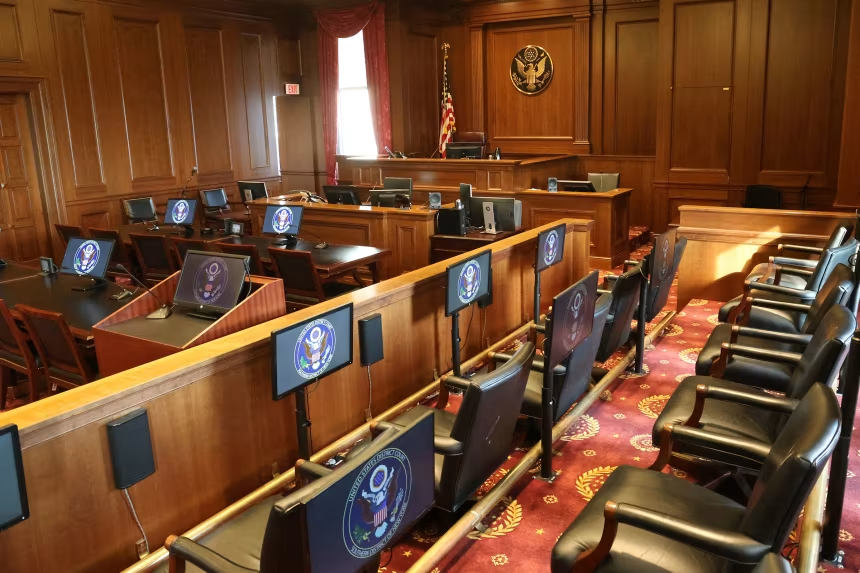
Federal courts go old school to paper filings after hack to key system
Entities mentioned:
- Federal Courts: Security, Duty, Professional pride
- Stanley Bastian: Security, Duty, Professional pride
- Cecilia Altonaga: Security, Duty, Professional pride
- Mark Davis: Security, Duty, Professional pride
- George Russell III: Security, Duty, Professional pride
- Administrative Office of the US Courts: Security, Duty, Professional pride
- Kremlin: Power, Control, Influence
- President Donald Trump: Pride, Competitive spirit, Power
Article Assessment:
Credibility Score: 75/100
Bias Rating: 45/100 (Center)
Sentiment Score: 35/100
Authoritarianism Risk: 25/100 (Generally Democratic)
Bias Analysis:
The article presents a balanced view of the situation, quoting multiple sources and providing context. It includes a brief mention of Trump's response without overtly favoring any political stance.
Key metric: National Cybersecurity Preparedness
As a social scientist, I analyze that this article highlights a significant vulnerability in the U.S. federal court system's cybersecurity infrastructure. The shift to paper-based filings for sensitive documents across multiple federal districts indicates a serious breach that potentially compromises national security and the integrity of the judicial system. This reactive measure, while necessary, exposes the outdated nature of the court's digital systems and the urgent need for modernization. The alleged involvement of a foreign government (possibly Russia) in the cyber attack further emphasizes the geopolitical implications of this security lapse. The varied responses from different district courts also reveal a lack of standardized cybersecurity protocols across the federal judiciary, which could lead to inconsistencies in information protection. This incident may erode public trust in the government's ability to safeguard sensitive information and potentially impact the efficiency of court proceedings.

20 officers came to arrest man charged with throwing sandwich at a police officer in DC, his lawyer says
Entities mentioned:
- Sean Charles Dunn: Moral outrage, Indignation, Justice
- Pam Bondi: Righteousness, Control, Loyalty
- Department of Justice: Control, Power, Professional pride
- Donald Trump: Power, Control, Influence
- Jeanine Pirro: Loyalty, Righteousness, Influence
- White House: Power, Control, Unity
Article Assessment:
Credibility Score: 70/100
Bias Rating: 55/100 (Center)
Sentiment Score: 30/100
Authoritarianism Risk: 75/100 (Authoritarian Tendencies)
Bias Analysis:
The article presents multiple viewpoints, including government officials and the accused's side. However, there's a slight lean towards questioning the government's actions, particularly in framing the response as disproportionate.
Key metric: Trust in Government Institutions
As a social scientist, I analyze that this incident reflects growing tensions between federal law enforcement and civilians in Washington, DC. The disproportionate response to a minor altercation (20 officers arresting one man for throwing a sandwich) suggests an escalation of authoritarian tactics and a potential abuse of power. The swift firing and felony charges against a DOJ employee for a relatively minor offense could be seen as an attempt to suppress dissent within government ranks. This event, coupled with the increased federal law enforcement presence and the President's takeover of local police, indicates a concerning trend towards centralized federal control and potential erosion of local governance. The rhetoric from officials like Bondi and Pirro emphasizes a 'with us or against us' mentality, which could further polarize public opinion and decrease trust in government institutions.