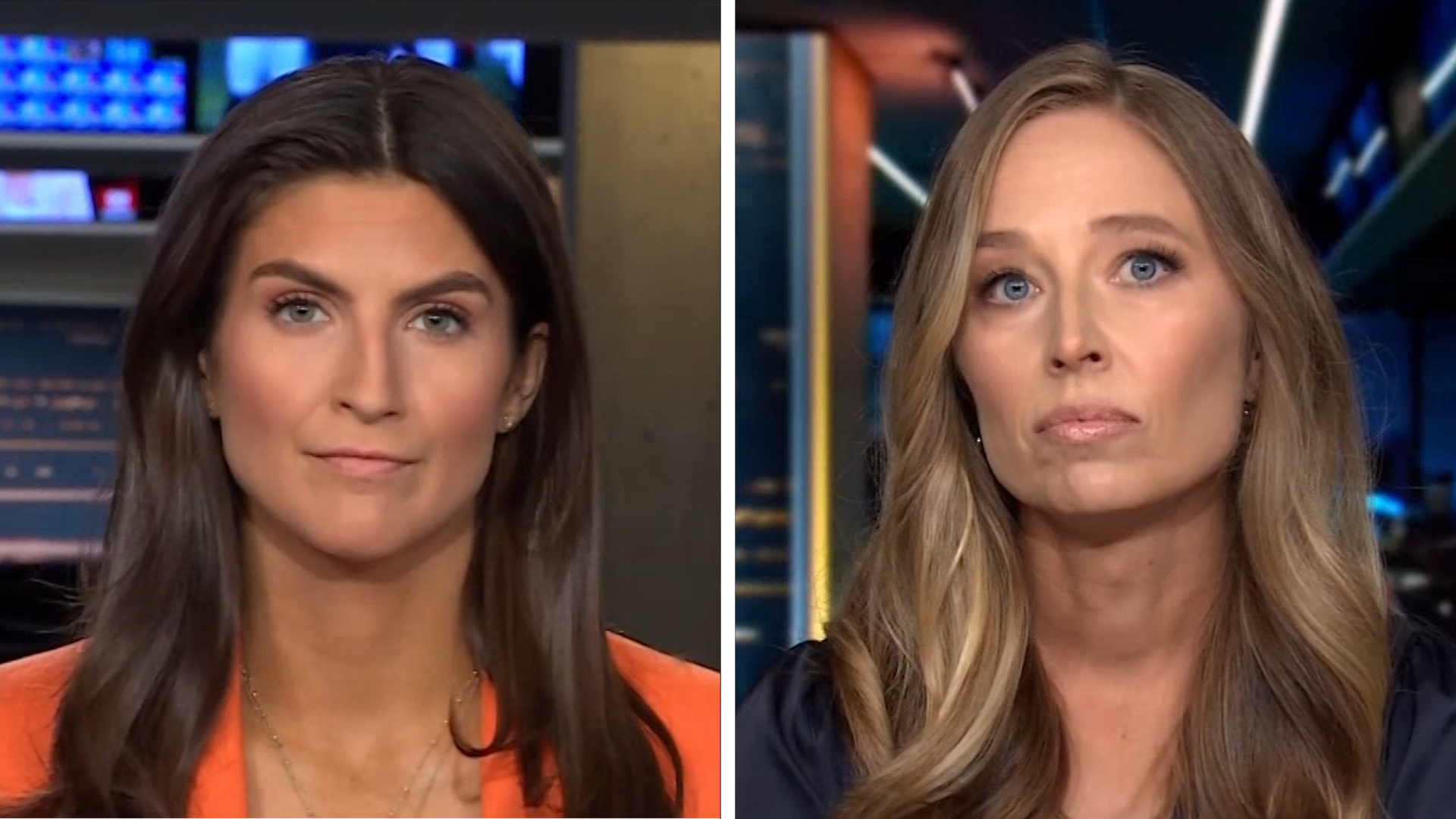
Epstein victims are a growing political threat to Trump
Entities mentioned:
- Jeffrey Epstein: Power, Control, Greed
- Donald Trump: Self-preservation, Power, Control
- Epstein victims: Justice, Recognition, Self-respect
- Pam Bondi: Loyalty, Duty, Self-preservation
- Ghislaine Maxwell: Self-preservation, Loyalty, Control
- Virginia Giuffre: Justice, Recognition, Self-respect
- Sky Roberts: Justice, Moral outrage, Recognition
- JD Vance: Loyalty, Ambition, Self-preservation
- Kash Patel: Loyalty, Duty, Self-preservation
- Annie Farmer: Justice, Recognition, Moral outrage
- Todd Blanche: Duty, Loyalty, Self-preservation
- Jennifer Freeman: Justice, Moral outrage, Professional pride
Article Assessment:
Credibility Score: 75/100
Bias Rating: 35/100 (Lean Left)
Sentiment Score: 25/100
Authoritarianism Risk: 45/100 (Mixed/Neutral)
Bias Analysis:
The article leans left, evidenced by its critical tone towards the Trump administration and sympathetic portrayal of Epstein's victims. While it presents factual information, the framing and language choices suggest a skeptical view of the administration's handling of the situation.
Key metric: Public Trust in Government Institutions
As a social scientist, I analyze that this article highlights a significant tension between political self-preservation and the pursuit of justice for victims of sexual abuse. The handling of the Epstein case by the Trump administration appears to prioritize political damage control over transparency and justice for the victims. This approach risks further eroding public trust in government institutions, particularly the Department of Justice. The victims' increasing vocalization and media attention could potentially shift public opinion and apply pressure on the administration to take more substantive action. The article suggests a growing political threat to Trump from the Epstein victims, which could impact his support base and overall public perception. The lack of representation of survivors in high-level meetings and the administration's apparent focus on political maneuvering rather than addressing victims' concerns indicate a disconnect between government actions and public expectations for justice and accountability.
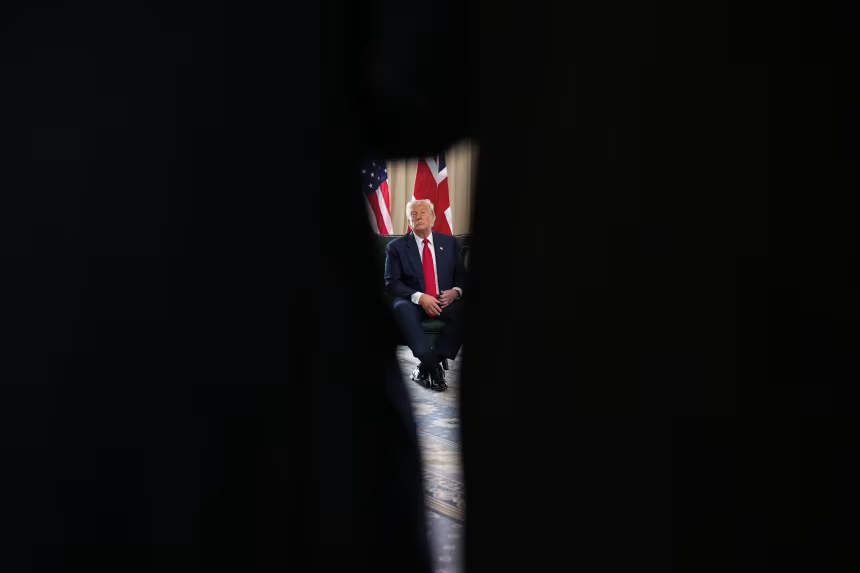
Trump’s legal retribution tour is getting more blatant
Entities mentioned:
- Donald Trump: Revenge, Power, Control
- Pam Bondi: Loyalty, Duty, Ambition
- Letitia James: Justice, Determination, Professional pride
- Adam Schiff: Justice, Duty, Moral outrage
- Barack Obama: Legacy, Duty, Self-preservation
- James Comey: Duty, Justice, Self-preservation
- John Brennan: Duty, Professional pride, Self-preservation
- Liz Cheney: Duty, Moral outrage, Justice
- Eugene Vindman: Duty, Moral outrage, Justice
- Alexander Vindman: Duty, Moral outrage, Justice
- Jack Smith: Justice, Duty, Professional pride
- Miles Taylor: Moral outrage, Duty, Justice
- Christopher Krebs: Duty, Professional pride, Justice
Article Assessment:
Credibility Score: 70/100
Bias Rating: 35/100 (Lean Left)
Sentiment Score: 25/100
Authoritarianism Risk: 65/100 (Authoritarian Tendencies)
Bias Analysis:
The article leans left in its framing, presenting Trump's actions in a critical light. While it presents factual information, the tone and selection of examples suggest a skeptical view of the Trump administration's motivations.
Key metric: Rule of Law Index
As a social scientist, I analyze that this article highlights a concerning pattern of potential retaliatory legal actions against individuals who have previously investigated or criticized former President Trump. This systematic targeting of political opponents and investigators through the legal system poses a significant threat to the Rule of Law Index in the United States. Such actions can erode public trust in the justice system, discourage whistleblowers and investigators from coming forward, and potentially lead to a chilling effect on political dissent. The apparent use of legal mechanisms for political retaliation undermines the principle of equal application of the law and suggests a troubling trend towards weaponizing the justice system for personal or political gain. This could have long-lasting implications for the strength and independence of democratic institutions in the country.
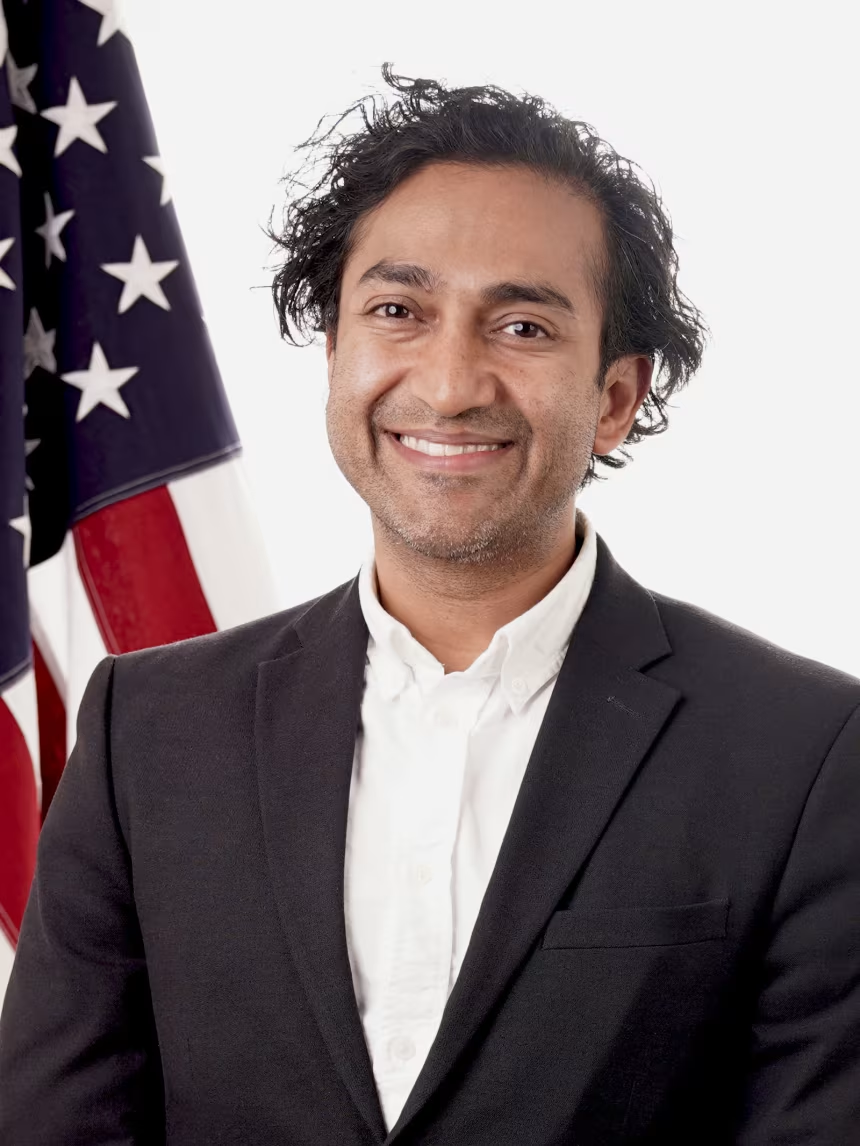
FDA official returns to agency after Loomer-led ouster
Entities mentioned:
- Dr. Vinay Prasad: Professional pride, Duty, Recognition
- US Food and Drug Administration (FDA): Duty, Public safety, Credibility
- Laura Loomer: Moral outrage, Influence, Righteousness
- White House: Control, Power, Influence
- President Donald Trump: Power, Legacy, Control
Article Assessment:
Credibility Score: 75/100
Bias Rating: 45/100 (Center)
Sentiment Score: 35/100
Authoritarianism Risk: 65/100 (Authoritarian Tendencies)
Bias Analysis:
The article presents multiple perspectives and cites various sources, including official statements and anonymous insiders. While it gives voice to critics of Dr. Prasad, it also provides context for his previous work and controversies, maintaining a relatively balanced approach.
Key metric: Public Trust in Government Institutions
As a social scientist, I analyze that this article highlights the complex interplay between politics, public health, and institutional integrity. Dr. Prasad's return to the FDA after a politically-motivated ouster demonstrates the tension between scientific expertise and political pressure. This situation potentially undermines public trust in the FDA's decision-making process and independence. The involvement of activist Laura Loomer and the White House in personnel decisions at a scientific agency raises concerns about the politicization of public health institutions. This event may have long-lasting effects on how the public perceives the FDA's ability to make unbiased, science-based decisions, particularly in critical areas such as vaccine approvals and drug regulations.

Capital Jewish Museum shooting suspect indicted on murder and hate crime charges and could face death penalty
Entities mentioned:
- Elias Rodriguez: Moral outrage, Revenge, Justice
- Justice Department: Justice, Duty, Righteousness
- Yaron Lischinsky: Duty, Professional pride
- Sarah Milgrim: Duty, Professional pride
- Israeli Embassy: Duty, Security, Unity
- Capital Jewish Museum: Unity, Legacy, Recognition
Article Assessment:
Credibility Score: 75/100
Bias Rating: 50/100 (Center)
Sentiment Score: 25/100
Authoritarianism Risk: 30/100 (Generally Democratic)
Bias Analysis:
The article presents a balanced account of the indictment, including details from both the prosecution and potential challenges they may face. It avoids sensationalism and provides context for the legal proceedings without apparent partisan leanings.
Key metric: Domestic Terrorism Incidents
As a social scientist, I analyze that this case represents a significant escalation in hate-motivated violence against Jewish and Israeli targets in the United States. The indictment on hate crime charges suggests a growing concern over antisemitism and its potential to fuel violent extremism. The possibility of pursuing the death penalty indicates the severity with which federal authorities are treating this incident. This case may have far-reaching implications for U.S. domestic counterterrorism efforts, potentially leading to increased security measures for Jewish institutions and a reevaluation of how law enforcement addresses ideologically motivated violence.
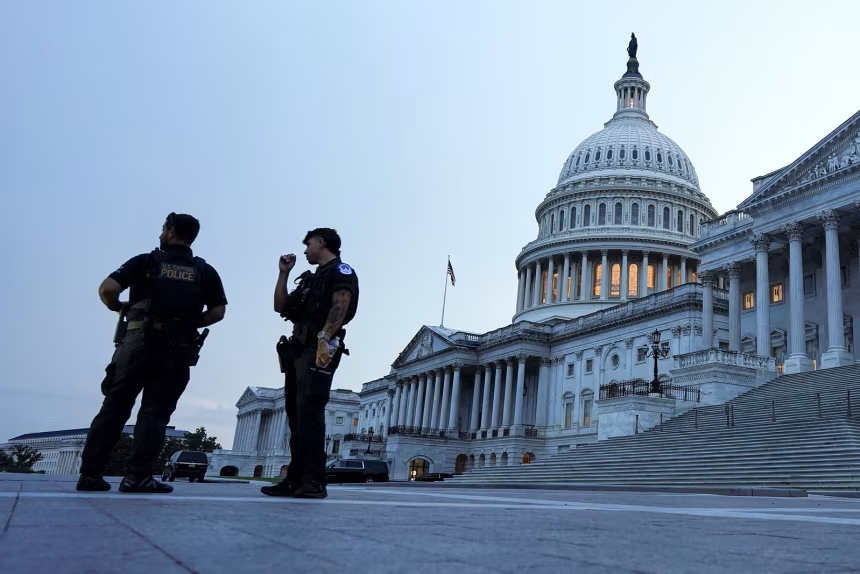
White House plans increase in federal law enforcement in DC over crime as Trump threatens to bring in National Guard
Entities mentioned:
- Trump administration: Control, Power, Security
- Donald Trump: Power, Control, Recognition
- ICE: Duty, Control, Security
- FBI: Duty, Security, Justice
- National Guard: Duty, Security, Control
- Department of Homeland Security: Security, Control, Duty
- Karoline Leavitt: Duty, Loyalty, Professional pride
- Muriel Bowser: Duty, Security, Self-preservation
- DC Police Department: Duty, Security, Professional pride
- Gavin Newsom: Moral outrage, Self-preservation, Control
Article Assessment:
Credibility Score: 70/100
Bias Rating: 55/100 (Center)
Sentiment Score: 30/100
Authoritarianism Risk: 65/100 (Authoritarian Tendencies)
Bias Analysis:
The article presents multiple viewpoints and cites official sources, but there's a slight lean towards questioning Trump's claims. It includes contradictory crime statistics and criticism of Trump's actions, balancing official statements with factual context.
Key metric: Crime Rate in Washington, DC
As a social scientist, I analyze that this article highlights a complex interplay between federal and local governance, public safety concerns, and political motivations. The Trump administration's plan to increase federal law enforcement presence in Washington, DC, ostensibly to address crime issues, raises questions about the balance of power between federal and local authorities. The discrepancy between Trump's claims of increased crime and the actual crime statistics reported by DC Police suggests potential political motivations behind the move. The threat to deploy the National Guard and take over the DC Police Department indicates a significant escalation in federal intervention in local affairs, which could have implications for democratic governance and federalism. This situation reflects broader tensions in American politics regarding law and order, federal vs. local control, and the use of security forces for political purposes.

What Matters
Entities mentioned:
- Donald Trump: Power, Control, Influence
- Department of Justice: Control, Righteousness, Duty
- Federal Communications Commission: Control, Influence, Duty
- Paramount: Self-preservation, Obligation, Professional pride
- CBS News: Professional pride, Obligation, Self-preservation
- Stephen Colbert: Moral outrage, Justice, Freedom
- Columbia University: Self-preservation, Obligation, Professional pride
- Harvard University: Self-preservation, Professional pride, Obligation
- Harmeet Dhillon: Righteousness, Duty, Justice
- Jim Ryan: Professional pride, Obligation, Self-preservation
- Ryan Walters: Righteousness, Control, Influence
Article Assessment:
Credibility Score: 65/100
Bias Rating: 35/100 (Lean Left)
Sentiment Score: 30/100
Authoritarianism Risk: 70/100 (Authoritarian Tendencies)
Bias Analysis:
The article leans left in its framing, presenting the Trump administration's actions critically. While it includes multiple sources and examples, the language used often implies disapproval of the administration's policies.
Key metric: Social Cohesion Index
As a social scientist, I analyze that this article highlights a significant shift in the U.S. government's approach to diversity and inclusion policies, particularly in education, media, and private enterprise. The Trump administration's actions, as described, appear to be systematically dismantling diversity initiatives through financial pressure, regulatory threats, and policy changes. This approach is likely to have a substantial impact on the Social Cohesion Index, potentially decreasing social integration and increasing polarization. The government's use of financial leverage and regulatory power to influence institutional policies may lead to decreased trust in public institutions and heightened social tensions. Furthermore, the emphasis on religious expression in the workplace, coupled with the suppression of certain forms of diversity, could exacerbate existing social divisions and potentially lead to increased discrimination and inequality. The long-term effects of these policies could significantly alter the social fabric of the United States, potentially reversing decades of progress in civil rights and equal opportunity.
- Read more about What Matters
- Log in to post comments
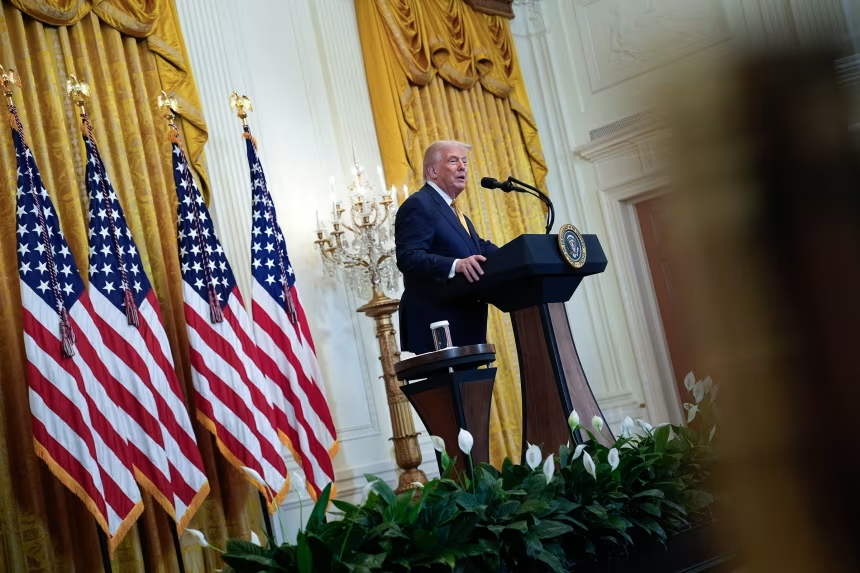
Fact check: Five false claims Trump made about inflation last night
Entities mentioned:
- Donald Trump: Power, Control, Self-preservation
- Democrats: Justice, Righteousness, Moral outrage
- Patrick De Haan: Professional pride, Duty, Righteousness
- Jerome Powell: Duty, Professional pride, Control
- Federal Reserve: Control, Stability, Professional pride
Article Assessment:
Credibility Score: 85/100
Bias Rating: 35/100 (Lean Left)
Sentiment Score: 30/100
Authoritarianism Risk: 20/100 (Strongly Democratic)
Bias Analysis:
The article leans slightly left due to its focus on fact-checking Trump's claims, which are consistently shown to be false. However, it relies heavily on verifiable data and expert sources, maintaining overall objectivity in its presentation of economic facts.
Key metric: Consumer Price Index (CPI)
As a social scientist, I analyze that this article significantly impacts the Consumer Price Index (CPI) metric by highlighting discrepancies between President Trump's claims and actual economic data. The fact-checking reveals that Trump's statements about inflation, gas prices, and grocery costs are largely inaccurate. This misinformation could potentially influence public perception of economic performance and policy effectiveness. The article's thorough debunking of these claims using verified data sources like the CPI, AAA, and GasBuddy emphasizes the importance of accurate economic reporting and its potential effects on consumer behavior and political discourse surrounding inflation and overall economic health.

Six months into Trump’s second term, voters remain divided
Entities mentioned:
- Donald Trump: Power, Control, Legacy
- Jaclyn Taylor: Loyalty, Pride, Enthusiasm
- Lawrence Malinconico: Moral outrage, Anxiety, Indignation
- Deven McIver: Self-preservation, Security, Wariness
- Pat Levin: Fear, Moral outrage, Anxiety
- Tonya Rincon: Moral outrage, Justice, Indignation
- Vladimir Putin: Power, Control, Influence
- Jeffrey Epstein: Power, Greed, Control
Article Assessment:
Credibility Score: 75/100
Bias Rating: 45/100 (Center)
Sentiment Score: 35/100
Authoritarianism Risk: 45/100 (Mixed/Neutral)
Bias Analysis:
The article presents views from both Trump supporters and opponents, providing a balanced perspective. While it includes more critical voices, it also fairly represents supportive opinions, maintaining a relatively centrist approach.
Key metric: Political Polarization Index
As a social scientist, I analyze that this article demonstrates the deep political divide in the United States six months into Trump's second term. The stark contrast in opinions between Trump supporters and opponents reflects a highly polarized electorate, with little middle ground. This polarization extends to various issues, including immigration, foreign policy, and economic matters. The article highlights how pre-existing views largely determine interpretations of current events, with supporters praising Trump's actions and opponents criticizing them. The Epstein saga appears to be a rare point of concern among some Trump supporters, though it hasn't significantly altered their overall support. The persistent high cost of living is a common concern across political lines, which could become a critical issue in the upcoming 2026 midterm elections. The article suggests that the political landscape remains deeply divided, with little evidence of a shift towards unity or bipartisanship.

Voters share the economic impacts of Trump’s megabill in battleground Arizona
Entities mentioned:
- Ray Flores: Ambition, Wariness, Self-preservation
- Donald Trump: Power, Influence, Legacy
- Republican Congress: Control, Competitive spirit, Influence
- Juan Ciscomani: Ambition, Power, Self-preservation
- Claudio Rodriguez: Duty, Justice, Moral outrage
Article Assessment:
Credibility Score: 75/100
Bias Rating: 55/100 (Center)
Sentiment Score: 45/100
Authoritarianism Risk: 35/100 (Generally Democratic)
Bias Analysis:
The article presents multiple perspectives, including business owners, non-profit workers, and political figures. While it leans slightly left in its framing of social safety net concerns, it balances this with positive economic impacts of Republican policies.
Key metric: Economic Impact of Policy Changes
As a social scientist, I analyze that this article highlights the complex interplay between economic policy changes and voter sentiment in a battleground state. The GOP's new policy bill, championed by Trump, has immediate effects on hiring practices and business operations, as seen in Ray Flores' restaurant. However, the delayed implementation of social safety net changes creates uncertainty for organizations like the Community Food Bank. The article suggests a potential disconnect between short-term economic benefits and long-term social consequences, which may influence voter behavior in the upcoming midterms. The Latino vote is presented as a crucial factor, with Republicans hoping to build on recent gains. The staggered implementation of policy changes complicates political messaging and voter response, potentially benefiting incumbents in the short term but creating challenges for long-term policy evaluation.

The US government has declared war on the very idea of climate change
Entities mentioned:
- Donald Trump: Power, Control, Legacy
- Environmental Protection Agency (EPA): Control, Duty, Professional pride
- Lee Zeldin: Loyalty, Ambition, Control
- Chris Wright: Greed, Self-preservation, Influence
- Katie Dykes: Duty, Righteousness, Moral outrage
- Andrew Dessler: Professional pride, Righteousness, Duty
- Phil Duffy: Professional pride, Moral outrage, Duty
- Michael Mann: Righteousness, Moral outrage, Professional pride
Article Assessment:
Credibility Score: 70/100
Bias Rating: 35/100 (Lean Left)
Sentiment Score: 25/100
Authoritarianism Risk: 65/100 (Authoritarian Tendencies)
Bias Analysis:
The article leans left, presenting a critical view of Trump administration policies. While it includes multiple perspectives, it gives more weight to climate scientists and environmental advocates, potentially under-representing opposing viewpoints.
Key metric: Environmental Protection and Sustainability
As a social scientist, I analyze that this article highlights a significant shift in US climate policy under the Trump administration. The actions described, particularly the move to undo the 'endangerment finding', represent a fundamental change in how the US government approaches climate change. This shift could have long-lasting effects on environmental protection, potentially hampering efforts to address climate change at the federal level. The article suggests a conflict between economic interests (particularly in fossil fuels) and environmental concerns, with the current administration prioritizing the former. This approach contradicts the scientific consensus on climate change and could impact the US's role in global climate efforts. The contrast between the administration's stance and the views of state officials and scientists indicates a growing divide in climate policy approaches, which could lead to increased tensions between federal and state governments on environmental issues.