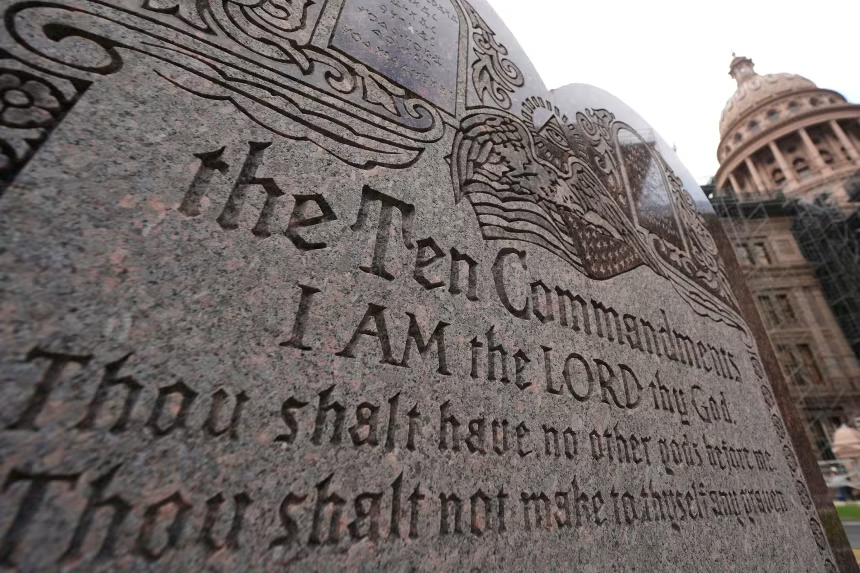
Judge rules that some Texas schools don’t have to display Ten Commandments in classrooms
Entities mentioned:
- Judge Fred Biery: Justice, Righteousness, Duty
- Texas school districts: Obligation, Wariness, Self-preservation
- Texas state legislature: Control, Righteousness, Influence
- Texas families (plaintiffs): Freedom, Justice, Self-respect
- Gov. Greg Abbott: Control, Righteousness, Influence
- Tommy Buser-Clancy (ACLU): Justice, Freedom, Duty
- Ken Paxton: Righteousness, Determination, Influence
Article Assessment:
Credibility Score: 75/100
Bias Rating: 45/100 (Center)
Sentiment Score: 55/100
Authoritarianism Risk: 25/100 (Generally Democratic)
Bias Analysis:
The article presents multiple perspectives, including the judge's ruling, plaintiffs' arguments, and the state's defense. While it gives more space to arguments against the law, it also includes the opposing view from the Texas Attorney General.
Key metric: First Amendment Protections
As a social scientist, I analyze that this ruling significantly impacts First Amendment protections in public schools. The judge's decision to block the enforcement of the Ten Commandments display law in several Texas school districts upholds the separation of church and state. This ruling sets a precedent that could influence similar cases in other states, potentially strengthening First Amendment protections nationwide. The decision reflects a tension between religious conservative efforts to introduce religious symbols in public spaces and the constitutional principle of religious neutrality in government institutions. The judge's detailed and occasionally humorous opinion suggests a strong stance against what he perceives as unconstitutional religious influence in public education, which could have far-reaching implications for similar legislative efforts in other states.

Trump escalates attacks against Smithsonian museums, says there’s too much focus on ‘how bad slavery was’
Entities mentioned:
- Donald Trump: Control, Power, Influence
- Smithsonian Institution: Professional pride, Duty, Curiosity
- Lonnie Bunch III: Professional pride, Duty, Education
- Janet Marstine: Professional pride, Duty, Wariness
- JD Vance: Loyalty, Power, Influence
- Lindsey Halligan: Loyalty, Power, Control
- Jillian Michaels: Righteousness, Indignation, Influence
Article Assessment:
Credibility Score: 75/100
Bias Rating: 45/100 (Center)
Sentiment Score: 35/100
Authoritarianism Risk: 65/100 (Authoritarian Tendencies)
Bias Analysis:
The article presents multiple viewpoints and includes direct quotes from various sources. While it gives more space to criticisms of Trump's actions, it also includes perspectives supporting his stance, maintaining a relatively balanced approach.
Key metric: Cultural Cohesion
As a social scientist, I analyze that this article highlights a significant conflict between political ideology and historical education in the United States. The attempt to control narrative in cultural institutions like the Smithsonian represents a potential shift in how national history is presented and understood. This could have far-reaching effects on cultural cohesion, potentially polarizing public opinion on historical interpretations and impacting national identity formation. The administration's actions suggest an attempt to reshape collective memory, which could lead to a more fragmented understanding of American history across different segments of society. This conflict between political directives and academic/curatorial expertise also raises questions about the independence of cultural institutions and their role in society.