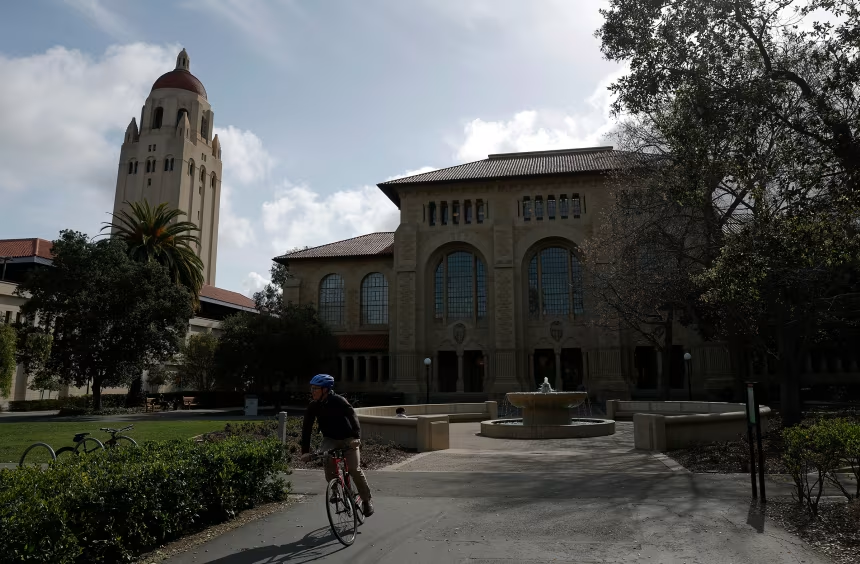
Stanford’s student newspaper sues Trump administration over use of immigration law to target pro-Palestinian students
Entities mentioned:
- Stanford University's student-run newspaper: Justice, Freedom, Self-preservation
- Trump administration: Control, Security, Power
- State Department: Security, Control, Duty
- Homeland Security Department: Security, Control, Duty
- Foundation for Individual Rights and Expression: Justice, Freedom, Righteousness
- Marco Rubio: Power, Security, Duty
- Judge William Young: Justice, Duty, Impartiality
Article Assessment:
Credibility Score: 75/100
Bias Rating: 45/100 (Center)
Sentiment Score: 35/100
Authoritarianism Risk: 65/100 (Authoritarian Tendencies)
Bias Analysis:
The article presents multiple perspectives, including those of the plaintiffs and the government. While it appears to sympathize with the students' position, it also explains the government's rationale, maintaining a relatively balanced approach.
Key metric: Civil Liberties Index
As a social scientist, I analyze that this article highlights a significant conflict between national security interests and First Amendment rights, particularly affecting non-citizen students and academics. The lawsuit challenges the Trump administration's use of immigration law to potentially suppress pro-Palestinian speech, which could have a chilling effect on free expression in academic settings. This case exemplifies the tension between government efforts to control political narratives and the constitutional protection of free speech, even for non-citizens. The outcome of this and similar lawsuits could have far-reaching implications for the balance between national security measures and civil liberties in the United States, potentially impacting the country's Civil Liberties Index.
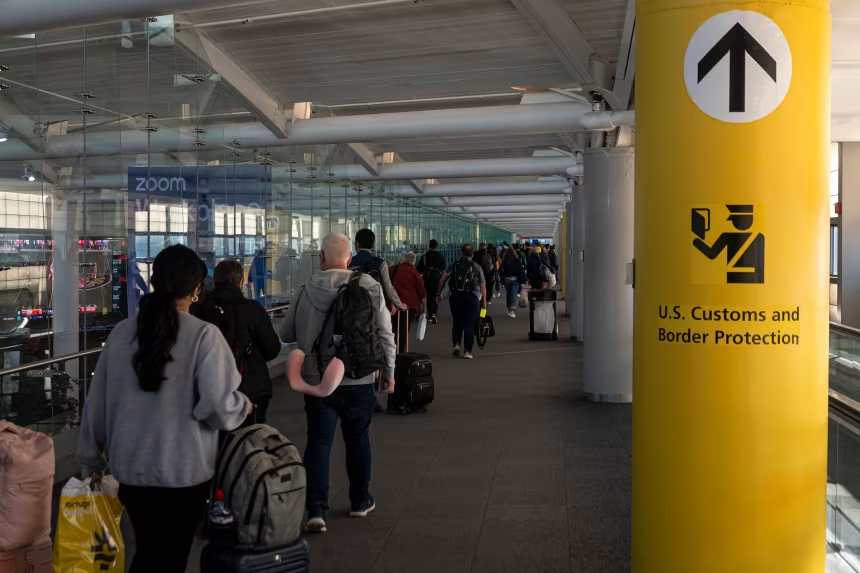
State Department may require visa applicants to post bond of up to $15,000 to enter the US
Entities mentioned:
- State Department: Control, Security, Duty
- Trump administration: Control, Security, Influence
- Visa applicants: Freedom, Ambition, Self-preservation
- U.S. government: Security, Control, Self-preservation
Article Assessment:
Credibility Score: 75/100
Bias Rating: 55/100 (Center)
Sentiment Score: 35/100
Bias Analysis:
The article presents a relatively balanced view of the proposed policy, including both the government's rationale and potential concerns. While it mentions the Trump administration's role, it doesn't editorialize on the policy's merits, maintaining a largely neutral stance.
Key metric: Net International Migration
As a social scientist, I analyze that this proposed policy could significantly impact the Net International Migration metric for the United States. The implementation of visa bonds up to $15,000 for certain countries may act as a deterrent for potential visitors, especially those from lower-income nations. This could lead to a decrease in both short-term visitors and potential long-term immigrants, as the financial barrier may discourage applications. Additionally, the policy may disproportionately affect business travelers and tourists from developing countries, potentially impacting economic and cultural exchanges. The pilot program's selective application based on overstay rates and document security could also lead to diplomatic tensions with affected countries, possibly resulting in reciprocal measures against U.S. travelers.