
Democrat state lawmaker debates former NCAA volleyball player who forfeited to SJSU team with trans athlete
Entities mentioned:
- Catherine Miranda: Loyalty, Professional pride, Influence
- Kaylie Ray: Justice, Competitive spirit, Determination
- San Jose State University: Self-preservation, Control, Pride
- Linda McMahon: Duty, Power, Justice
Article Assessment:
Credibility Score: 75/100
Bias Rating: 55/100 (Center)
Sentiment Score: 35/100
Authoritarianism Risk: 30/100 (Generally Democratic)
Bias Analysis:
The article presents both sides of the argument, but gives more space to Ray's perspective. It includes direct quotes from both Miranda and Ray, maintaining a relatively balanced approach.
Key metric: Gender Equality in Sports
Let me tell you something - this is a HUGE match-up in the world of women's sports! We've got a political heavyweight, Senator Miranda, squaring off against former NCAA volleyball star Kaylie Ray in a high-stakes debate that could change the game forever! Ray's bringing the heat with her game-changing forfeit strategy, while Miranda's trying to run interference with some questionable personal fouls. This isn't just about one player or one team, folks - it's about the entire league of women's sports! The clock is ticking, and with the feds threatening to pull funding, SJSU is in a fourth-quarter scramble that could cost them the whole season. I'm telling you right now, this is the kind of championship-level intensity that separates the contenders from the pretenders!
California State University board meeting falls into chaos amid SJSU lawsuit vs Trump admin over trans scandal
Entities mentioned:
- California State University (CSU): Righteousness, Justice, Influence
- San Jose State University (SJSU): Righteousness, Justice, Professional pride
- U.S. Department of Education: Justice, Control, Obligation
- Linda McMahon: Duty, Control, Justice
- Cynthia Teniente-Matson: Righteousness, Determination, Professional pride
- Brooke Slusser: Justice, Moral outrage, Self-respect
Article Assessment:
Credibility Score: 75/100
Bias Rating: 55/100 (Center)
Sentiment Score: 35/100
Authoritarianism Risk: 30/100 (Generally Democratic)
Bias Analysis:
The article presents multiple viewpoints, including those for and against the lawsuit. While it gives slightly more space to critics of transgender inclusion, it also includes supportive voices, maintaining a relatively balanced approach.
Key metric: Gender Equality in Collegiate Athletics
Let me tell you something - this story is RIDICULOUS! We've got a full-court press situation here, folks, with CSU and SJSU going head-to-head against the federal government in a high-stakes Title IX showdown. It's like we're watching a championship game where the refs have made a controversial call, and now the home team is challenging it with everything they've got! The Department of Education is playing defense, trying to enforce the rules, while CSU and SJSU are on offense, pushing hard to redefine the playing field. This isn't just a game-day decision - we're talking about a potential game-changer for women's sports across the nation. And let's not forget about Brooke Slusser - she's stepped up to the plate with some bombshell revelations that could be the clutch play in this whole match-up. I'm telling you right now, this is the kind of fourth-quarter drama that could reshape the entire league!

SJSU responds to Trump admin probe that found university violated Title IX with trans volleyball player
Entities mentioned:
- San Jose State University: Self-preservation, Obligation, Unity
- U.S. Department of Education: Justice, Control, Righteousness
- Brooke Slusser: Justice, Self-respect, Competitive spirit
- Blaire Fleming: Competitive spirit, Recognition, Self-preservation
- Melissa Batie-Smoose: Justice, Professional pride, Moral outrage
- Linda McMahon: Justice, Righteousness, Determination
Article Assessment:
Credibility Score: 75/100
Bias Rating: 65/100 (Lean Right)
Sentiment Score: 25/100
Authoritarianism Risk: 40/100 (Generally Democratic)
Bias Analysis:
The article leans slightly right, focusing more on the concerns of female athletes and the Department of Education's findings against SJSU. While it includes SJSU's statement, it gives more space to critiques and consequences.
Key metric: Title IX Compliance in Collegiate Athletics
Let me tell you something, folks - this is a GAME-CHANGING play in the world of collegiate sports! San Jose State University just got hit with a MASSIVE penalty flag from the Department of Education, and they're scrambling like a quarterback under pressure! The refs are calling foul on SJSU's handling of a transgender athlete on their women's volleyball team, and it's like they've been caught with too many players on the court! This isn't just a small infraction, this is a FOURTH QUARTER, CHAMPIONSHIP-LEVEL violation that could bench SJSU for good if they don't step up their game in the next 10 days. We're talking about a complete playbook overhaul - from redefining their roster based on biological sex to issuing apologies faster than a pitcher throwing heat! The DOE is playing hardball, folks, and SJSU needs to bring their A-game or risk being ejected from the game entirely. This is the kind of high-stakes matchup that can redefine the entire league, and I'm telling you right now, every school in the nation is watching this play unfold with bated breath!

WWE legend leaving company over its ties with Trump administration
Entities mentioned:
- Mick Foley: Moral outrage, Righteousness, Self-respect
- WWE: Loyalty, Influence, Professional pride
- Donald Trump: Power, Control, Influence
- Linda McMahon: Ambition, Power, Loyalty
- Paul 'Triple H' Levesque: Loyalty, Professional pride, Influence
Article Assessment:
Credibility Score: 75/100
Bias Rating: 40/100 (Lean Left)
Sentiment Score: 30/100
Authoritarianism Risk: 25/100 (Generally Democratic)
Bias Analysis:
The article leans slightly left, focusing on Foley's criticism of Trump and WWE's ties to his administration. While it presents facts, the framing and choice of quotes emphasize the negative aspects of the Trump-WWE relationship.
Key metric: Political Polarization Index
Let me tell you something, folks - this is a HUGE upset in the wrestling world! Mick Foley, a true legend of the squared circle, is throwing in the towel on his relationship with WWE. This is like a star quarterback walking away from his team mid-season! Foley's coming out swinging against the Trump administration, showing he's got the heart of a champion by standing up for what he believes in. On the other side of the ring, we've got WWE playing defense, trying to maintain their tag-team partnership with the politically powerful. It's a classic clash of titans, with Foley delivering a devastating moral clothesline to his former employers. This move could be a game-changer, folks, potentially influencing other athletes and entertainers to take a stand. We're seeing a real test of loyalty vs. conscience here, and Foley's made it clear which side of the mat he's on. It's fourth quarter, the clock's ticking, and the political arena is as heated as any Hell in a Cell match!
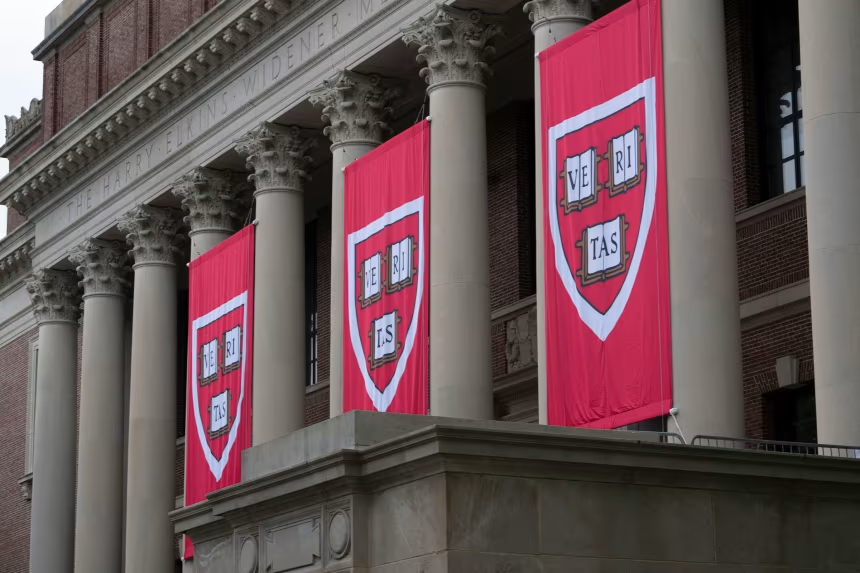
‘Don’t negotiate, Linda’: Trump calls for $500 million Harvard settlement
Entities mentioned:
- Donald Trump: Power, Control, Revenge
- Harvard University: Self-preservation, Academic freedom, Professional pride
- Linda McMahon: Duty, Loyalty, Control
- Howard Lutnick: Competitive spirit, Loyalty, Power
- Allison Burroughs: Justice, Duty, Righteousness
- Alan Garber: Self-preservation, Professional pride, Duty
Article Assessment:
Credibility Score: 75/100
Bias Rating: 55/100 (Center)
Sentiment Score: 30/100
Authoritarianism Risk: 65/100 (Authoritarian Tendencies)
Bias Analysis:
The article presents multiple viewpoints and includes factual information from various sources. However, it gives more space to the administration's perspective and actions, slightly tilting the balance of presentation.
Key metric: Higher Education Federal Funding
As a social scientist, I analyze that this article highlights a significant conflict between the Trump administration and elite universities, particularly Harvard. The administration's aggressive stance, demanding large settlements and increased control over research patents, could have far-reaching implications for higher education funding and academic freedom. This approach appears to be driven by political motivations, leveraging public sentiment against elite institutions. The potential $500 million settlement and patent ownership changes could severely impact Harvard's operations and set a precedent for federal intervention in university affairs. This conflict represents a broader ideological battle over the role of government in higher education and the balance between oversight and institutional autonomy.

Trump administration targets Harvard’s patents
Entities mentioned:
- Trump administration: Control, Power, Influence
- Harvard University: Self-preservation, Professional pride, Influence
- Howard Lutnick: Duty, Control, Influence
- Alan Garber: Self-preservation, Professional pride, Duty
- Linda McMahon: Duty, Influence, Competitive spirit
Article Assessment:
Credibility Score: 75/100
Bias Rating: 55/100 (Center)
Sentiment Score: 35/100
Authoritarianism Risk: 65/100 (Authoritarian Tendencies)
Bias Analysis:
The article presents multiple viewpoints and cites specific actions and statements, indicating an attempt at balanced reporting. However, there's a slight tilt towards framing the situation as the Trump administration pressuring Harvard, rather than an equal exploration of both sides' perspectives.
Key metric: Federal Research Funding
As a social scientist, I analyze that this article reveals a significant escalation in tensions between the Trump administration and Harvard University, primarily centered around federal research funding and intellectual property rights. The administration's actions, including the threat of invoking the 'march-in' process under the Bayh-Dole Act, represent a substantial pressure tactic that could have far-reaching implications for academic research and university autonomy. This conflict is part of a broader pattern of the administration's approach to elite educational institutions, which includes freezing federal funding and restrictions on international students. The situation highlights the complex relationship between government, academia, and intellectual property in the United States, and raises questions about the balance of power between federal authorities and educational institutions. The mention of recent agreements with other universities suggests that the administration is using a carrot-and-stick approach, potentially aiming to reshape the landscape of federally funded research and the autonomy of universities in managing their intellectual property and student services.
- Read more about Trump administration targets Harvard’s patents
- Log in to post comments
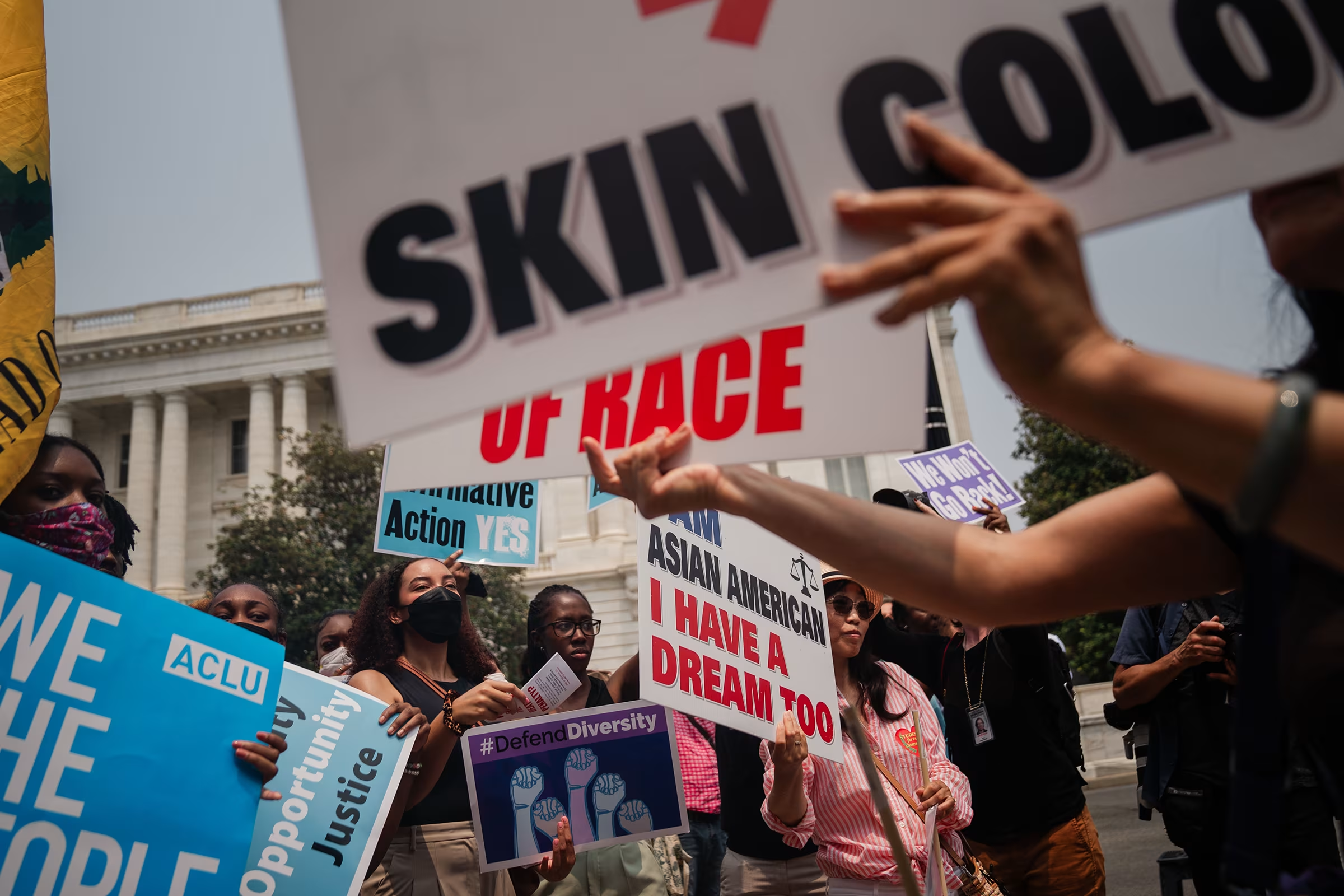
Trump takes executive action to target race-based university admissions
Entities mentioned:
- Donald Trump: Power, Control, Influence
- Linda McMahon: Duty, Loyalty, Professional pride
- Department of Education: Control, Transparency, Duty
- Supreme Court: Justice, Influence, Legacy
- Universities: Autonomy, Professional pride, Obligation
Article Assessment:
Credibility Score: 75/100
Bias Rating: 55/100 (Center)
Sentiment Score: 45/100
Authoritarianism Risk: 65/100 (Authoritarian Tendencies)
Bias Analysis:
The article presents a relatively balanced view, including both the administration's perspective and context from recent court decisions. However, there's a slight lean towards the administration's framing of the issue, with limited space given to opposing viewpoints or potential criticisms of the policy.
Key metric: Higher Education Equity and Access
As a social scientist, I analyze that this executive action represents a significant shift in higher education policy, potentially impacting diversity and access in American universities. The move to expand data collection on race-based admissions follows the Supreme Court's decision to restrict race-conscious admissions practices. This action may lead to increased scrutiny of university admissions processes and could potentially influence future policy decisions regarding affirmative action and diversity initiatives in higher education. The emphasis on 'meritocracy and excellence' in McMahon's statement suggests a shift away from considering racial diversity as a factor in admissions, which could have far-reaching consequences for minority representation in higher education institutions.