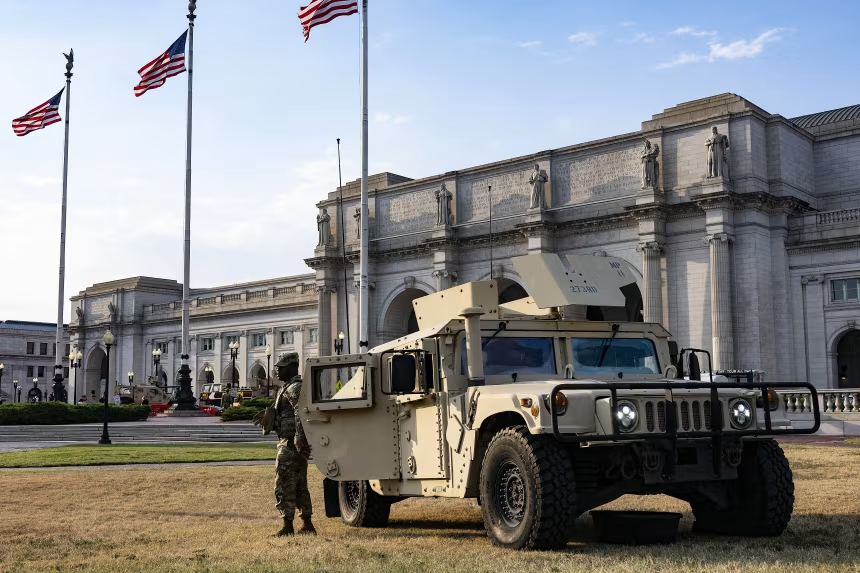
Six GOP-led states to send hundreds of National Guard troops to DC as White House escalates police takeover
Entities mentioned:
- Republican Governors: Loyalty, Duty, Security
- President Donald Trump: Control, Power, Security
- Mayor Muriel Bowser: Self-preservation, Freedom, Justice
- White House: Control, Power, Security
- National Guard: Duty, Obligation, Security
- DC Police: Professional pride, Duty, Security
- Protesters: Moral outrage, Freedom, Justice
Article Assessment:
Credibility Score: 75/100
Bias Rating: 45/100 (Center)
Sentiment Score: 35/100
Authoritarianism Risk: 70/100 (Authoritarian Tendencies)
Bias Analysis:
The article presents multiple viewpoints, including those of the Trump administration, local officials, and protesters. However, there is slightly more space given to critics of the federal intervention, suggesting a subtle lean towards skepticism of the administration's actions.
Key metric: Civil Liberties and Rule of Law
As a social scientist, I analyze that this article highlights a significant shift in the balance of power between federal and local authorities in Washington, DC. The deployment of National Guard troops from multiple states, at the request of the Trump administration, represents an unprecedented federal intervention in local law enforcement. This action raises concerns about the erosion of local autonomy and the potential for abuse of federal power. The stated goals of combating crime and 'beautifying' the city appear to be at odds with local crime statistics and may serve as a pretext for consolidating federal control. The lawsuit filed by DC against the federal takeover of its police department underscores the constitutional tensions at play. This situation could have far-reaching implications for federalism, civil liberties, and the separation of powers in the United States.
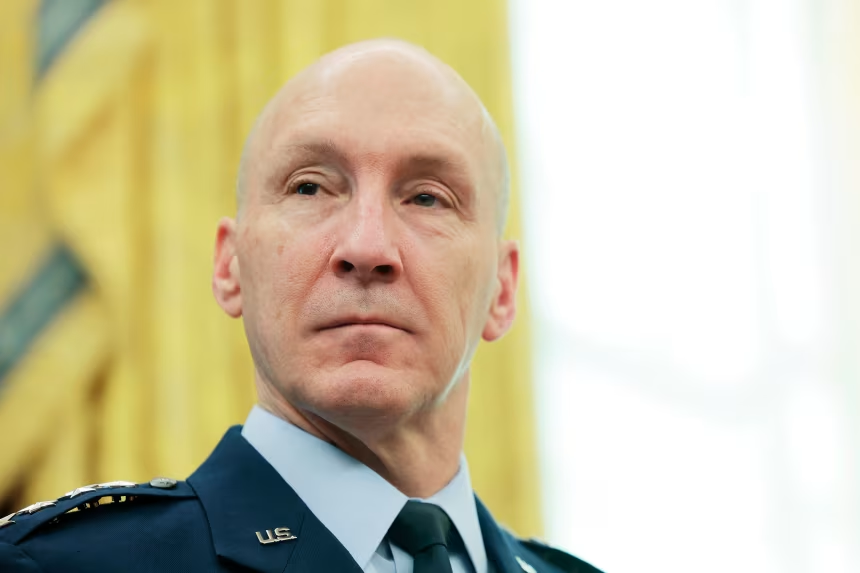
Air Force chief abruptly retires early in latest Pentagon shakeup
Entities mentioned:
- Gen. David Allvin: Professional pride, Duty, Self-preservation
- Pete Hegseth: Power, Control, Ambition
- Donald Trump: Power, Control, Influence
- Troy E. Meink: Loyalty, Duty, Professional pride
- US Air Force: Duty, Security, Professional pride
Article Assessment:
Credibility Score: 70/100
Bias Rating: 55/100 (Center)
Sentiment Score: 35/100
Authoritarianism Risk: 65/100 (Authoritarian Tendencies)
Bias Analysis:
The article presents facts from named sources and includes direct quotes, lending credibility. However, it relies on an unnamed source for key information about Hegseth's intentions, which introduces some bias. The tone is generally neutral, with balanced presentation of statements from different parties.
Key metric: Military Readiness and Stability
As a social scientist, I analyze that this article reveals a concerning pattern of instability and turnover in high-ranking military positions. The abrupt retirement of Gen. David Allvin, halfway through his expected term, coupled with the earlier dismissals of other senior military officials, suggests a significant disruption in military leadership continuity. This pattern may negatively impact long-term strategic planning, troop morale, and overall military readiness. The apparent involvement of civilian leadership in these changes raises questions about the balance of civil-military relations and the potential politicization of military appointments. This trend could lead to a loss of institutional knowledge and experience at the highest levels of military command, potentially compromising national security interests.