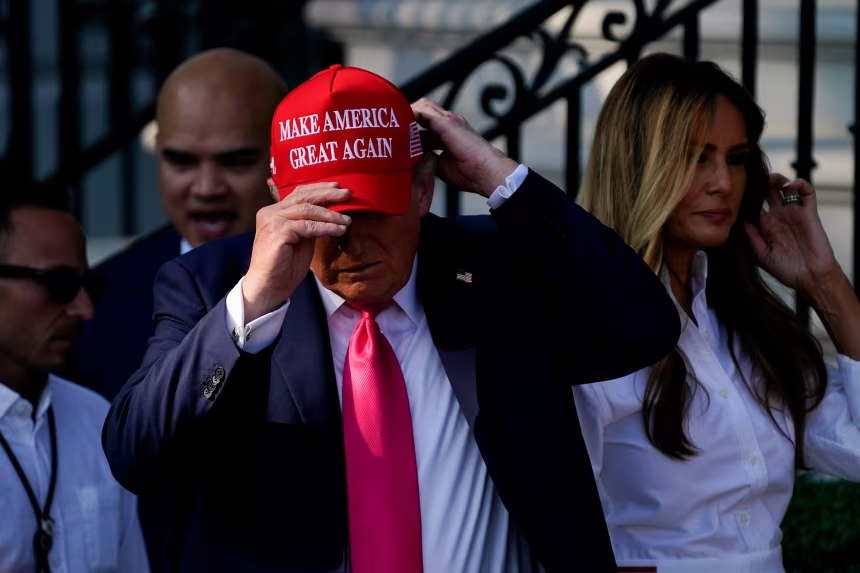
Analysis: Donald Trump’s long history of fake history
Entities mentioned:
- Donald Trump: Recognition, Self-preservation, Power
- Joe Biden: Duty, Obligation, Professional pride
- Tim Walz: Duty, Security, Control
- European Union: Unity, Security, Influence
- South Korea: Security, Self-preservation, Obligation
Article Assessment:
Credibility Score: 85/100
Bias Rating: 40/100 (Lean Left)
Sentiment Score: 30/100
Authoritarianism Risk: 20/100 (Strongly Democratic)
Bias Analysis:
The article leans slightly left due to its focus on fact-checking Trump's statements. However, it maintains credibility through extensive sourcing and balanced presentation of facts, including White House responses.
Key metric: Public Trust in Government
As a social scientist, I analyze that this article significantly impacts public trust in government by exposing numerous false claims made by former President Donald Trump. The systematic debunking of Trump's statements across various topics, including Brexit, the Iraq War, civil unrest in Minneapolis, and international relations, reveals a pattern of misinformation that could erode citizens' confidence in political leadership. The article's detailed fact-checking demonstrates how distorted narratives can be used to inflate a leader's perceived competence and foresight, potentially misleading voters and distorting public discourse. This constant stream of inaccuracies from a high-profile political figure may contribute to a broader skepticism towards government communications and decrease overall trust in political institutions.
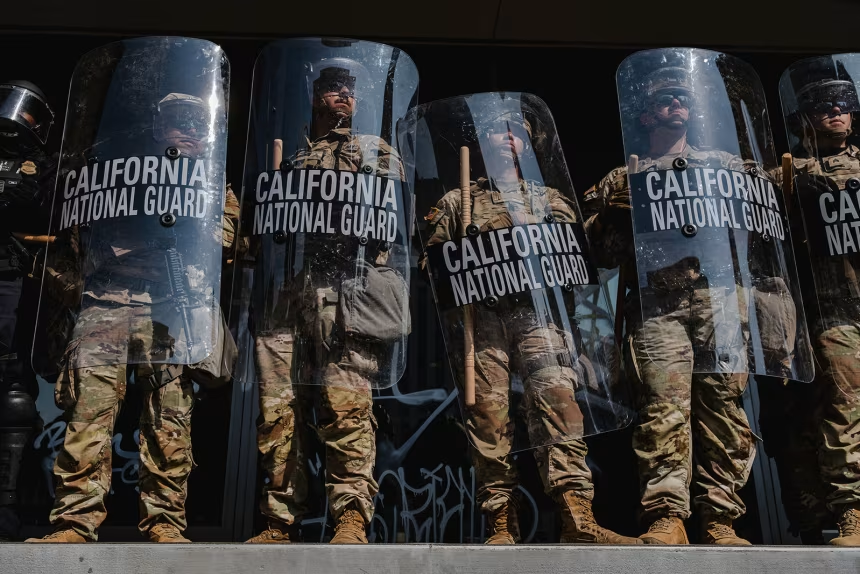
Trump’s threats of using military on US soil are getting more real
Entities mentioned:
- Donald Trump: Power, Control, Security
- US Military: Duty, Security, Obligation
- Gavin Newsom: Competitive spirit, Righteousness
- Karen Bass: Duty, Security
- Mark Esper: Duty, Professional pride
- Stephen Miller: Control, Security
Article Assessment:
Credibility Score: 75/100
Bias Rating: 35/100 (Lean Left)
Sentiment Score: 25/100
Authoritarianism Risk: 70/100 (Authoritarian Tendencies)
Bias Analysis:
The article leans left in its framing, emphasizing concerns about Trump's actions and their potential authoritarian implications. While it presents factual information, the tone and selection of quotes suggest a critical stance towards the administration's policies.
Key metric: Civilian Control of Military
As a social scientist, I analyze that this article highlights a concerning trend towards the potential erosion of civilian control over the military in the United States. President Trump's repeated suggestions and actions aimed at deploying military forces for domestic law enforcement purposes represent a significant departure from historical norms and potentially challenge the foundational principle of civilian control. This shift could have far-reaching implications for the balance of power within the US government and the role of the military in domestic affairs. The article suggests a gradual escalation in both rhetoric and action, which may be testing public and institutional tolerance for such measures. This trend, if continued, could lead to a redefinition of the military's domestic role and potentially alter the relationship between civilian leadership and military forces in ways that may be difficult to reverse.
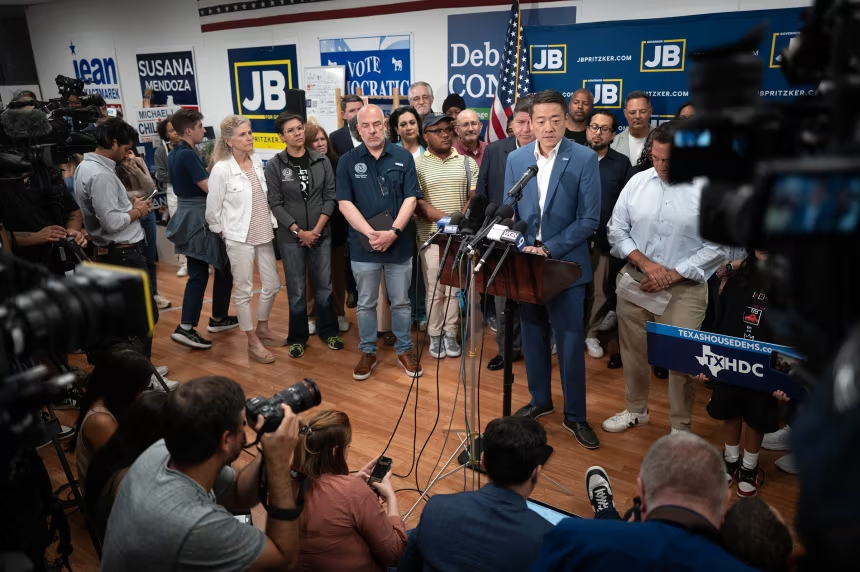
The FBI has been asked to help locate Texas House Democrats. One state lawmaker says officials would be breaking the law
Entities mentioned:
- Gene Wu: Determination, Righteousness, Self-preservation
- Texas House Democrats: Justice, Loyalty, Self-preservation
- Dustin Burrows: Control, Power, Duty
- John Cornyn: Ambition, Power, Competitive spirit
- Greg Abbott: Control, Power, Determination
- Ken Paxton: Ambition, Power, Competitive spirit
- JB Pritzker: Righteousness, Loyalty, Unity
- FBI: Duty, Control, Obligation
Article Assessment:
Credibility Score: 75/100
Bias Rating: 55/100 (Center)
Sentiment Score: 30/100
Authoritarianism Risk: 65/100 (Authoritarian Tendencies)
Bias Analysis:
The article presents multiple viewpoints and quotes from both Republican and Democratic figures. While it gives slightly more space to Democratic perspectives, it also includes detailed explanations of Republican actions and motivations.
Key metric: Political Polarization Index
As a social scientist, I analyze that this article highlights the intensifying political polarization in Texas and by extension, the United States. The use of extreme measures such as civil arrest warrants and attempts to involve federal law enforcement in a state legislative matter indicate a breakdown in normal democratic processes. This escalation of tactics could further erode trust in democratic institutions and increase partisan animosity. The involvement of multiple states and the potential use of federal resources in what is essentially an internal state issue also points to the nationalization of local politics, a trend that often exacerbates polarization. The contrasting approaches of different administrations (Bush vs. current) to similar situations also underscores how partisan politics is increasingly influencing the application of federal power.
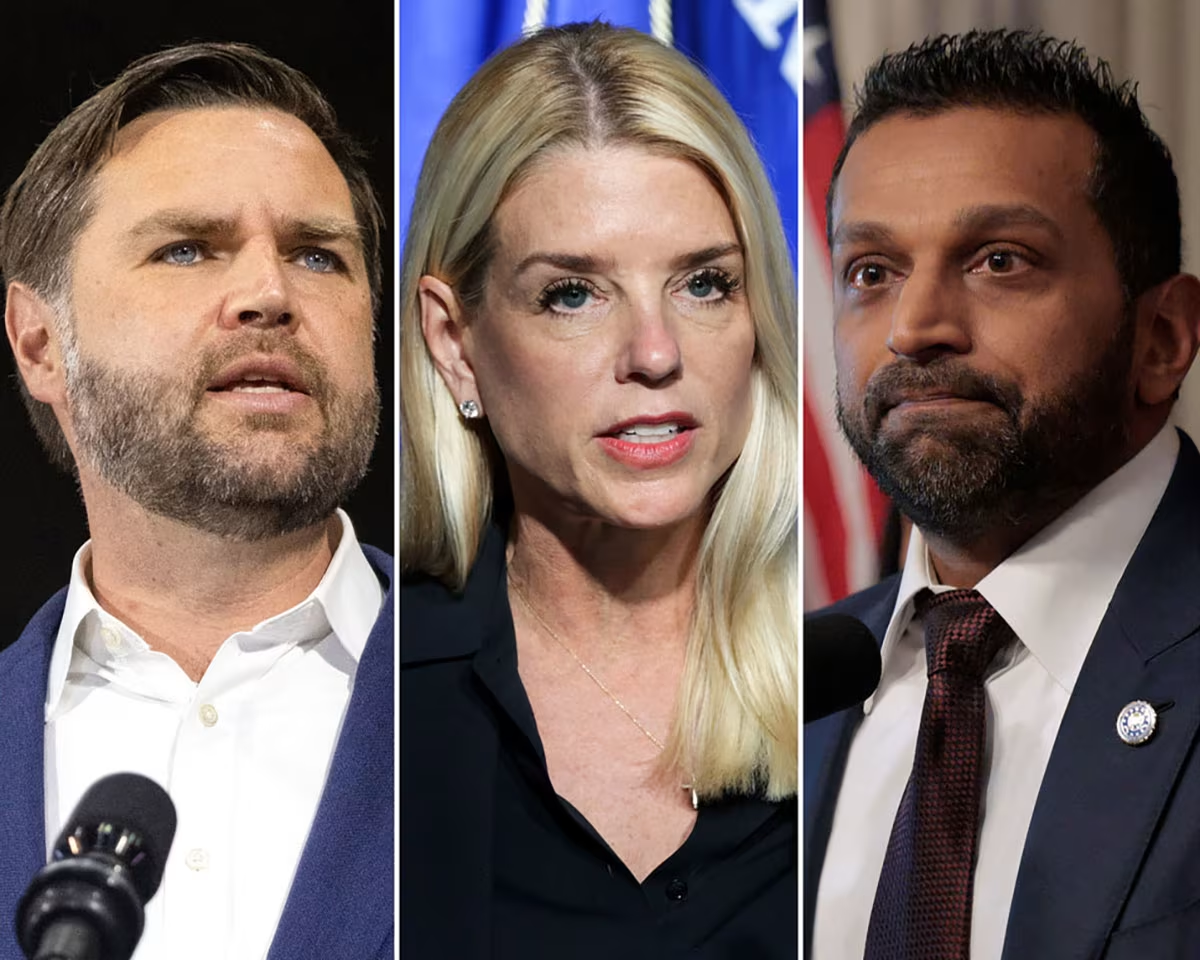
Top Trump officials discussed Epstein at White House meeting Wednesday night
Entities mentioned:
- Attorney General Pam Bondi: Justice, Professional pride, Power
- FBI Director Kash Patel: Duty, Control, Security
- Vice President JD Vance: Unity, Influence, Obligation
- White House chief of staff Susie Wiles: Control, Loyalty, Unity
- Deputy Attorney General Todd Blanche: Justice, Duty, Professional pride
- Deputy FBI Director Dan Bongino: Security, Control, Professional pride
- Jeffrey Epstein: Power, Greed, Control
- Ghislaine Maxwell: Self-preservation, Loyalty, Fear
Article Assessment:
Credibility Score: 65/100
Bias Rating: 50/100 (Center)
Sentiment Score: 35/100
Authoritarianism Risk: 55/100 (Mixed/Neutral)
Bias Analysis:
The article presents a balanced view of the situation, citing unnamed sources and reporting denied claims. It refrains from overtly partisan language or framing, maintaining a neutral stance in its reporting of the events and conflicts.
Key metric: Government Transparency and Accountability
As a social scientist, I analyze that this article reveals internal tensions and strategic disagreements within the Trump administration regarding the handling of the high-profile Epstein case. The last-minute change of meeting location to the White House suggests a desire for increased control over information and optics. The potential publication of the Maxwell conversation transcript indicates a struggle between transparency and strategic information management. The conflicts between top officials, particularly Bondi and Patel, highlight the challenges in coordinating a unified response to a sensitive and politically charged issue. This situation underscores the complexities of balancing justice, political considerations, and public perception in high-level government operations.

Trump takes executive action to target race-based university admissions
Entities mentioned:
- Donald Trump: Power, Control, Influence
- Linda McMahon: Duty, Loyalty, Professional pride
- Department of Education: Control, Transparency, Duty
- Supreme Court: Justice, Influence, Legacy
- Universities: Autonomy, Professional pride, Obligation
Article Assessment:
Credibility Score: 75/100
Bias Rating: 55/100 (Center)
Sentiment Score: 45/100
Authoritarianism Risk: 65/100 (Authoritarian Tendencies)
Bias Analysis:
The article presents a relatively balanced view, including both the administration's perspective and context from recent court decisions. However, there's a slight lean towards the administration's framing of the issue, with limited space given to opposing viewpoints or potential criticisms of the policy.
Key metric: Higher Education Equity and Access
As a social scientist, I analyze that this executive action represents a significant shift in higher education policy, potentially impacting diversity and access in American universities. The move to expand data collection on race-based admissions follows the Supreme Court's decision to restrict race-conscious admissions practices. This action may lead to increased scrutiny of university admissions processes and could potentially influence future policy decisions regarding affirmative action and diversity initiatives in higher education. The emphasis on 'meritocracy and excellence' in McMahon's statement suggests a shift away from considering racial diversity as a factor in admissions, which could have far-reaching consequences for minority representation in higher education institutions.

Here’s what could happen if Trump brings the National Guard to DC
Entities mentioned:
- Donald Trump: Control, Power, Influence
- DC Police Department: Duty, Security, Professional pride
- National Guard: Duty, Security, Obligation
- US Congress: Control, Duty, Power
- DC Mayor and City Council: Self-preservation, Control, Duty
- Federal Law Enforcement Agencies: Duty, Control, Security
Article Assessment:
Credibility Score: 75/100
Bias Rating: 45/100 (Center)
Sentiment Score: 35/100
Authoritarianism Risk: 65/100 (Authoritarian Tendencies)
Bias Analysis:
The article presents multiple perspectives, including Trump's statements, expert opinions, and factual context. While it leans slightly critical of Trump's proposals, it maintains a generally balanced approach by providing legal and historical context.
Key metric: Civil Liberties and Democratic Governance
As a social scientist, I analyze that this article highlights a potential conflict between federal and local governance in Washington, DC, with implications for civil liberties and democratic norms. Trump's threat to federalize DC's police force and deploy the National Guard represents a significant escalation in federal intervention in local affairs. This move could undermine the principles of Home Rule and local autonomy, potentially setting a precedent for increased federal control over municipal governance. The article suggests that such actions may not be justified by current crime rates, raising questions about the motivations behind these threats. The potential deployment of federal forces, reminiscent of the 2020 protests response, could lead to increased tensions between residents and law enforcement, potentially infringing on civil liberties and First Amendment rights. This situation underscores the unique and complex status of Washington, DC in the American federal system and highlights the delicate balance between federal oversight and local governance.
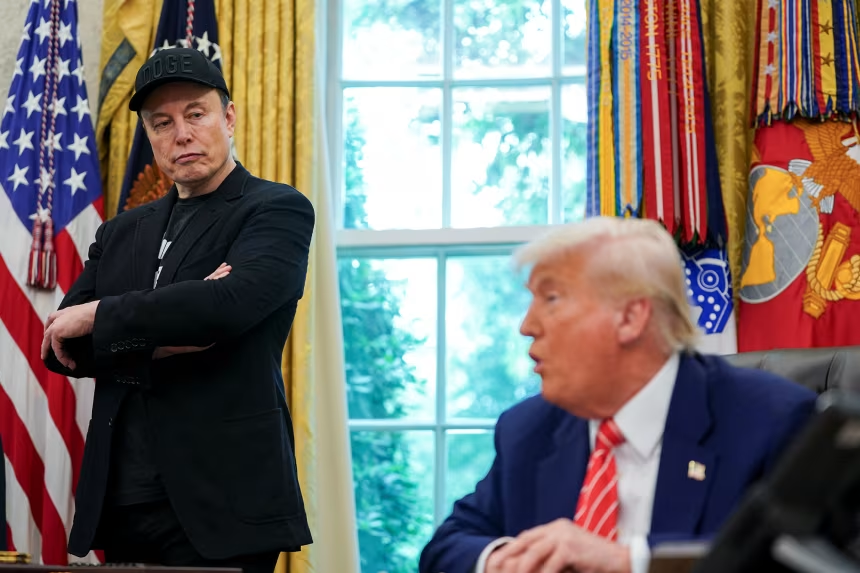
Trump administration rolls back Elon Musk’s email telling federal employees to justify their jobs
Entities mentioned:
- Trump administration: Control, Power, Influence
- Elon Musk: Ambition, Efficiency, Control
- Office of Personnel Management: Professional pride, Duty, Control
- Scott Kupor: Duty, Professional pride, Influence
- Donald Trump: Power, Control, Influence
- Federal employees: Self-preservation, Anxiety, Obligation
Article Assessment:
Credibility Score: 75/100
Bias Rating: 55/100 (Center)
Sentiment Score: 40/100
Authoritarianism Risk: 45/100 (Mixed/Neutral)
Bias Analysis:
The article presents multiple viewpoints and cites official sources, maintaining a relatively neutral stance. However, there's a slight lean towards criticizing Musk's approach, potentially reflecting a centrist or slightly left-of-center perspective on government management.
Key metric: Government Efficiency and Accountability
As a social scientist, I analyze that this article highlights a significant shift in federal employee management practices. The reversal of Musk's email policy demonstrates a tension between aggressive private sector management styles and traditional government operations. This change likely impacts government efficiency and accountability by reverting to established performance management systems. The conflict between Musk and the Trump administration also reveals the challenges of integrating external business leaders into government roles. This situation may affect public perception of government effectiveness and the administration's ability to implement reforms.

Trump administration to reinstall two Confederate statues
Entities mentioned:
- Trump administration: Control, Legacy, Pride
- Donald Trump: Power, Legacy, Influence
- US National Park Service: Duty, Obligation, Professional pride
- Pete Hegseth: Loyalty, Righteousness, Influence
- Glenn Youngkin: Pride, Legacy, Influence
- Biden administration: Justice, Unity, Righteousness
- Eleanor Holmes Norton: Justice, Moral outrage, Determination
Article Assessment:
Credibility Score: 75/100
Bias Rating: 55/100 (Center)
Sentiment Score: 35/100
Authoritarianism Risk: 65/100 (Authoritarian Tendencies)
Bias Analysis:
The article presents multiple viewpoints, including those supporting and opposing the reinstatement of Confederate monuments. However, there's a slight lean towards critical perspectives of the action, particularly in the detailed explanation of the monuments' controversial aspects.
Key metric: Social Cohesion
As a social scientist, I analyze that this article highlights a significant regression in social progress and national unity. The reinstatement of Confederate monuments, particularly in the aftermath of widespread protests against racial injustice, signals a deliberate attempt to reassert narratives that many view as supportive of systemic racism. This action is likely to exacerbate existing social tensions, potentially leading to decreased trust in government institutions and increased polarization among different demographic groups. The justification of these actions through executive orders and reinterpretations of historical narratives suggests a concerning trend towards using governmental power to shape public memory and national identity in ways that may marginalize certain communities. This could have long-term implications for social cohesion, civic engagement, and the collective understanding of American history.
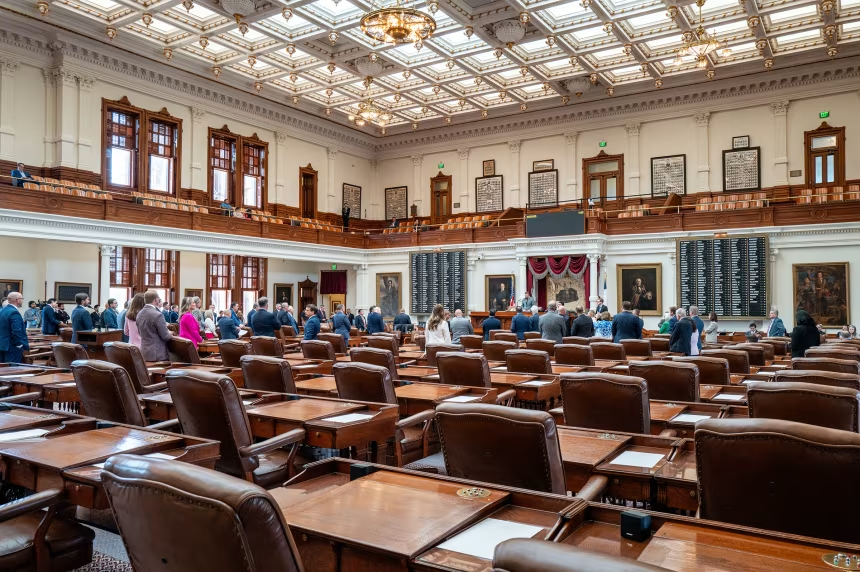
Will Texas Democrats’ walkout work?
Entities mentioned:
- Texas Democrats: Justice, Determination, Righteousness
- Texas Republicans: Power, Control, Ambition
- President Donald Trump: Power, Influence, Control
- Oregon Republicans: Loyalty, Righteousness, Obligation
Article Assessment:
Credibility Score: 75/100
Bias Rating: 45/100 (Center)
Sentiment Score: 35/100
Authoritarianism Risk: 25/100 (Generally Democratic)
Bias Analysis:
The article presents a balanced view, discussing both Democratic and Republican perspectives on walkouts and gerrymandering. While slightly more space is given to Democratic arguments, the piece includes counterpoints and potential criticisms of the walkout strategy.
Key metric: Electoral Integrity
As a social scientist, I analyze that this article highlights the ongoing struggle over redistricting and its impact on electoral integrity in the United States. The Texas Democrats' walkout represents a dramatic escalation in the fight against gerrymandering, particularly mid-decade redistricting efforts. This tactic, while potentially effective in the short term, faces significant challenges in terms of sustainability and public perception. The article suggests that while Americans generally disapprove of gerrymandering, their views can be influenced by partisan loyalty. The success of this strategy will likely depend on the Democrats' ability to frame the issue effectively and maintain public support over an extended period. The long-term implications for electoral integrity are significant, as this confrontation could either lead to fairer districting practices or further entrench partisan manipulation of electoral maps.
- Read more about Will Texas Democrats’ walkout work?
- Log in to post comments

Victims object to ‘public legitimization’ of Ghislaine Maxwell as judge weighs fate of Epstein grand jury transcripts
Entities mentioned:
- Jeffrey Epstein: Power, Control, Greed
- Ghislaine Maxwell: Self-preservation, Power, Control
- Victims of Epstein and Maxwell: Justice, Self-respect, Security
- Brad Edwards and Paul Cassell (Lawyers): Justice, Duty, Moral outrage
- Justice Department: Control, Obligation, Wariness
- Trump administration: Power, Control, Self-preservation
- Todd Blanche (Deputy Attorney General): Duty, Professional pride, Influence
- David Oscar Markus (Maxwell's attorney): Duty, Professional pride, Self-preservation
Article Assessment:
Credibility Score: 75/100
Bias Rating: 45/100 (Center)
Sentiment Score: 35/100
Authoritarianism Risk: 25/100 (Generally Democratic)
Bias Analysis:
The article presents multiple perspectives, including those of victims, lawyers, and Maxwell's defense. While it leans slightly towards emphasizing victim concerns, it also includes Maxwell's arguments, maintaining a relatively balanced approach.
Key metric: Public Trust in Government Institutions
As a social scientist, I analyze that this article highlights a significant tension between the pursuit of justice, victim protection, and institutional transparency. The potential unsealing of grand jury transcripts in the Epstein case presents a complex challenge to the justice system. On one hand, there's a push for transparency and accountability, particularly given the high-profile nature of the case and its connection to powerful figures. On the other hand, there are serious concerns about victim privacy, re-traumatization, and the potential impact on ongoing legal proceedings. The article suggests a growing distrust among victims towards government institutions, particularly in light of Maxwell's recent treatment. This situation likely negatively impacts public trust in government institutions, as it raises questions about the priorities and motivations of the justice system when dealing with high-profile cases involving influential individuals.