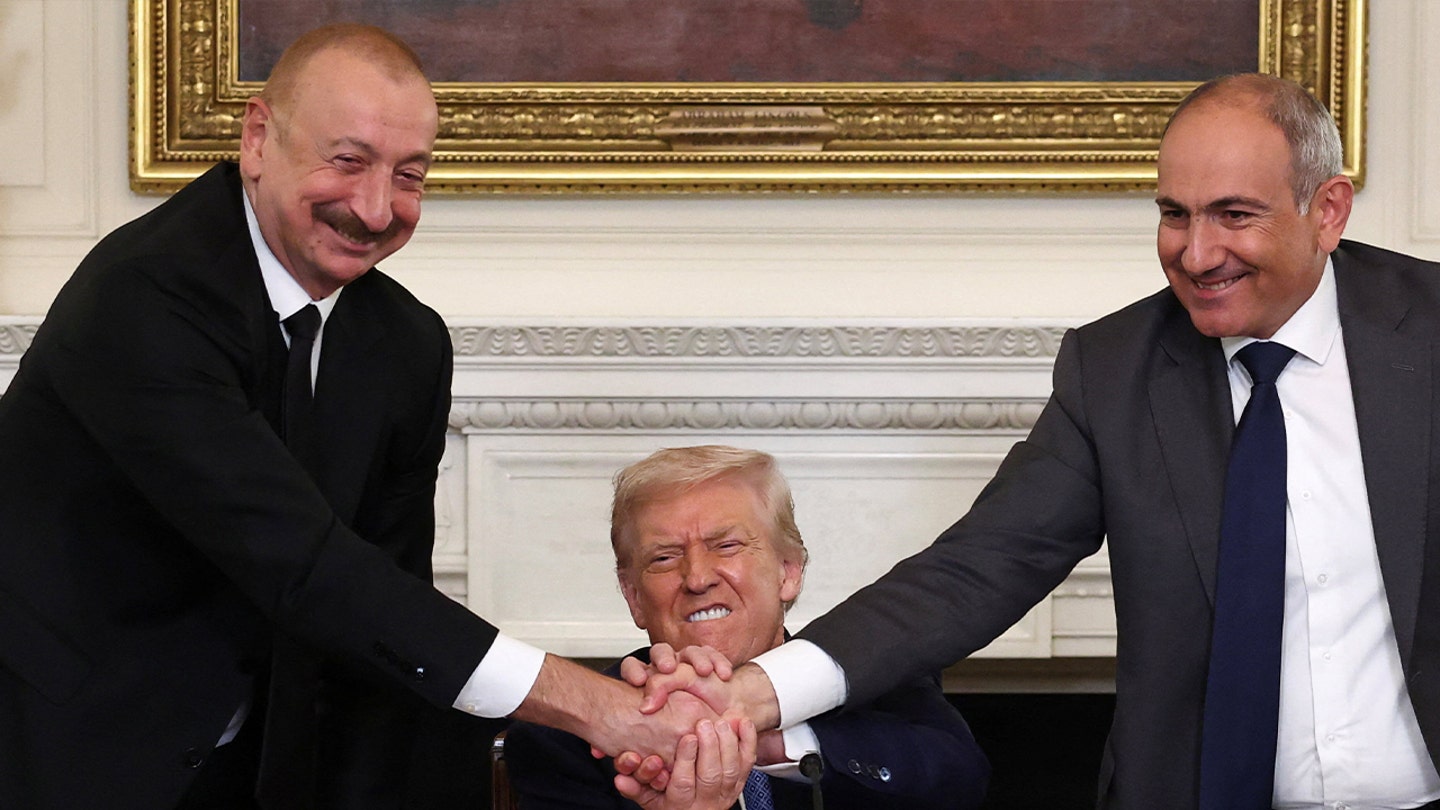
Armenia and Azerbaijan leaders seek to ease Russian and Iranian concerns after US-brokered peace deal
Entities mentioned:
- Nikol Pashinyan: Unity, Security, Legacy
- Ilham Aliyev: Unity, Influence, Legacy
- Donald Trump: Influence, Legacy, Recognition
- Russia: Influence, Control, Wariness
- Iran: Security, Influence, Wariness
- Armenia: Security, Unity, Self-preservation
- Azerbaijan: Unity, Security, Influence
- United States: Influence, Power, Control
- Armenian Apostolic Church: Loyalty, Righteousness, Moral outrage
Article Assessment:
Credibility Score: 75/100
Bias Rating: 55/100 (Center)
Sentiment Score: 60/100
Authoritarianism Risk: 35/100 (Generally Democratic)
Bias Analysis:
The article presents multiple perspectives, including those of Armenia, Azerbaijan, Russia, and Iran, indicating an attempt at balanced reporting. However, there's a slight emphasis on the positive aspects of US involvement, which may suggest a subtle pro-Western lean.
Key metric: US Global Influence Index
As a social scientist, I analyze that this article showcases a significant shift in regional power dynamics in the South Caucasus. The US-brokered peace deal between Armenia and Azerbaijan represents a strategic advancement of American influence in a traditionally Russian-dominated region. This development likely improves the US Global Influence Index by establishing a foothold through the TRIPP project. The deal challenges Russia's and Iran's regional influence, potentially altering geopolitical balances. However, it also risks domestic instability in Armenia and regional tensions with Iran. The agreement's long-term success depends on managing these challenges and maintaining the delicate balance between regional powers.
US medical journal rejects call from RFK Jr to retract vaccine study
Entities mentioned:
- RFK Jr: Righteousness, Influence, Moral outrage
- US medical journal: Professional pride, Duty, Credibility
- Trump administration: Power, Control, Influence
- National Guard: Duty, Security, Obligation
- Democrats: Opposition, Justice, Moral outrage
- Mamdani: Ambition, Competitive spirit, Influence
- Cuomo: Power, Competitive spirit, Influence
Article Assessment:
Credibility Score: 65/100
Bias Rating: 35/100 (Lean Left)
Sentiment Score: 25/100
Authoritarianism Risk: 70/100 (Authoritarian Tendencies)
Bias Analysis:
The article leans left in its framing, focusing more on criticisms of the Trump administration and giving voice to opposition figures. While it includes factual information, the selection and presentation of topics suggest a critical stance towards the current administration.
Key metric: Political Stability Index
As a social scientist, I analyze that this article reflects significant political tension and potential instability in the United States. The Trump administration's actions, including revoking Biden's order, taking control of DC police, and reviewing Smithsonian museums for 'patriotic' content, suggest a consolidation of power and potential erosion of democratic norms. The deployment of the National Guard in Washington DC further indicates escalating tensions. The article also highlights growing opposition from Democrats and other political figures, as well as concerns about healthcare and human rights. These factors collectively point to a decrease in political stability and an increase in social division, which could have long-term implications for governance and civil society in the US.