
Facts First
Entities mentioned:
- Donald Trump: Power, Influence, Legacy
- Joe Biden: Duty, Legacy, Unity
- Kamala Harris: Ambition, Recognition, Unity
- Nikki Haley: Ambition, Competitive spirit, Recognition
- Republican Party: Power, Control, Loyalty
- Democratic Party: Unity, Justice, Control
- Voters: Security, Freedom, Self-preservation
Article Assessment:
Credibility Score: 75/100
Bias Rating: 45/100 (Center)
Sentiment Score: 45/100
Authoritarianism Risk: 25/100 (Generally Democratic)
Bias Analysis:
The articles attempt to present diverse voter perspectives from various regions and demographics. While there's a slight lean towards examining Democratic challenges, the content also covers Republican voter sentiments extensively.
Key metric: Voter Engagement and Political Polarization
As a social scientist, I analyze that this collection of articles highlights the deep political divisions and shifting voter sentiments in key battleground states. The content demonstrates how various demographic groups, including blue-collar workers, Hispanic voters, and suburban residents, are responding to major political figures and policy issues. The articles reveal a complex political landscape where traditional party loyalties are being tested, and voters are grappling with concerns about age, economic impacts, and social issues. This ongoing voter engagement and the apparent polarization suggest a highly contested and potentially volatile political environment leading up to the 2024 election.
- Read more about Facts First
- Log in to post comments
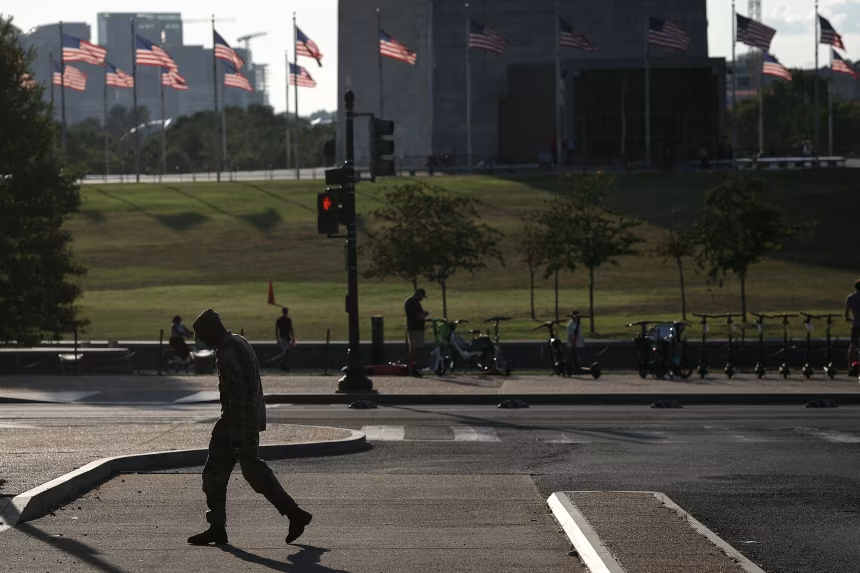
Trump has suggested a nationwide crime crackdown. Here’s what he can do outside of DC
Entities mentioned:
- Donald Trump: Power, Control, Recognition
- DC National Guard: Duty, Security, Obligation
- Washington, DC Police Department: Security, Duty, Professional pride
- US Congress: Control, Duty, Oversight
- Muriel Bowser: Self-preservation, Indignation, Wariness
- Greggory Pemberton: Security, Professional pride, Duty
- Federal law enforcement agencies: Security, Duty, Control
Article Assessment:
Credibility Score: 75/100
Bias Rating: 55/100 (Center)
Sentiment Score: 35/100
Authoritarianism Risk: 70/100 (Authoritarian Tendencies)
Bias Analysis:
The article presents multiple viewpoints and includes factual crime statistics that contradict the President's claims. However, it gives more space to concerns about federal overreach than to supporters of the action, slightly tilting it towards a centrist-to-left perspective.
Key metric: Federal-State Power Balance
As a social scientist, I analyze that this article highlights a significant shift in the federal-state power dynamic, particularly in Washington, DC. President Trump's unprecedented move to take control of the DC police department and deploy the National Guard represents a dramatic expansion of federal authority in local affairs. This action, while technically allowed under the Home Rule Act, raises concerns about the erosion of local autonomy and the potential for federal overreach. The justification for this action - addressing crime - appears to be at odds with actual crime statistics, which show a declining trend in violent crime and carjackings. This discrepancy suggests that the move may be more politically motivated than based on genuine public safety concerns. The expansion of federal power in DC could set a precedent for similar actions in other cities, potentially altering the balance of power between federal and local governments nationwide.