
Indiana Republican state lawmakers set to visit the White House amid Trump redistricting push
Entities mentioned:
- Republican legislators from Indiana: Power, Loyalty, Influence
- White House: Power, Control, Influence
- President Donald Trump: Power, Control, Ambition
- Democrats: Power, Competitive spirit, Self-preservation
- Rep. Frank Mrvan: Self-preservation, Duty, Loyalty
- Rep. Andre Carson: Self-preservation, Duty, Loyalty
- Todd Huston: Power, Loyalty, Influence
- Rodric Bray: Power, Loyalty, Influence
- Gov. Gavin Newsom: Power, Competitive spirit, Influence
- Gov. Greg Abbott: Power, Loyalty, Influence
- Vice President JD Vance: Loyalty, Influence, Power
- Gov. Mike Braun: Power, Loyalty, Wariness
Article Assessment:
Credibility Score: 75/100
Bias Rating: 55/100 (Center)
Sentiment Score: 40/100
Authoritarianism Risk: 65/100 (Authoritarian Tendencies)
Bias Analysis:
The article presents multiple perspectives, including both Republican and Democratic actions and concerns. While it focuses more on Republican efforts, it does so in the context of a Republican-led initiative, balancing this with mentions of Democratic counteractions and some Republican hesitancy.
Key metric: Electoral Competitiveness
As a social scientist, I analyze that this article highlights a significant push for redistricting efforts by the Republican Party, particularly driven by the White House under Trump's administration. This move aims to consolidate power in the House of Representatives by redrawing congressional maps in Republican-controlled states. The focus on Indiana as a potential 'test case' for mid-decade redistricting suggests a broader strategy that could have far-reaching implications for electoral competitiveness across multiple states. This effort, if successful, could significantly alter the balance of power in the House, potentially undermining the principle of fair representation and exacerbating political polarization. The involvement of high-level officials, including the President and Vice President, in pressuring state lawmakers indicates the high stakes and strategic importance placed on this initiative. However, the article also notes some resistance and skepticism among Republican operatives in Indiana, highlighting the complex political calculations involved in such a controversial move.
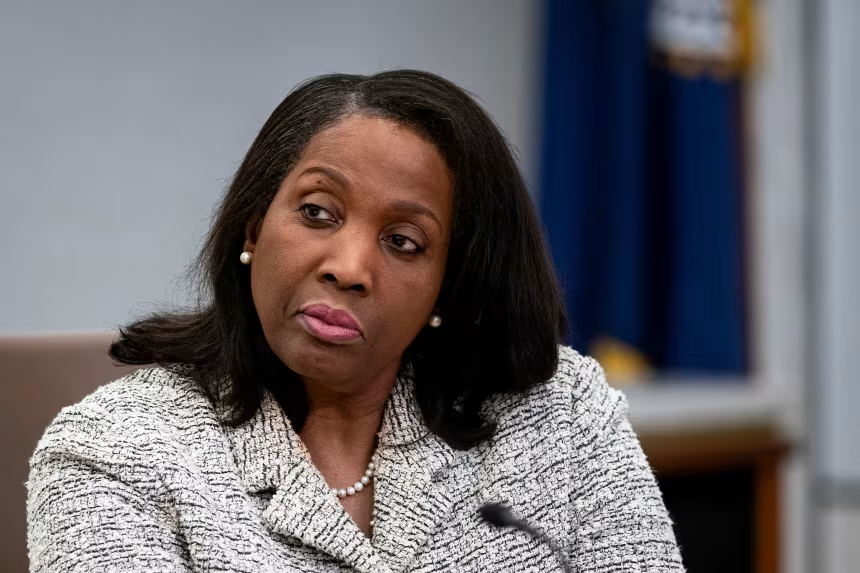
Trump’s firing of Fed’s Lisa Cook tests Supreme Court’s limits on presidential power
Entities mentioned:
- Donald Trump: Power, Control, Revenge
- Lisa Cook: Professional pride, Duty, Self-preservation
- Supreme Court: Justice, Duty, Wariness
- Federal Reserve: Independence, Professional pride, Duty
- Bill Pulte: Justice, Duty, Influence
- Ed Martin: Justice, Duty, Influence
- Elena Kagan: Justice, Duty, Wariness
Article Assessment:
Credibility Score: 75/100
Bias Rating: 55/100 (Center)
Sentiment Score: 35/100
Authoritarianism Risk: 65/100 (Authoritarian Tendencies)
Bias Analysis:
The article presents multiple viewpoints and cites various legal experts, indicating an attempt at balanced reporting. However, there's a slight tilt towards skepticism of Trump's actions, reflected in the framing of the issue and choice of expert quotes.
Key metric: Economic Stability
As a social scientist, I analyze that this article highlights a significant conflict between presidential power and the independence of key economic institutions, particularly the Federal Reserve. The firing of Lisa Cook represents a potential erosion of the Fed's autonomy, which could have far-reaching implications for economic stability. This action tests the boundaries of executive power and challenges established norms, potentially undermining market confidence in the Fed's ability to operate free from political interference. The Supreme Court's previous rulings and the unique status they've afforded the Federal Reserve add complexity to this situation, setting the stage for a possible legal battle that could redefine the balance of power between the executive branch and independent agencies. The outcome of this conflict could significantly impact the perceived stability and credibility of U.S. economic institutions, potentially affecting investor confidence, market behavior, and long-term economic policy-making.