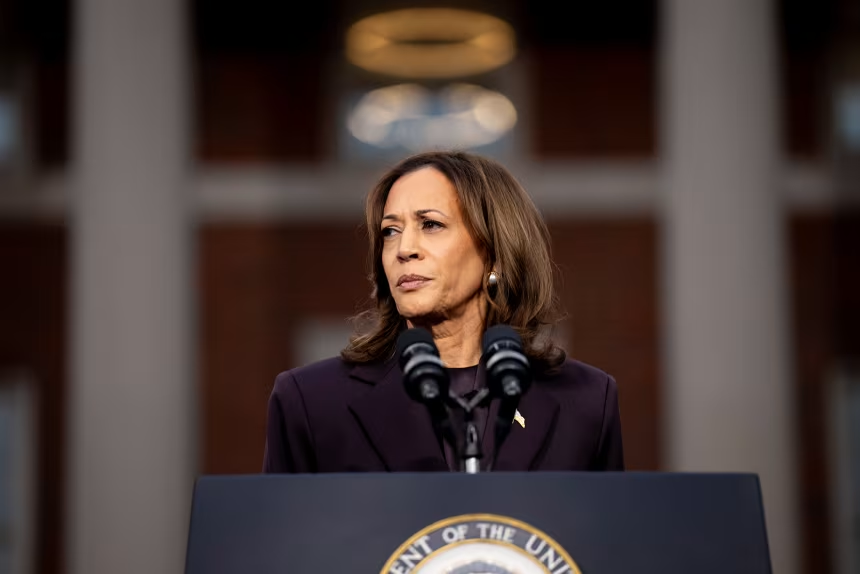
Republicans reprise anti-transgender ‘Kamala is for they/them’ ads for the midterms
Entities mentioned:
- Republicans: Power, Control, Fear
- Roy Cooper: Ambition, Righteousness, Justice
- Senate Leadership Fund: Power, Influence, Control
- Kamala Harris: Justice, Righteousness, Duty
- Donald Trump: Power, Control, Influence
- Jon Ossoff: Justice, Duty, Righteousness
- Chris LaCivita: Competitive spirit, Power, Influence
- Democrats: Justice, Righteousness, Unity
- Viet Shelton: Duty, Righteousness, Justice
- Buddy Carter: Power, Competitive spirit, Loyalty
- Winsome Earle-Sears: Power, Control, Competitive spirit
- Abigail Spanberger: Justice, Duty, Righteousness
- Gavin Newsom: Ambition, Power, Influence
- Pete Buttigieg: Ambition, Influence, Righteousness
- Human Rights Campaign: Justice, Righteousness, Unity
- Tim Walz: Righteousness, Justice, Unity
- Stephen Cloobeck: Ambition, Competitive spirit, Power
Article Assessment:
Credibility Score: 75/100
Bias Rating: 55/100 (Center)
Sentiment Score: 35/100
Authoritarianism Risk: 45/100 (Mixed/Neutral)
Bias Analysis:
The article presents views from both Republican and Democratic sides, quoting various sources. However, it gives slightly more space to critiquing Republican strategies, suggesting a slight center-left lean.
Key metric: Political Polarization Index
As a social scientist, I analyze that this article highlights the increasing political polarization in the United States, particularly around transgender issues. The Republicans' strategy of using anti-transgender messaging in political ads demonstrates an attempt to create wedge issues and mobilize their base. This approach may deepen existing societal divisions and further alienate the LGBTQ+ community. The Democrats' response, while attempting to focus on economic issues, shows some internal disagreement on how to address these attacks. This polarization could lead to increased social tension, policy gridlock, and a decline in civil discourse, potentially impacting the overall functioning of democratic institutions.
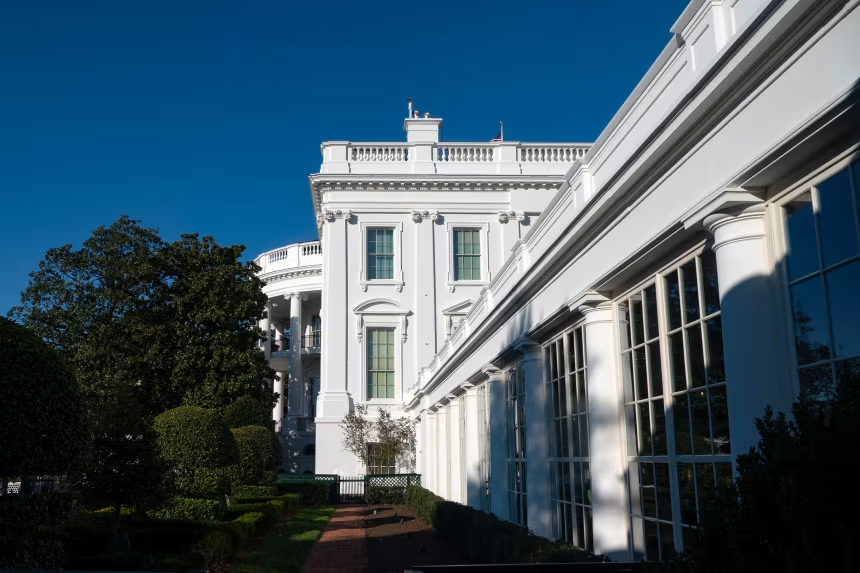
Trump’s East Wing expansion requires a reimagined White House tour
Entities mentioned:
- Donald Trump: Legacy, Power, Recognition
- White House: Duty, Security, Unity
- Melania Trump: Duty, Influence, Legacy
- US Secret Service: Security, Duty, Professional pride
- National Park Service: Duty, Preservation, Professional pride
- Jill Biden: Duty, Legacy, Recognition
Article Assessment:
Credibility Score: 75/100
Bias Rating: 55/100 (Center)
Sentiment Score: 45/100
Authoritarianism Risk: 35/100 (Generally Democratic)
Bias Analysis:
The article presents multiple perspectives and includes official statements, suggesting a relatively balanced approach. However, there's a slight tilt towards emphasizing the potential negative impacts of the construction, which could be seen as leaning slightly critical of the administration's decision.
Key metric: Government Transparency and Accessibility
As a social scientist, I analyze that the proposed expansion of the White House East Wing will significantly impact public access to the People's House, a symbol of American democracy. This change may affect the government's transparency and the public's ability to engage with their nation's history and leadership. The temporary disruption of tours and potential long-term changes to the tour route could decrease the number of visitors and alter the public's perception of government openness. However, the administration's stated commitment to maintaining public access suggests an awareness of the importance of this tradition. The project's private funding and scale also raise questions about the balance between presidential prerogatives and public interests in shaping national institutions.

Paxton and Cornyn, facing off for Senate, use their official powers in Texas redistricting fight
Entities mentioned:
- Ken Paxton: Power, Ambition, Control
- John Cornyn: Power, Competitive spirit, Self-preservation
- Texas House Democrats: Justice, Righteousness, Determination
- Greg Abbott: Control, Power, Determination
- Beto O'Rourke: Justice, Influence, Recognition
- Dustin Burrows: Control, Duty, Determination
Article Assessment:
Credibility Score: 75/100
Bias Rating: 55/100 (Center)
Sentiment Score: 30/100
Authoritarianism Risk: 65/100 (Authoritarian Tendencies)
Bias Analysis:
The article presents perspectives from both Republican and Democratic sides, quoting various officials. While it gives slightly more space to Republican actions, it also includes Democratic responses, maintaining a relatively balanced approach.
Key metric: Political Polarization Index
As a social scientist, I analyze that this article highlights the intensifying political polarization in Texas, particularly surrounding the redistricting issue. The use of official powers by both Republican and Democratic figures to pressure or support the absent Democrats demonstrates an escalation of partisan tactics. This situation likely increases the Political Polarization Index by showcasing the widening gap between parties and the willingness to use extraordinary measures to achieve political goals. The involvement of federal agencies (FBI) in a state matter further emphasizes the nationalization of local political disputes, potentially exacerbating divisions. The article also illustrates how this conflict is shaping future political races, suggesting long-term impacts on partisan dynamics in Texas and potentially nationally.
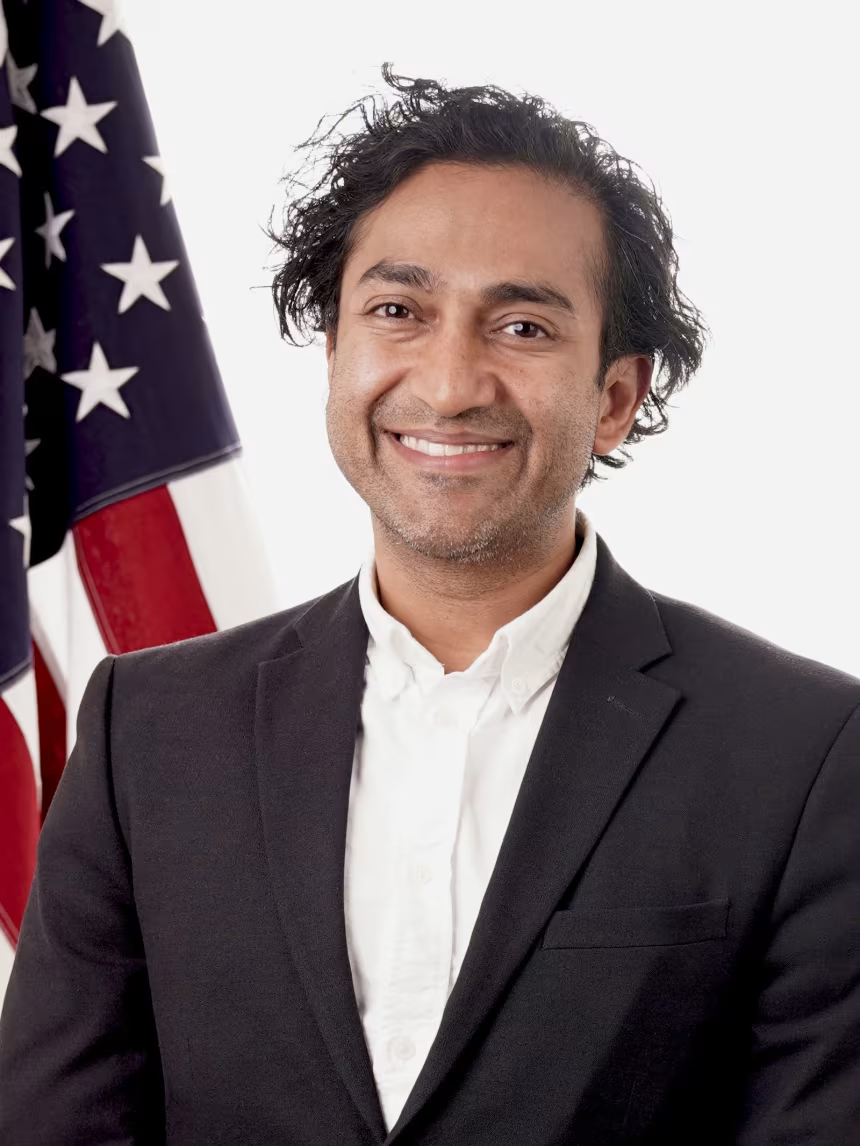
FDA official returns to agency after Loomer-led ouster
Entities mentioned:
- Dr. Vinay Prasad: Professional pride, Duty, Recognition
- US Food and Drug Administration (FDA): Duty, Public safety, Credibility
- Laura Loomer: Moral outrage, Influence, Righteousness
- White House: Control, Power, Influence
- President Donald Trump: Power, Legacy, Control
Article Assessment:
Credibility Score: 75/100
Bias Rating: 45/100 (Center)
Sentiment Score: 35/100
Authoritarianism Risk: 65/100 (Authoritarian Tendencies)
Bias Analysis:
The article presents multiple perspectives and cites various sources, including official statements and anonymous insiders. While it gives voice to critics of Dr. Prasad, it also provides context for his previous work and controversies, maintaining a relatively balanced approach.
Key metric: Public Trust in Government Institutions
As a social scientist, I analyze that this article highlights the complex interplay between politics, public health, and institutional integrity. Dr. Prasad's return to the FDA after a politically-motivated ouster demonstrates the tension between scientific expertise and political pressure. This situation potentially undermines public trust in the FDA's decision-making process and independence. The involvement of activist Laura Loomer and the White House in personnel decisions at a scientific agency raises concerns about the politicization of public health institutions. This event may have long-lasting effects on how the public perceives the FDA's ability to make unbiased, science-based decisions, particularly in critical areas such as vaccine approvals and drug regulations.

Here’s what Trump has promised to do in a second term
Entities mentioned:
- Donald Trump: Power, Control, Ambition
- Joe Biden: Legacy, Influence, Duty
- Elon Musk: Influence, Ambition, Curiosity
- Vivek Ramaswamy: Ambition, Influence, Recognition
- Robert F. Kennedy Jr.: Influence, Recognition, Righteousness
- Gary Gensler: Duty, Control, Professional pride
- Paul Atkins: Influence, Professional pride, Ambition
Article Assessment:
Credibility Score: 75/100
Bias Rating: 55/100 (Center)
Sentiment Score: 45/100
Authoritarianism Risk: 65/100 (Authoritarian Tendencies)
Bias Analysis:
The article presents a comprehensive overview of Trump's proposed policies without overtly endorsing or criticizing them. It relies on direct quotes and campaign statements, maintaining a relatively neutral tone. However, the selection of policies and their framing may slightly lean towards emphasizing controversial aspects.
Key metric: Political Polarization Index
As a social scientist, I analyze that this article outlines Donald Trump's proposed policies for a potential second term, which could significantly impact political polarization in the United States. The policies described, such as mass deportations, tariffs, and rollbacks of environmental regulations, are likely to exacerbate existing divisions between conservative and liberal factions. Trump's promises to use executive power extensively and to target political opponents through the Justice Department suggest a potential increase in authoritarian tendencies, which could further strain democratic institutions and increase polarization. The proposed economic policies, particularly on trade and taxes, may resonate with his base but could alienate moderates and the opposition, potentially widening the political divide. The article's comprehensive coverage of Trump's proposals across various sectors indicates that polarization would likely intensify across multiple fronts, including immigration, healthcare, education, and foreign policy.
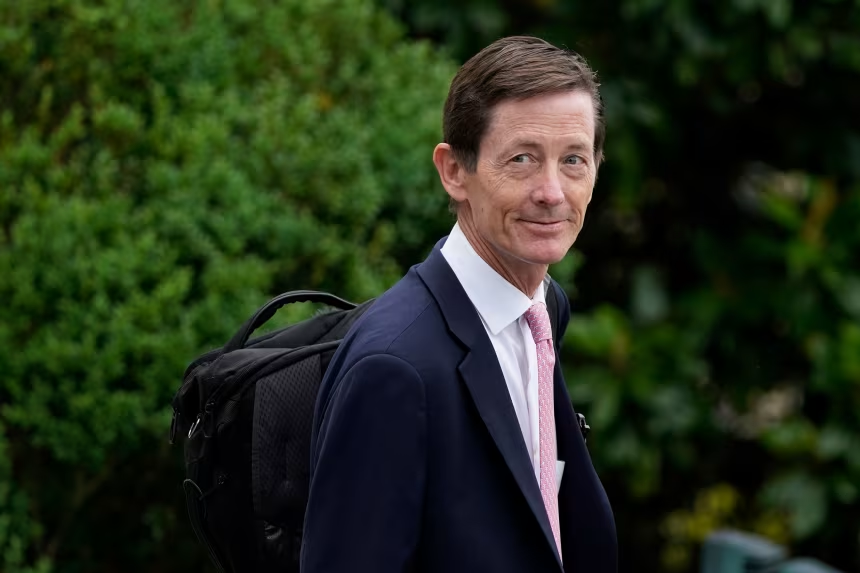
Former senior Biden aide appears before House committee in probe of former president’s alleged mental decline
Entities mentioned:
- Joe Biden: Self-preservation, Power, Legacy
- Bruce Reed: Loyalty, Professional pride, Duty
- House Oversight Committee: Justice, Control, Influence
- Anita Dunn: Loyalty, Professional pride, Self-preservation
- Donald Trump: Competitive spirit, Power, Influence
- Steve Ricchetti: Loyalty, Duty, Professional pride
- Mike Donilon: Loyalty, Duty, Professional pride
- Dr. Kevin O'Connor: Self-preservation, Professional pride, Duty
- Anthony Bernal: Self-preservation, Loyalty, Duty
- Annie Tomasini: Self-preservation, Loyalty, Duty
Article Assessment:
Credibility Score: 65/100
Bias Rating: 55/100 (Center)
Sentiment Score: 35/100
Authoritarianism Risk: 40/100 (Generally Democratic)
Bias Analysis:
The article presents a relatively balanced view, including perspectives from both sides. However, there's a slight lean towards emphasizing Republican actions and Democratic reluctance, which could be interpreted as a mild center-right bias.
Key metric: Political Stability
As a social scientist, I analyze that this investigation into former President Biden's cognitive abilities could significantly impact political stability in the United States. The probe by House Republicans suggests a deep partisan divide and potential delegitimization of a former administration. The involvement of high-ranking officials and their varying degrees of cooperation indicate the seriousness of the investigation. The invocation of the Fifth Amendment by some officials raises questions about potential legal implications. This investigation could influence public trust in political institutions and impact future elections, particularly if evidence of cognitive decline or concealment is found. The situation highlights the ongoing tension between political parties and the use of congressional oversight as a tool for political maneuvering.
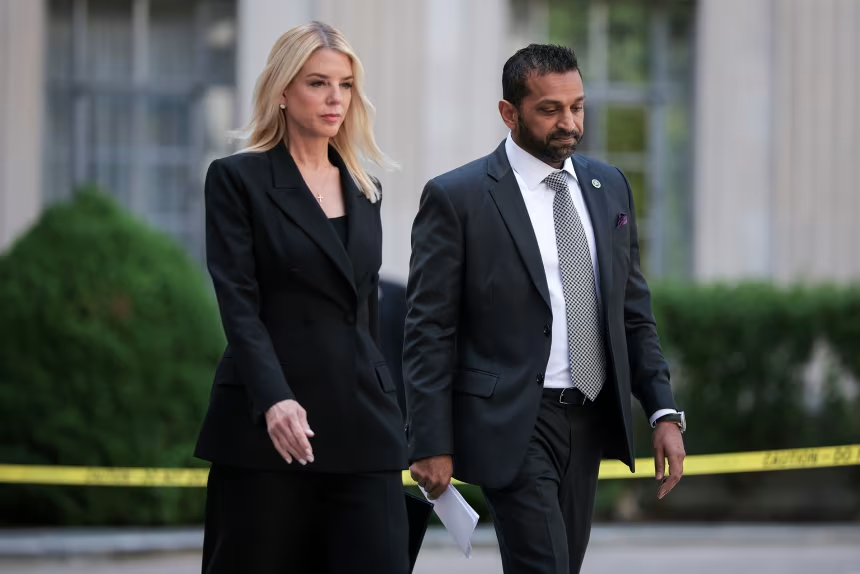
Planned dinner for Trump officials to discuss Epstein appears to have been moved amid media scrutiny
Entities mentioned:
- JD Vance: Unity, Influence, Duty
- Pam Bondi: Power, Recognition, Professional pride
- Kash Patel: Power, Professional pride, Loyalty
- Susie Wiles: Control, Unity, Duty
- Dan Bongino: Self-preservation, Professional pride, Recognition
- Todd Blanche: Duty, Professional pride, Loyalty
- William Martin: Loyalty, Duty, Control
Article Assessment:
Credibility Score: 65/100
Bias Rating: 55/100 (Center)
Sentiment Score: 35/100
Authoritarianism Risk: 45/100 (Mixed/Neutral)
Bias Analysis:
The article presents multiple viewpoints and relies on unnamed sources, which is common in political reporting. While it focuses on internal conflicts in the Trump administration, it maintains a relatively neutral tone in its presentation of facts.
Key metric: Government Transparency and Accountability
As a social scientist, I analyze that this article reveals internal conflicts and attempts at realignment within the Trump administration regarding the handling of the Epstein case. The planned dinner, which was apparently moved or canceled due to media scrutiny, indicates a desire to present a unified front and regain control of the narrative. The tensions between key figures like Bondi, Patel, and Bongino highlight the challenges in managing high-profile cases and maintaining cohesion within the administration. The article suggests a struggle between transparency and control of information, which directly impacts government accountability. The administration's response to media attention by potentially altering their meeting plans also demonstrates the influence of public scrutiny on government operations.

Army soldier charged with attempting to share sensitive data on US tanks with Russia
Entities mentioned:
- Taylor Adam Lee: Revenge, Recognition, Influence
- US Army: Security, Duty, Professional pride
- Justice Department: Justice, Security, Duty
- Russian Federation: Power, Influence, Security
- FBI: Security, Justice, Duty
- Roman Rozhavsky: Duty, Security, Deterrence
- Sean F. Stinchon: Security, Duty, Professional pride
Article Assessment:
Credibility Score: 75/100
Bias Rating: 45/100 (Center)
Sentiment Score: 30/100
Authoritarianism Risk: 25/100 (Generally Democratic)
Bias Analysis:
The article presents a balanced view of the incident, citing official sources and providing factual information without apparent political slant. The inclusion of statements from multiple officials and the straightforward presentation of the charges suggest a centrist approach to reporting.
Key metric: National Security Index
As a social scientist, I analyze that this incident significantly impacts the National Security Index by exposing vulnerabilities in military personnel vetting and information security protocols. The case highlights the ongoing threat of insider espionage, particularly concerning high-clearance individuals with access to sensitive military technology. This event may lead to increased scrutiny of security clearance procedures and enhanced counterintelligence efforts within the US military. The potential sharing of Abrams tank data with Russia could have far-reaching consequences, especially given the tank's deployment in Ukraine, potentially affecting US strategic advantages and international relations. This case also underscores the persistent efforts of foreign powers to acquire US military secrets, highlighting the need for continuous vigilance and improvement in safeguarding critical defense information.
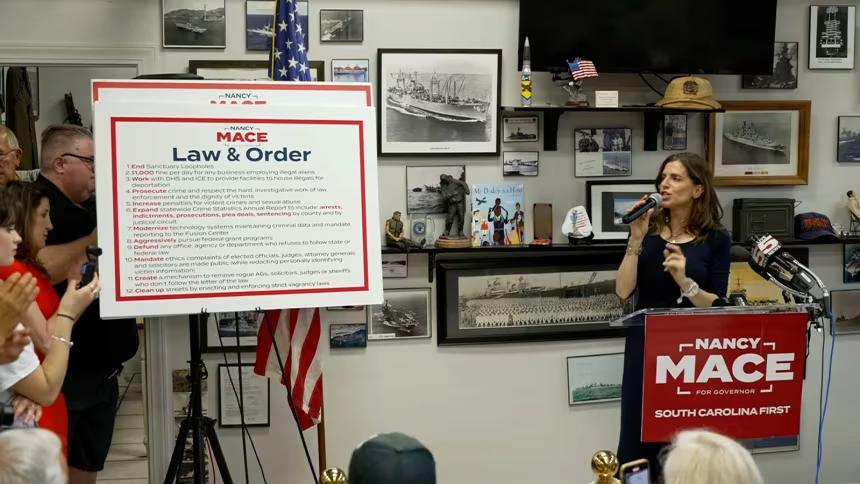
Mace touts ties to Trump, jockeys for endorsement in South Carolina governor’s race in campaign-style town hall
Entities mentioned:
- Nancy Mace: Ambition, Power, Recognition
- Donald Trump: Influence, Power, Legacy
- Ralph Norman: Ambition, Competitive spirit
- Alan Wilson: Ambition, Power
- Joe Biden: Legacy, Influence
- Greg Abbott: Power, Control
- Jim Clyburn: Self-preservation, Influence
Article Assessment:
Credibility Score: 75/100
Bias Rating: 55/100 (Center)
Sentiment Score: 45/100
Authoritarianism Risk: 55/100 (Mixed/Neutral)
Bias Analysis:
The article presents a fairly balanced view of Mace's town hall, including both her pro-Trump statements and contradictions in her claims. While it leans slightly towards critiquing Mace's positions, it also provides context and direct quotes, maintaining a relatively neutral stance.
Key metric: Political Polarization Index
As a social scientist, I analyze that this article highlights the increasing political polarization in the United States, particularly within the Republican Party. Nancy Mace's attempt to align herself closely with Donald Trump while simultaneously taking credit for Biden administration achievements demonstrates the complex dynamics at play in GOP politics. The emphasis on Trump's endorsement and the jockeying for position in the gubernatorial race underscores the continued influence of Trump within the party. Mace's stance on transgender issues and redistricting efforts also points to ongoing culture war topics that contribute to polarization. The article reveals how politicians navigate conflicting interests, balancing party loyalty with local needs, which can further entrench political divisions and impact governance effectiveness.

Trump reignites threat to take over DC after former DOGE worker assaulted in attempted carjacking
Entities mentioned:
- Donald Trump: Power, Control, Influence
- Edward Coristine: Self-preservation, Security, Fear
- DC Police Department: Duty, Security, Professional pride
- Elon Musk: Influence, Recognition, Ambition
- Muriel Bowser: Self-preservation, Duty, Security
- Jeanine Pirro: Loyalty, Influence, Justice
- Christina Henderson: Duty, Justice, Righteousness
Article Assessment:
Credibility Score: 70/100
Bias Rating: 55/100 (Center)
Sentiment Score: 30/100
Authoritarianism Risk: 65/100 (Authoritarian Tendencies)
Bias Analysis:
The article presents multiple viewpoints, including Trump's statements, local officials' responses, and conflicting crime statistics. However, there's slightly more emphasis on Trump's perspective and actions, potentially skewing the overall narrative.
Key metric: Crime Rate
As a social scientist, I analyze that this article highlights the complex interplay between federal and local governance in Washington, DC. Trump's threats to federalize the city's administration in response to a high-profile crime incident demonstrate a potential shift in federal-local relations. This could significantly impact the crime rate metric, as increased federal intervention might lead to stricter law enforcement but could also create tensions with local authorities and communities. The conflicting crime statistics presented (Trump's claims vs. official DC Police data) underscore the importance of data interpretation in shaping public policy and perception. The situation also reveals the delicate balance local leaders like Mayor Bowser must maintain between addressing crime concerns and preserving local autonomy, especially under pressure from federal authorities.