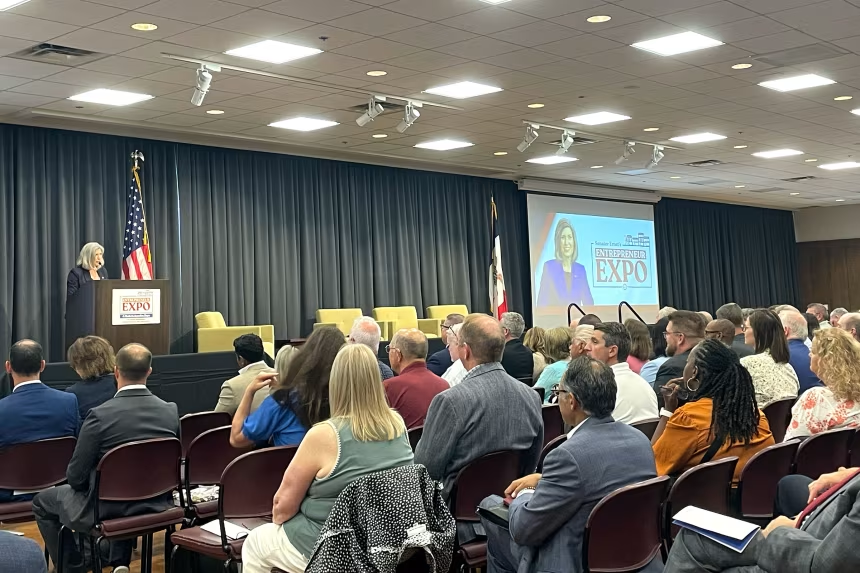
Republicans pitch Trump’s domestic policy agenda in Iowa, but some entrepreneurs aren’t yet sold
Entities mentioned:
- Kelly Loeffler: Ambition, Professional pride, Loyalty
- Laura Pager: Self-preservation, Indignation, Anxiety
- Joni Ernst: Ambition, Loyalty, Duty
- Lee Zeldin: Loyalty, Professional pride, Control
- Donald Trump: Power, Legacy, Control
- Republican Party: Power, Control, Competitive spirit
- Small Business Administration: Duty, Professional pride, Influence
- Environmental Protection Agency: Control, Influence, Professional pride
Article Assessment:
Credibility Score: 75/100
Bias Rating: 55/100 (Center)
Sentiment Score: 45/100
Authoritarianism Risk: 35/100 (Generally Democratic)
Bias Analysis:
The article presents multiple perspectives, including administration officials and business owners with varying views. While it leans slightly critical of the administration's policies, it attempts to balance this with official statements and supportive voices.
Key metric: Small Business Growth and Federal Contracting
As a social scientist, I analyze that this article highlights the complex interplay between the Trump administration's policies and their impact on small businesses, particularly in relation to federal contracting. The administration's efforts to downsize the federal government and reduce regulations are creating a challenging environment for some small business owners, especially those reliant on government contracts. This tension is evident in the conflicting narratives presented by administration officials and the experiences of business owners like Laura Pager. The article suggests that while the administration is promoting a pro-business agenda, the reality on the ground is more complicated, with some entrepreneurs feeling lost in the new landscape. This disconnect could potentially impact small business growth and participation in federal contracting, which are crucial economic indicators.
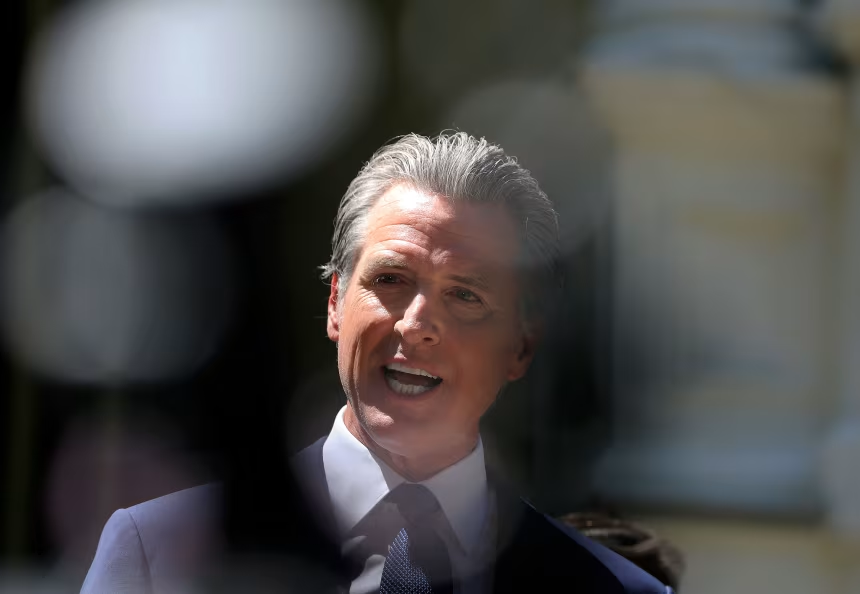
Newsom’s California redistricting push sets up a standoff with Republican-led opposition
Entities mentioned:
- Gavin Newsom: Power, Justice, Determination
- Donald Trump: Power, Control, Competitive spirit
- Greg Abbott: Power, Competitive spirit, Loyalty
- Arnold Schwarzenegger: Justice, Legacy, Righteousness
- Charles Munger Jr.: Justice, Influence, Determination
- Common Cause: Justice, Influence, Wariness
- League of Women Voters: Justice, Unity, Moral outrage
- Steve Hilton: Ambition, Justice, Competitive spirit
- Kevin Kiley: Justice, Self-preservation, Duty
Article Assessment:
Credibility Score: 75/100
Bias Rating: 55/100 (Center)
Sentiment Score: 35/100
Authoritarianism Risk: 45/100 (Mixed/Neutral)
Bias Analysis:
The article presents multiple viewpoints and includes quotes from various stakeholders, indicating an attempt at balance. However, there's slightly more space given to Democratic perspectives and framing of the issue as a response to Republican actions.
Key metric: Electoral Fairness and Representation
As a social scientist, I analyze that this article highlights a significant political conflict over redistricting in California, with potential national implications. Governor Newsom's push to redraw congressional maps is presented as a response to Republican-led efforts in other states, particularly Texas. This creates a tension between maintaining California's independent redistricting commission and strategically countering perceived gerrymandering elsewhere. The involvement of various political figures, advocacy groups, and potential legal challenges underscores the complexity of the issue. The debate touches on core democratic principles such as fair representation and the balance of power between state and federal governments. The potential impact on future elections and party control in Congress makes this a critical issue for electoral fairness and representation across the United States.
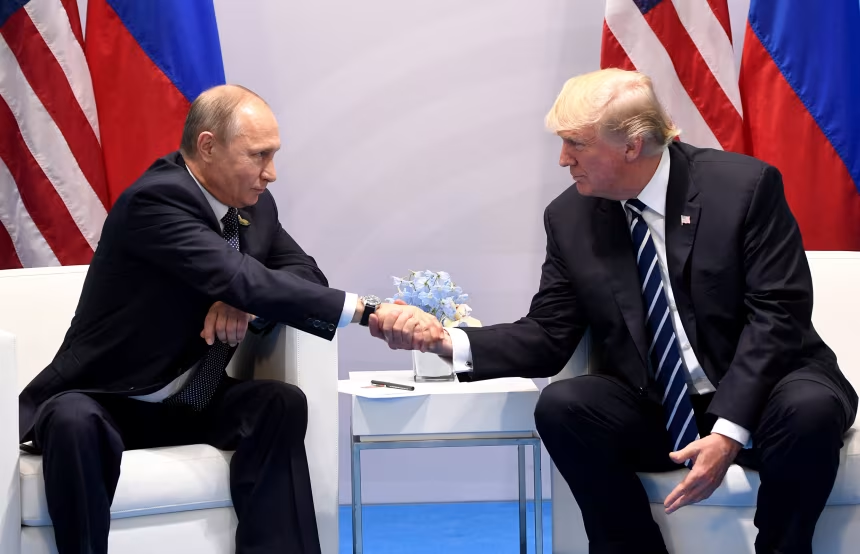
How Trump and Putin’s relationship has evolved since they first met eight years ago
Entities mentioned:
- Donald Trump: Power, Recognition, Influence
- Vladimir Putin: Power, Control, Self-preservation
- United States: Influence, Security, Power
- Russia: Power, Control, Self-preservation
- Ukraine: Self-preservation, Freedom, Security
- White House: Control, Influence, Security
- John Herbst: Professional pride, Duty, Influence
- James Stavridis: Professional pride, Duty, Security
Article Assessment:
Credibility Score: 75/100
Bias Rating: 55/100 (Center)
Sentiment Score: 35/100
Authoritarianism Risk: 45/100 (Mixed/Neutral)
Bias Analysis:
The article presents a relatively balanced view, incorporating various perspectives and historical context. While it includes some critical analysis of Trump's actions, it also presents his viewpoint, maintaining a mostly neutral tone.
Key metric: US-Russia Relations Index
As a social scientist, I analyze that this article highlights the complex and evolving relationship between Donald Trump and Vladimir Putin, as well as the broader US-Russia relations. The article traces the history of their interactions from 2016 to the present, showing how initial optimism has given way to skepticism and tension. The invasion of Ukraine serves as a critical turning point, significantly impacting the US-Russia Relations Index. Trump's changing rhetoric towards Putin, from praise to criticism, reflects the deteriorating diplomatic situation. The article also touches on the lingering effects of the 2016 election interference allegations, which have continually influenced Trump's approach to Russia. This evolving dynamic suggests a potential shift in US foreign policy towards Russia, with implications for global geopolitics and security arrangements.

‘Looming over the city like gods’: the men who changed New York for better and worse
Entities mentioned:
- Jonathan Mahler: Curiosity, Professional pride, Legacy
- Ed Koch: Ambition, Pride, Legacy
- Rudy Giuliani: Ambition, Power, Control
- David Dinkins: Justice, Unity, Legacy
- Donald Trump: Power, Recognition, Greed
- Al Sharpton: Justice, Influence, Recognition
- Larry Kramer: Moral outrage, Justice, Determination
- Linda Fairstein: Justice, Professional pride, Revenge
Article Assessment:
Credibility Score: 75/100
Bias Rating: 45/100 (Center)
Sentiment Score: 50/100
Authoritarianism Risk: 25/100 (Generally Democratic)
Bias Analysis:
The article presents a balanced view of historical events and figures, offering both positive and negative aspects of key personalities. While it leans slightly left in its framing of social issues, it maintains a generally neutral tone in its historical analysis.
Key metric: Urban Social Cohesion
As a social scientist, I analyze that this article provides a comprehensive historical overview of New York City's political and social landscape from 1986 to 1990, drawing parallels to current issues. The narrative highlights the cyclical nature of urban challenges, particularly focusing on political power dynamics, racial tensions, and economic disparities. The author's examination of key figures like Ed Koch, Rudy Giuliani, and Donald Trump illustrates how personal ambitions and the pursuit of attention can shape a city's trajectory. The article underscores the complexities of urban governance, showing how leaders' decisions can have long-lasting impacts on social cohesion and economic development. This historical perspective offers valuable insights into the ongoing challenges of maintaining social unity and equitable progress in large, diverse urban centers.

‘A literal gut punch’: Missouri workers devastated by Republican repeal of paid sick leave
Entities mentioned:
- Bill Thompson: Self-preservation, Justice, Moral outrage
- Missouri Republicans: Power, Control, Loyalty
- Missouri chamber of commerce and industry: Greed, Influence, Control
- Richard Eiker: Justice, Moral outrage, Self-preservation
- Richard von Glahn: Justice, Moral outrage, Influence
- Mike Kehoe: Loyalty, Power, Control
- Ray McCarty: Influence, Greed, Self-preservation
Article Assessment:
Credibility Score: 75/100
Bias Rating: 35/100 (Lean Left)
Sentiment Score: 25/100
Authoritarianism Risk: 40/100 (Generally Democratic)
Bias Analysis:
The article leans left in its framing, focusing primarily on the perspectives of workers and labor advocates. While it includes some opposing viewpoints, they are given less prominence and depth compared to pro-worker arguments.
Key metric: Labor Force Participation Rate
As a social scientist, I analyze that the repeal of the paid sick leave mandate in Missouri will likely have a negative impact on the Labor Force Participation Rate. The article highlights how the lack of paid sick leave forces workers to choose between their health and financial stability, potentially leading to reduced workforce participation, especially among vulnerable populations. The repeal may disproportionately affect lower-income workers, women, and those with health issues or caregiving responsibilities. This could result in increased absenteeism, lower productivity, and higher turnover rates, all of which can contribute to a decrease in overall labor force participation. The strong public support for the original mandate (58% approval) suggests that a significant portion of the workforce recognizes the importance of paid sick leave, and its repeal may lead to dissatisfaction and potential labor disputes. The article also points to research showing that paid sick leave policies can improve workforce participation, particularly for women, which further supports the potential negative impact of this repeal on the Labor Force Participation Rate.
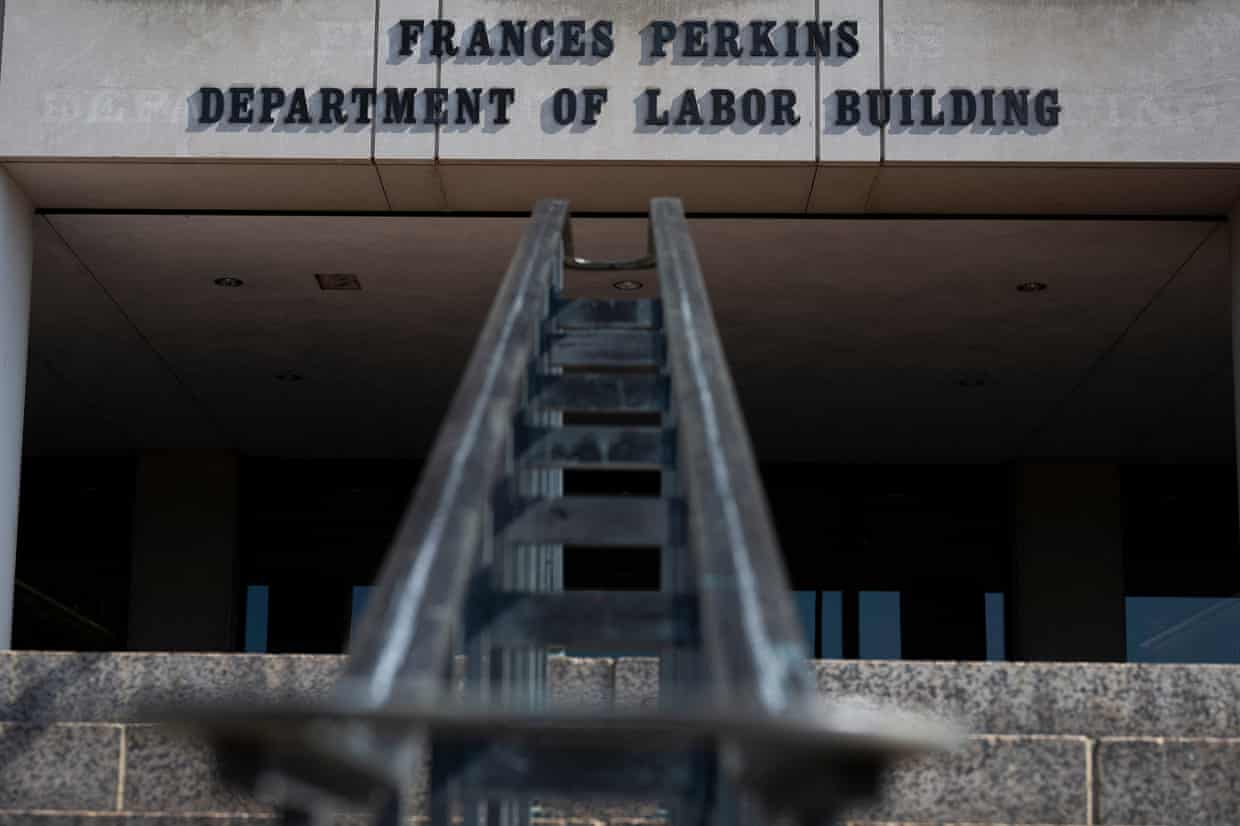
New Trump labor official has history of racist, sexist and conspiratorial posts
Entities mentioned:
- Jessica Bowman: Ambition, Loyalty, Influence
- US Department of Labor: Duty, Control, Professional pride
- Trump administration: Power, Control, Loyalty
- Bureau of International Labor Affairs: Duty, Justice, Influence
- Republican Liberty Caucus: Influence, Loyalty, Freedom
- Kamala Harris: Ambition, Power, Recognition
- Laura Loomer: Influence, Loyalty, Recognition
- Indivisible: Influence, Unity, Justice
Article Assessment:
Credibility Score: 75/100
Bias Rating: 35/100 (Lean Left)
Sentiment Score: 25/100
Authoritarianism Risk: 55/100 (Mixed/Neutral)
Bias Analysis:
The article leans left in its framing, focusing heavily on criticisms of the Trump administration and Republican-affiliated individuals. While it presents factual information, the selection of content and tone suggest a critical stance towards conservative policies and appointments.
Key metric: Government Integrity Index
As a social scientist, I analyze that this article highlights significant concerns about the appointment of Jessica Bowman to a key position in the US Department of Labor. Her history of racist, sexist, and conspiratorial social media posts raises questions about the vetting process and the priorities of the current administration. This appointment could potentially undermine the credibility and effectiveness of the Bureau of International Labor Affairs, whose mission involves ensuring fair treatment of workers globally. The dissemination of conspiracy theories and false claims about election rigging by a government official may contribute to eroding public trust in democratic institutions. Furthermore, the dramatic budget cuts to the department under the current administration, coupled with the appointment of officials with questionable qualifications and extreme views, suggest a potential shift in labor policy that could have far-reaching implications for workers' rights and international labor standards.

Nobody In White House Sure Who Guy Praying Over Trump Is
Entities mentioned:
- Donald Trump: Power, Control, Recognition
- White House: Security, Control, Loyalty
- Mysterious Stranger: Influence, Righteousness, Control
- Administration Official: Duty, Wariness, Self-preservation
- Press Secretary: Loyalty, Control, Indignation
- Secret Service: Security, Duty, Wariness
Article Assessment:
Credibility Score: 30/100
Bias Rating: 35/100 (Lean Left)
Sentiment Score: 25/100
Authoritarianism Risk: 65/100 (Authoritarian Tendencies)
Bias Analysis:
The article leans left, using satire to criticize the Trump administration. It portrays the administration as chaotic and hostile to transparency, reflecting a negative bias towards conservative leadership.
Key metric: Government Transparency and Accountability
As a social scientist, I analyze that this satirical article highlights concerns about transparency, security protocols, and decision-making processes within the highest levels of government. The presence of an unidentified individual with apparent influence over the President raises questions about vetting procedures and the potential for undue religious influence in governance. The administration's reported hostility towards media inquiries further underscores issues of accountability and press freedom. The absurd elements, such as snake-handling and speaking in tongues, serve to amplify concerns about rational leadership and separation of church and state. The article's conclusion, suggesting the appointment of this unknown figure to a critical economic position, pointedly criticizes perceived incompetence and arbitrary decision-making in high-level appointments.

Timeline Of Trump’s Battle With Harvard
Entities mentioned:
- Donald Trump: Power, Control, Revenge
- Harvard University: Self-preservation, Professional pride, Influence
- Justice Department: Duty, Loyalty, Control
- Tim Cook: Competitive spirit, Ambition, Innovation
- Apple: Competitive spirit, Influence, Greed
Article Assessment:
Credibility Score: 25/100
Bias Rating: 30/100 (Lean Left)
Sentiment Score: 30/100
Authoritarianism Risk: 70/100 (Authoritarian Tendencies)
Bias Analysis:
The article leans left, mocking Trump and conservative policies. It presents exaggerated scenarios that paint the administration in a negative light, while portraying Harvard as resistant to governmental pressure.
Key metric: Economic Competitiveness
As a social scientist, I analyze that this satirical article presents a fictional timeline of escalating tensions between President Trump and Harvard University, as well as an unrelated segment about Apple. The exaggerated conflict portrays governmental overreach and abuse of power, potentially impacting academic freedom and international relations. The Apple segment satirizes trade tensions and manufacturing challenges. Both parts highlight concerns about executive power, education policy, and economic competitiveness. The absurdist nature of the content serves to critique real-world political and economic issues through humor.
- Read more about Timeline Of Trump’s Battle With Harvard
- Log in to post comments

Trump Pardons Tom Sandoval
Entities mentioned:
- Donald Trump: Power, Control, Recognition
- Tom Sandoval: Self-preservation, Recognition, Ambition
- Brittany Trumble: Professional pride, Loyalty, Influence
- Ariana Madix: Revenge, Justice, Self-respect
- Raquel Leviss: Ambition, Recognition, Competitive spirit
Article Assessment:
Credibility Score: 30/100
Bias Rating: 40/100 (Lean Left)
Sentiment Score: 35/100
Authoritarianism Risk: 55/100 (Mixed/Neutral)
Bias Analysis:
The article leans slightly left, mocking Trump's use of pardons and associating him with trivial celebrity culture. The satirical nature and choice of target suggest a critique of right-wing politics, though presented through absurdist humor.
Key metric: Public Trust in Government
As a social scientist, I analyze that this article, while satirical, highlights the potential for abuse of presidential pardoning powers and the trivialization of important governmental functions. The fictional scenario of pardoning a reality TV star for personal indiscretions suggests a blurring of entertainment and politics, which could erode public trust in government institutions and processes. This type of content, even as satire, may contribute to public cynicism about the integrity of political leadership and the proper use of executive powers, potentially impacting the broader metric of public trust in government.
- Read more about Trump Pardons Tom Sandoval
- Log in to post comments

Musk Weighs Return To Politics After 60th Death On ‘Elden Ring Nightreign’ Tutorial
Entities mentioned:
- Elon Musk: Ambition, Recognition, Self-respect
- FromSoft: Professional pride, Influence, Competitive spirit
- Donald Trump: Power, Influence, Recognition
- NASA: Professional pride, Duty, Curiosity
Article Assessment:
Credibility Score: 30/100
Bias Rating: 40/100 (Lean Left)
Sentiment Score: 35/100
Authoritarianism Risk: 25/100 (Generally Democratic)
Bias Analysis:
The article leans slightly left, mocking a prominent right-wing figure and implying criticism of wealthy individuals in politics. However, the satire is relatively mild and focuses more on individual foibles than explicit political commentary.
Key metric: Public Trust in Government
As a social scientist, I analyze that this satirical article highlights the perceived disconnect between high-profile public figures and their responsibilities. The portrayal of Elon Musk struggling with a video game while contemplating political involvement suggests a critique of the revolving door between business and politics, as well as questioning the competence and motivations of wealthy individuals in public service roles. This narrative could potentially impact public trust in government by reinforcing skepticism about the qualifications and commitment of those in or seeking positions of power.